Snorkeling In Cabo San Lucas: Best Spots, Season And Tours (2026)
Cabo's snorkeling lives in a handful of sheltered coves on the Sea of Cortez side: Pelican Rock, the bay side of Lover's Beach, Chileno Bay and Santa Maria. Here is what each one is like, when the water cooperates, and how boat trips fit snorkel stops in.
The three main snorkel bays, by boat time from the marina
Times are planning allowances for a direct run in normal sea conditions; tour routes often combine two stops. Pacific-side beaches are not swimming water at any season.
Cabo snorkeling ranges from a simple shore session to a private yacht with the day’s equipment and comfort handled. The paid option should solve access, gear or group logistics without erasing the beach plan. Compare The Cabo Tour Options Below →
Keep Chileno or Santa Maria for flexible shore snorkeling. Choose the 45-foot yacht for a private three-hour coastal trip with gear, towels, lunch, shade, a toilet and paddleboards, or the private whale charter when whale watching must share the outing.
Where Is The Best Snorkeling In Cabo San Lucas?
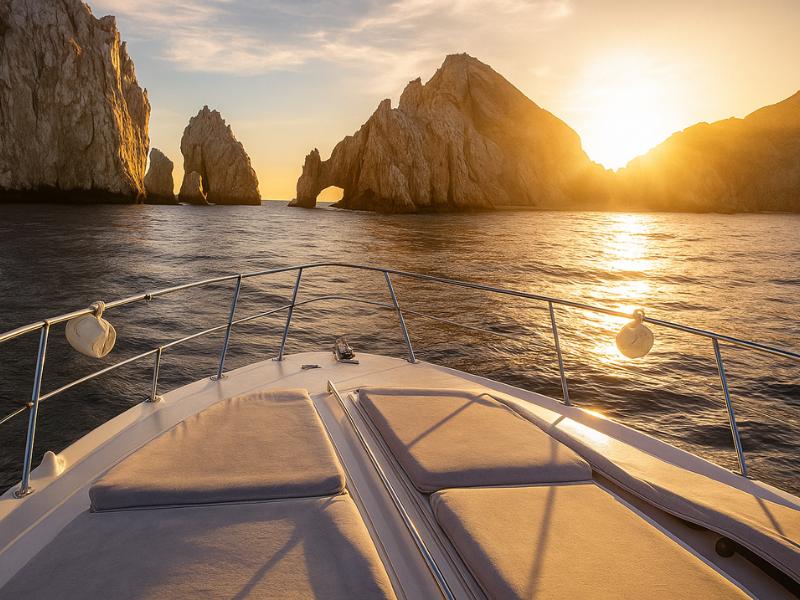
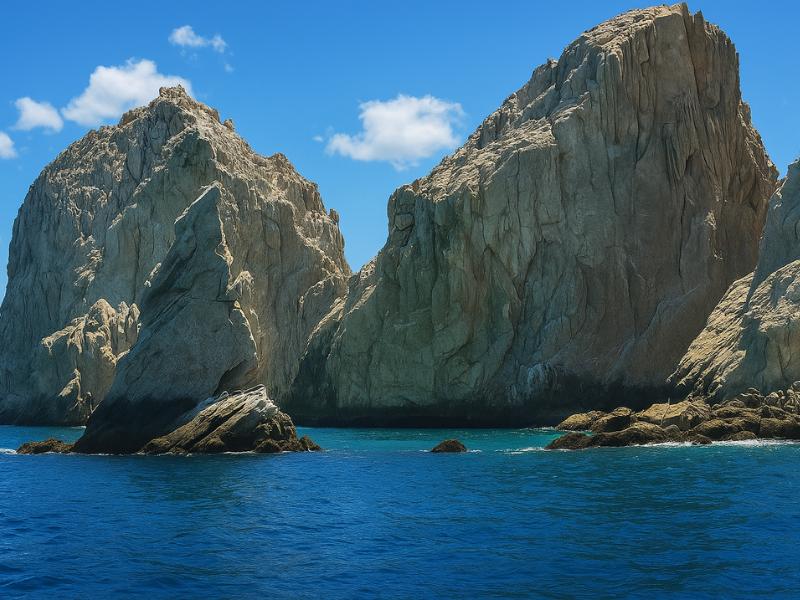
Four spots do almost all the work. Pelican Rock and the cove beside Lover's Beach sit at Land's End, minutes from the marina and reachable only by boat. Chileno Bay and Santa Maria Bay lie along the corridor east, both with road access. All four face the Sea of Cortez. The Pacific side is not swimmable.
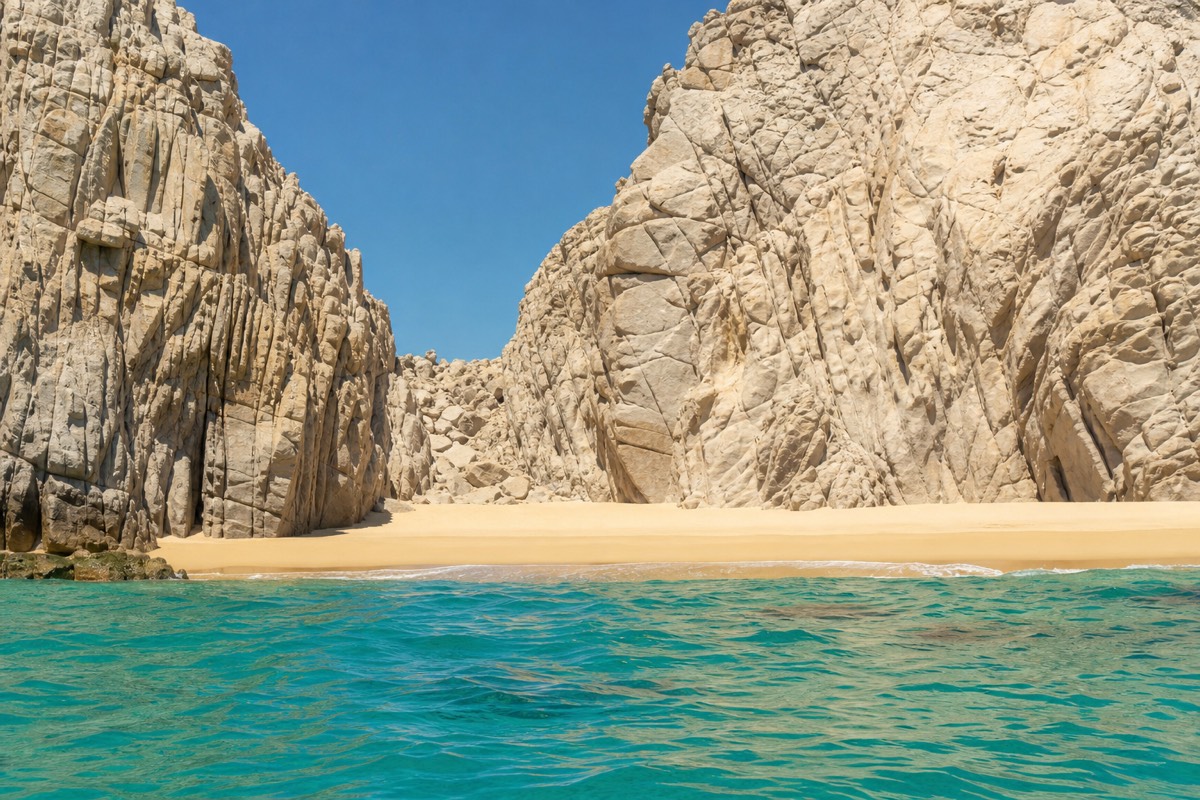
That last point deserves an early flag because it catches visitors every season. Cabo San Lucas sits exactly where the Pacific meets the Sea of Cortez, and the two sides behave nothing alike. The Cortez side is sheltered, warm and calm enough for a beginner in a mask. The Pacific side carries shore break and rip currents strong enough that its most famous stretch is signposted against swimming altogether.
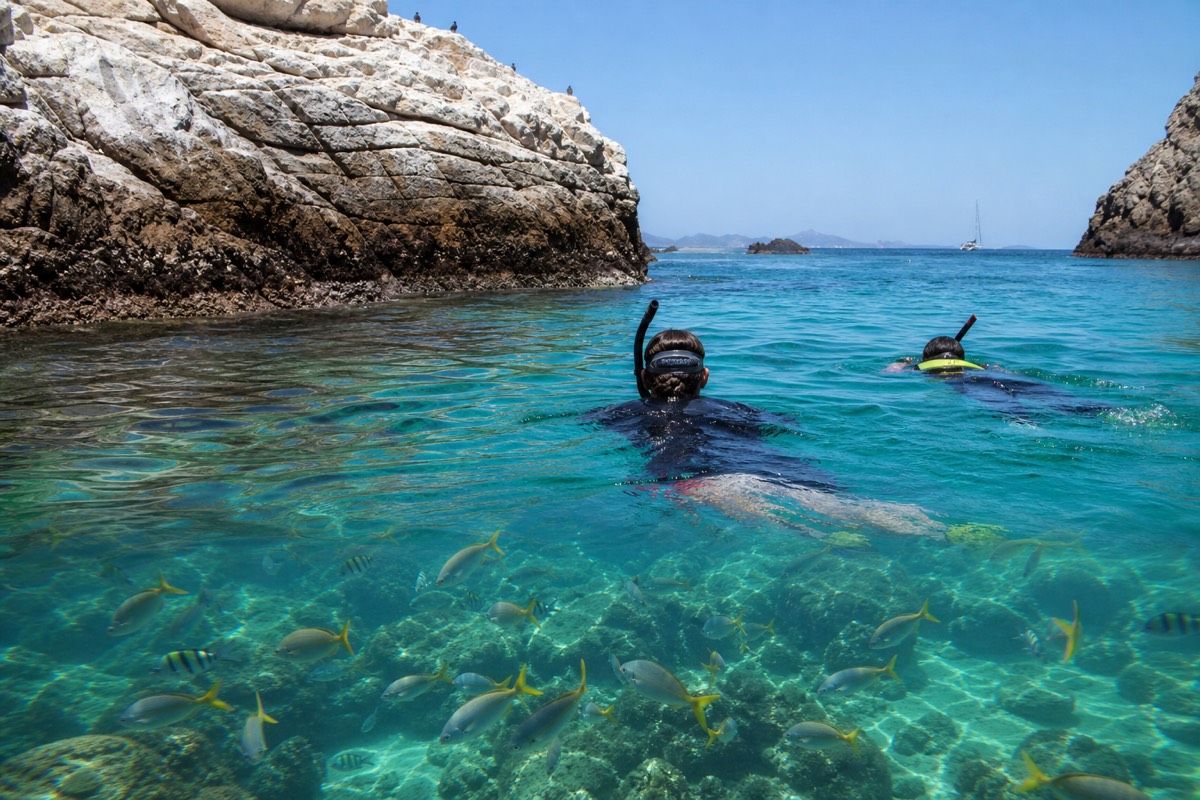
What you are snorkeling here is rocky reef rather than coral garden. Granite walls drop into sand, fish stack up along the edges, and rays cruise the shallows. Anyone arriving with Caribbean expectations will find it different: fewer colours, more structure, and enough fish life along the rock faces to keep a first-timer busy for an hour.
| Spot | Access | What it is like | Best for | Watch for |
|---|---|---|---|---|
| Pelican Rock | Boat or water taxi from the marina, a few minutes out | Rock wall dropping from a sandy shelf into deeper water, dense fish life along the face | The classic short snorkel, and the stop most tours use | Boat traffic. Stay inside the marked swim area |
| Lover's Beach, Cortez side | Boat or water taxi only | Small cove between granite headlands at Land's End, sheltered, shallow entry | Combining a snorkel with El Arco and the sea lion colony | Crowds mid-morning, and current through the gap at Land's End |
| Chileno Bay | Road, along the corridor east of town | Wide public beach with reef on the eastern side and calm shallow water | Families, first-timers, walk-in snorkeling without a boat | Parking fills early on weekends |
| Santa Maria Bay | Road, a little further east along the corridor | Horseshoe cove with rocky headlands on both arms | A quieter shore session, and the anchor stop on private charters | A short walk in from the road, and no shade to speak of |
| Divorce Beach, Pacific side | Walk over from Lover's Beach | Open Pacific sand with heavy shore break | Photographs, and nothing else | Not for swimming or snorkeling under any conditions |
What Is Pelican Rock Actually Like?
It is the short, reliable one. A rock face just inside Land's End drops from a shallow sandy shelf into deeper blue, and fish concentrate along that edge in numbers that make the site work even on an average day. It sits a few minutes from the marina, which is why nearly every boat with a snorkel stop uses it.
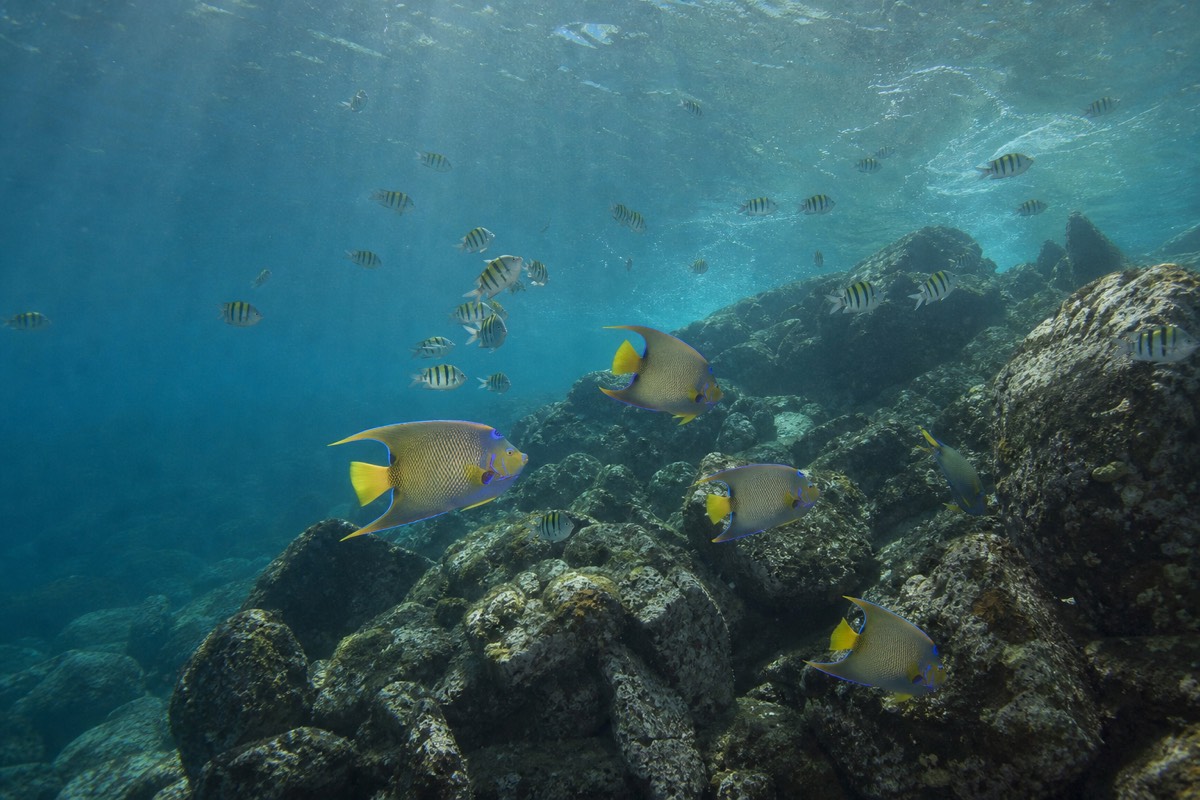
The layout is what makes it forgiving. You enter over sand in water shallow enough to stand in, fin twenty or thirty metres to the wall, and everything interesting is on that seam between rock and open water. Beginners can hover in the shallows and still see plenty. Stronger snorkelers can work along the face where the drop-off gets serious.
The hazard here is not the water, it is the traffic. This is a busy piece of coastline with water taxis, tour boats and private charters moving constantly, so the swim area is marked and staying inside it matters. Crews on the organised trips police that boundary carefully, which is one of the quieter arguments for taking a boat rather than a taxi and improvising.
Timing helps too. Early morning is calmer and emptier, and the light through the water is better before the wind gets up. By late morning in high season you are sharing the site with several boats at once.
What you see along the wall changes with the season and the day, but the pattern is consistent: schooling fish holding in the current lines, larger individuals working the rock face, and rays passing over the sand below. The Sea of Cortez is a productive stretch of water, and even an unremarkable session at Pelican Rock puts more fish in front of a beginner than most people expect from a twenty minute swim.
Lover's Beach, And The Land's End Rule That Matters
Lover's Beach sits in a notch of granite at Land's End with two entirely different beaches back to back. The Sea of Cortez side is the sheltered one where snorkeling happens. The Pacific side, a two minute walk across the sand, has shore break and rip currents and is not for swimming. Learn which side you are on.
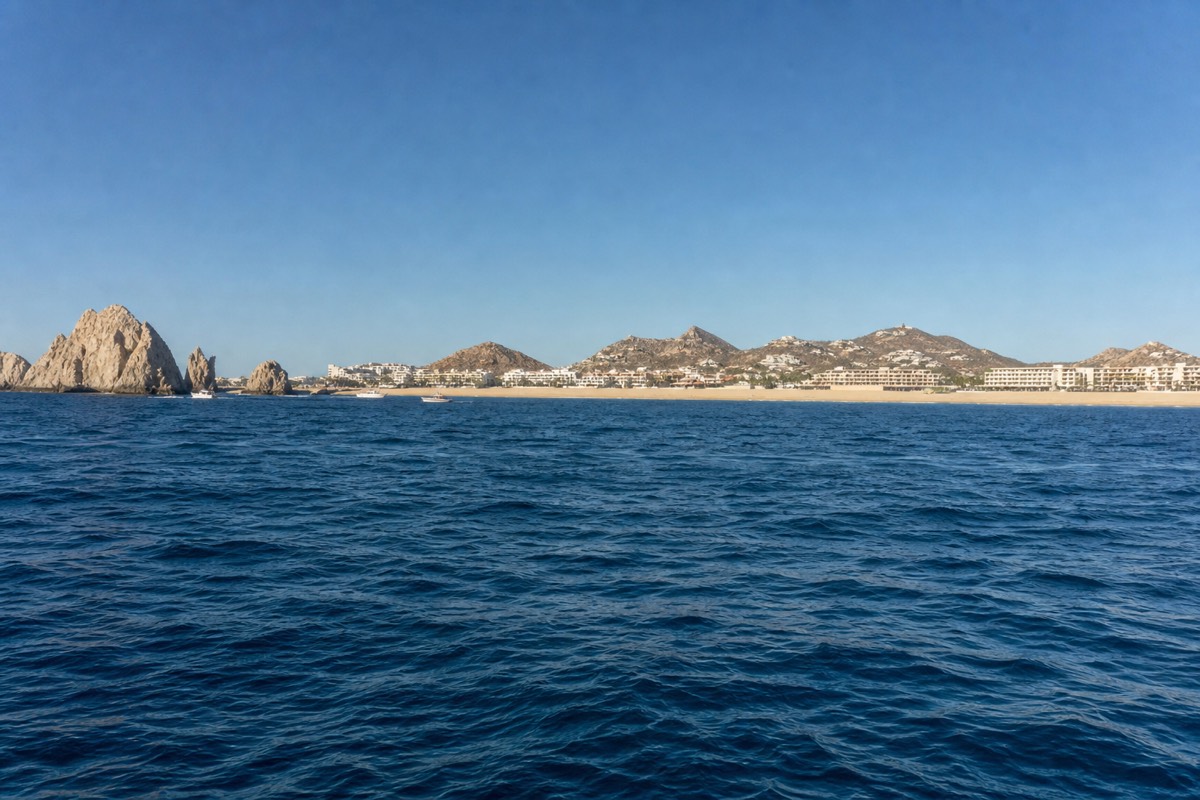
Getting there means a boat. Water taxis run constantly from the marina and Medano Beach, and every El Arco sightseeing trip passes within metres of it. The cove is small, shallow at the entry, and backed by rock that gives it decent shelter from wind. Snorkeling is best along the edges where the sand meets the granite.
The wider Land's End area is the reason people book boats at all. El Arco stands at the tip, the sea lion colony hauls out on the rocks nearby, and the whole formation sits minutes from the marina. Anyone planning to combine snorkeling with that circuit will find the practical detail in the guide on El Arco and Lover's Beach boat trips.
Two practical points if you take a water taxi rather than a tour. Agree the return time and the price before you get in, because negotiating from a beach with no other way off it is a poor position. And take water: there is no shade, no shop, and the granite radiates heat by mid-morning.
Chileno Bay And Santa Maria Bay: The Two You Can Drive To
Both sit on the corridor road east of Cabo San Lucas, well inside the twenty to thirty minutes that separates town from San Jose del Cabo. Chileno Bay is the wide, calm one with easy parking and reef on its eastern side. Santa Maria is a horseshoe cove with rocky arms on both sides. Neither needs a boat.
Chileno is the better first stop for families and anyone snorkeling for the first time. The water shelves gently, the bay is protected, and the reef structure sits close enough to shore that nobody has to swim far. It is also the busiest, and parking is the constraint rather than space in the water. Arrive early, especially at weekends when the beach fills with local families.
Santa Maria trades convenience for calm. The walk in from the road is short but real, there is no meaningful shade, and the payoff is a compact cove where the fish stack along both rocky arms. It is the quieter of the two on a weekday morning, and it is one of the two anchor stops the private yacht charters use.
That overlap is useful to know when you are choosing between a car day and a boat day. The listings for both the 42-foot and the 45-foot private charters name Santa Maria or Chileno as the snorkel stop, so booking a charter is partly a decision to reach the same water from the sea, with gear, shade, a toilet and lunch attached.
When Is The Water Best For Snorkeling In Cabo?
Late summer through autumn brings the warmest, calmest water of the year and the least need for a wetsuit. Winter is entirely snorkelable but cooler, with water around 21 to 24 degrees Celsius from December to April, and the north winds that define Baja winters chop the surface and cut clarity on their worst days.
The practical rule is that wind decides your day, not the month. A windless January morning at Chileno can be better than a blustery October afternoon, and operators plan around the forecast rather than the calendar. Mornings are consistently calmer than afternoons across the whole year, which is why organised snorkel stops cluster before lunch.
Winter is also whale season, which changes the calculation. From December 15 to April 15 you can put a snorkel stop and whale watching into the same outing, at the price of colder water and the odd cancelled day. Late summer and early autumn is the region's tropical storm window, so operators watch forecasts closely and postpone rather than run marginal conditions.
| Planning period | Snorkeling guidance | Whale wording |
|---|---|---|
| January through March | Choose a calm-weather morning and consider thermal protection | Use a whale-focused product only if the visitor selects that intent |
| December or April | Check water conditions and the exact whale-product date | Do not assume a product runs throughout the whole month |
| May through November | The coastal yacht remains available subject to live dates and weather | Describe the outing as coast and reef, without whales |
Treat that as a planning allowance built from the site's own season records, not a forecast. Confirm conditions with the operator on the day, and take the morning slot whenever one is offered.
Boat Access Or Shore Access: Which Should You Choose?
Shore snorkeling at Chileno or Santa Maria costs almost nothing and works on your own schedule. A boat reaches Pelican Rock and Lover's Beach, carries gear, and pairs the water time with El Arco and whale watching. The honest split is that shore access wins on price and boat access wins on everything else.
| Factor | Shore snorkeling | Boat snorkel stop |
|---|---|---|
| Cost | Beach access, plus gear you own or rent | Part of a tour fare, gear included |
| Spots reachable | Chileno and Santa Maria only | Pelican Rock and Lover's Beach as well |
| Gear | Bring or rent your own, and rental fit is a lottery | Provided and sized on board |
| Time in the water | As long as you like | A set window the crew calls, usually before lunch |
| Supervision | None. You are your own safety cover | Crew watching the swim area throughout |
| Combining with whales | Not possible | Standard on the three hour private charters in season |
| Getting there | Rental car or taxi along the corridor | Hotel transfer or marina meet, depending on the listing |
| Best for | Repeat visitors, families on a budget, unhurried mornings | First visits, short trips, anyone wanting Land's End too |
Most people end up doing one of each across a week, and that is the sensible answer. Take a car morning at Chileno early in the trip to find out whether you actually enjoy snorkeling, then put the money into a charter that combines the reef stop with the Arch and, in season, whales.
There is a middle option people overlook. Water taxis from the marina and Medano Beach will drop you at Lover's Beach and collect you later, which gets you Land's End access without a tour fare. It works well for confident swimmers carrying their own mask. It works badly for anyone who has not agreed the price and the pickup time in advance, since a beach with no road out of it is not the place to start a negotiation.
Renting gear is the other variable. Shops around the marina and the bigger beaches rent masks and fins, and the quality ranges from fine to badly worn. If you snorkel more than once a year, packing your own mask is the single upgrade that changes the most, because a mask that seals turns a frustrating hour into an easy one.
How Do Snorkel Stops Work On The Yacht Tours?
On a private charter the snorkel stop is a scheduled anchor stop, not an afterthought. The crew hands out mask, snorkel and fins, sets a swim boundary, and watches from the deck while you are in. How long you get depends on the run and the sea state, and the captain sets it on the day.
The verified private 45-foot yacht runs three hours from IGY H Dock and returns there. It includes English and Spanish service, snorkel gear, towels, paddleboards, a toilet, shade, a light lunch and a premium bar. Transport is not included and must be booked separately.
The Cabo Boat Adventures private charter is another three-hour option with food, drinks, snorkel gear and a paddleboard. It meets at IGY Dock C and does not promise hotel transport. The listing does not expose language, and the assigned boat comes from a fleet, so confirm both before paying.
The two hour shared whale watching boats do not stop to snorkel. They are built for a different job: get out to the whales, stay with them, come back. If you want both activities in one outing, the charter is the format that does it.
| Verified private boat | Duration | Included | Logistics |
|---|---|---|---|
| 45-foot yacht | 3 hours | Snorkel gear, towels, paddleboards, toilet, shade, lunch and premium bar | IGY H Dock; transport extra |
| Cabo Boat Adventures | 3 hours | Food, drinks, snorkel gear and paddleboard | IGY Dock C; confirm assigned boat, English and access |
Prices, group caps and inclusions move through the season, so treat the figures above as the shape of the market rather than a quote, and confirm on the live listing.
What Does Snorkeling In Cabo Cost?
It ranges from almost nothing to four figures depending on how you reach the water. Chileno and Santa Maria are public beaches, so a shore session costs a taxi or a rental car and whatever gear you carry. A private charter with a snorkel stop runs into four figures for the boat, split across your group.
| Approach | Cost check | What it provides |
|---|---|---|
| Shore at Chileno or Santa Maria | Local transport and any gear rental | Flexible shore snorkeling |
| Water taxi | Agree the current fare and return pickup locally | Land’s End access without a guided charter |
| Private yacht | Check the current whole-boat total and cancellation terms | Crew, listed gear, food and drink; product-specific logistics |
Per head, the charters stop looking extravagant once a group of six or eight splits the fare, which is the calculation most families end up doing. The reasoning behind chartering rather than joining a shared boat is set out in the guide to private whale watching charters.
Can You Snorkel And See Whales On The Same Trip?
A three-hour private charter can combine snorkeling with a whale-focused outing when the listing and date support both. The Cabo Boat Adventures product includes snorkel gear and a paddleboard. The verified 45-foot yacht is a year-round coastal snorkeling product, not a dedicated whale trip.
From January through March, choose a whale-focused private listing if both activities matter. Confirm December and April dates. From May through November, book the yacht for the coast and reef without expecting whales.
The trade-off is temperature. Winter water sits around 21 to 24 degrees Celsius, which is fine for a twenty minute snorkel and cold for an hour, particularly with wind on wet skin afterwards. A rash guard or shorty makes a real difference, and a dry layer for the ride back matters more than people expect. If you want the month-by-month reasoning behind which weeks give the best whale odds, that sits in the guide on the best months to see whales in Cabo.
One thing the charters cannot do is put you in the water with a whale. Swimming with whales is prohibited throughout Mexico, and licensed boats hold the legal approach distance. The only in-water encounter with a giant available from Los Cabos is whale shark snorkeling in La Paz, which is a fish, a different permit regime, and a full ten hour day north.
What Gear Do You Need?
On a tour, almost none: mask, snorkel and fins come with the boat. For shore snorkeling you need your own set, plus thermal protection in winter. The items people forget are the ones that make an hour in the water pleasant rather than tolerable: defog, a rash guard, water shoes and a dry bag.
| Item | 45-foot yacht | Cabo Boat Adventures | Shore plan |
|---|---|---|---|
| Mask and snorkel | Included | Included | Bring or rent |
| Paddleboard | Included | Included | Not applicable |
| Towels | Included | Check current listing | Bring your own |
| Thermal protection | Check current listing | Check current listing | Bring based on conditions |
Thermal protection is the item shore snorkelers most often get wrong in winter. Twenty minutes in 22 degree water feels fine. An hour of it, with wind on wet skin during the breaks, is how a pleasant morning turns into shivering by eleven. A basic rash guard covers most of the gap, a shorty covers all of it, and neither takes meaningful space in a suitcase.
Fit beats brand on everything else. A mask that seals against your face without being strapped down hard will not fog or leak, and testing that in a shop takes ten seconds: press it on with no strap and breathe in through your nose. If it stays put, it fits. Fins matter less than people think for the coves here, since none of the swims involve fighting current when you have picked a calm morning.
Which Sunscreen Is Allowed On The Boats?
Mineral formulations, SPF 50 or higher, with zinc oxide or titanium dioxide as the active ingredient. Operators increasingly check bottles and turn away chemical sunscreens containing oxybenzone or octinoxate, both of which damage reef systems. The brands the site's own packing guide names are Stream2Sea, Raw Elements and Badger.
The mechanism is simple enough. Mineral filters sit on the surface of the skin and reflect light. Chemical filters absorb into skin and wash off into the water, where the compounds accumulate around reef and feeding areas that see thousands of swimmers a season. Bottles that qualify usually say reef safe or reef friendly on the label and list only mineral actives.
Application timing matters as much as the formulation. Put it on before you board, not on the boat, so it has time to bind rather than rinsing straight off at the first entry. Reapply every 60 to 75 minutes in the April heat and every 90 in cooler months, and cover the parts everyone misses: ears, backs of hands, tops of feet, the back of the neck under a hat. The fuller kit list, including what actually fits in a boat bag, is in the guide on what to wear and bring on a boat day.
What Are The Safety Basics?
Three things cover most of it. The Pacific side of Land's End is not for swimming under any conditions. Water moves fast through the gap at Land's End, so stay inside marked swim areas. And boat traffic near Pelican Rock is constant, which is why crews set a boundary and mean it.
Beyond that, the standard open-water habits apply. Snorkel with a partner and agree where you are going before you get in. Check the wind before you commit to a shore session, since an onshore breeze turns a calm cove choppy within the hour. Watch your energy on the way out rather than the way back, because the return leg into a breeze is always the harder one.
Anyone unsure about the water should say so to the crew rather than working it out mid-swim. Flotation vests are standard equipment on the charters, and using one is not a sign of anything except sense. The same principle governs whale trips, where the briefing exists to be listened to, and the detail on that sits in the guide covering seasickness and boat safety on Cabo trips.
One last note on the wildlife. Sea lions haul out on the rocks at Land's End and they are wild animals with teeth, not an attraction to swim up to. Watch from the boat, keep your distance in the water, and treat the same restraint that governs responsible whale watching as the default around everything else out there.
A Half-Day Snorkel Plan That Works
Morning, always. Book or drive for an early start, get the water time in before the wind builds, and be back for lunch. The plan below is a shape rather than a schedule, and it works whether you are driving to Chileno or joining a boat from the marina.
| Roughly | What you are doing | Why this order |
|---|---|---|
| 7:00 | Sunscreen on at the hotel, swimsuit under clothes | Mineral sunscreen needs time to bind before it hits salt water |
| 7:45 | Drive east to Chileno, or meet the boat at the marina | Parking at the corridor beaches fills fast, and boats leave on time |
| 8:30 | First session in the water while the surface is glass | Mornings are calmest across the whole year |
| 9:30 | Break on the beach or deck, water, reapply sunscreen | Ninety minutes is the reapply window outside the hottest months |
| 10:00 | Second session, or the Land's End circuit if you are on a boat | El Arco, Lover's Beach and the sea lion colony sit minutes from the marina |
| 11:30 | Out of the water, dry off, change | The wind usually arrives around now |
| 12:30 | Lunch, then the rest of the day free | The afternoon is for shade, not for the water |
In whale season the same half day carries a second animal for free, since the boat route passes the water where humpbacks and grays work through the winter. If you would rather plan the whole trip around that overlap, the practical sequencing is in the guide on planning a Cabo whale watching visit.
Who Should Skip Snorkeling In Cabo?
Anyone who is not comfortable with their face in the water should start in the shallows at Chileno rather than off a boat. Skip the Pacific side entirely. And anyone expecting dense living coral should reset expectations: this is rocky reef with good fish life, not a Caribbean garden.
Non-swimmers are not automatically excluded. A flotation vest and a shallow, sheltered entry makes the activity accessible to a lot of people who think it is not for them, and the corridor beaches are the right place to test that with nobody waiting on you. What does not work is discovering it from a boat deck at anchor with six people watching.
Families with toddlers may prefer a beach morning because the schedule stays flexible. If whales rather than reef are the priority, compare the verified 2.5-hour biologist-led trip with the two-hour catamaran, then check the live price, child policy and restrictions before booking.
Finally, timing. Snorkeling in the middle of a windy winter afternoon is how people conclude that Cabo snorkeling is disappointing. It is not, but it is a morning activity, and the difference between eight in the morning and two in the afternoon is bigger here than almost anywhere else on the Baja coast.