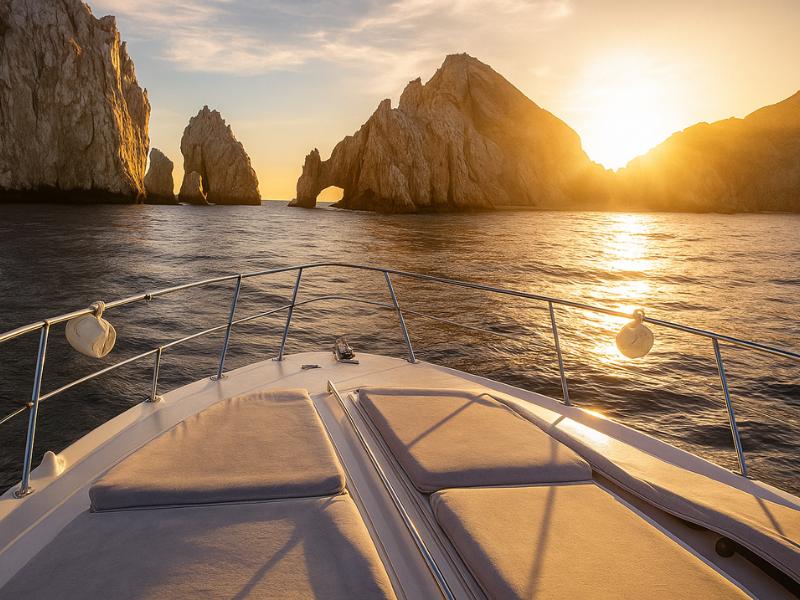
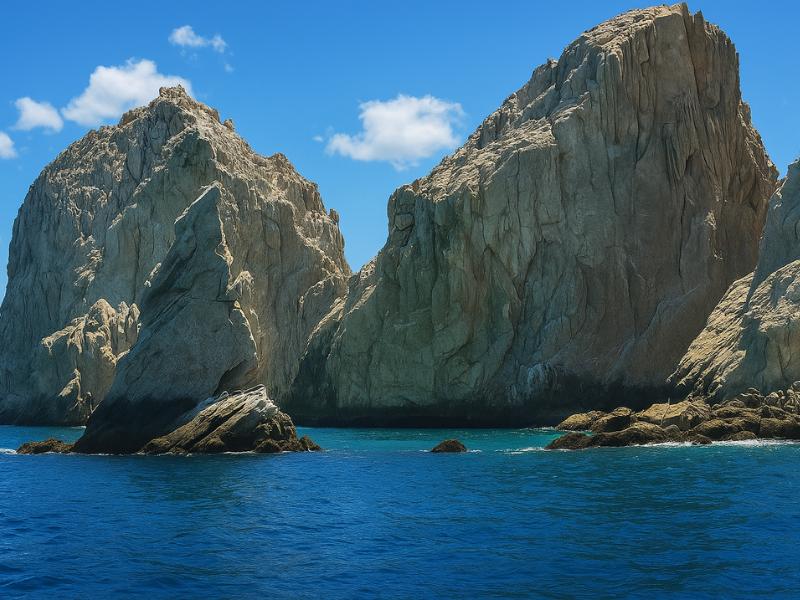
El Arco And Lover's Beach By Boat: Seeing Cabo's Arch On A Whale Tour
El Arco stands at Land's End where the Pacific meets the Sea of Cortez, a few minutes out of the Cabo San Lucas harbour. Here is how boats approach it, which whale tours linger there, and when the light actually works.
Ways to see El Arco, by time on the water
Prices are the listed tour rates at writing; the water taxi is a dock-negotiated service and varies. In season, the boat options add whales to the same trip.
El Arco can be a quick water-taxi view, a beach-access plan or a fuller private coastal outing. Keep the free and simple choices visible while comparing what the yacht adds. Compare The Cabo Tour Options Below →
Use a water taxi when stepping onto Lover’s Beach is the goal. Choose the private 45-foot yacht for a three-hour coastal outing with snorkeling equipment, lunch, paddleboards, shade and a toilet, and use the private whale charter only when whales are the primary intent.
What Exactly Is El Arco, And Why Does It Sit Where It Does?
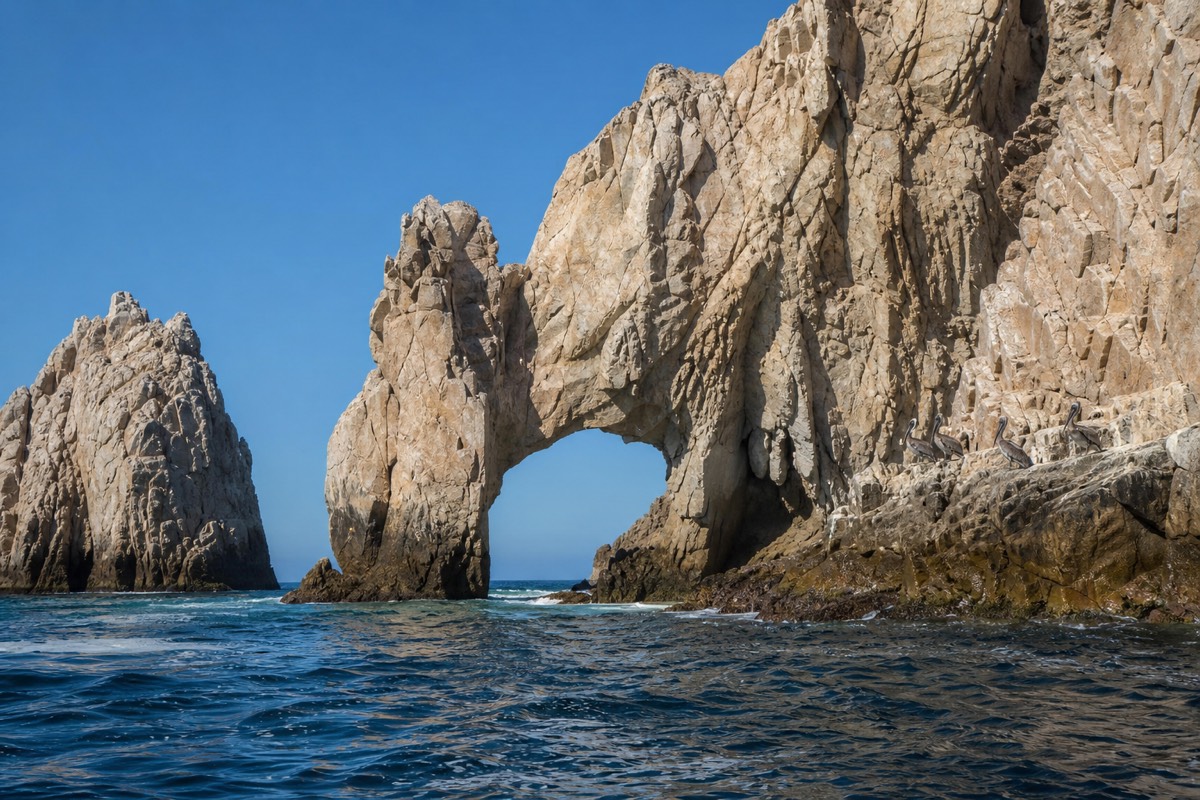
El Arco is a granite sea arch at the southern tip of the Baja peninsula, cut by surf into the headland where the Pacific Ocean meets the Sea of Cortez. It is a few minutes by boat from the Cabo San Lucas marina, and it marks the exact corner the whales round each winter.
The rock here is hard, pale and heavily jointed. Waves work into the weak lines from both sides of a narrow headland, and over a very long time the two hollows meet. What is left is an opening you can see daylight through, flanked by stacks and pinnacles that break the surface further out. Locals call the whole tip Land's End, and the arch is its centrepiece.
Geography is why it matters beyond photography. Two bodies of water meet at this point, the seabed drops away close to shore, and large animals pass within sight of a town. That is unusual. Most whale watching involves a long run to reach productive water, whereas boats leaving Cabo San Lucas clear the harbour mouth and are past the arch within minutes.
Many Cabo marina routes pass Land’s End, but the exact itinerary and pause at the Arch vary by product. Confirm the route on the live listing before treating the Arch and whale watching as one booking.
What Are Lover's Beach And Divorce Beach?
They are two faces of the same narrow spit of sand at Land's End. Lover's Beach faces the sheltered Sea of Cortez side and is the calm one. Divorce Beach faces the open Pacific, takes the full swell, and is not a swimming beach under any conditions.
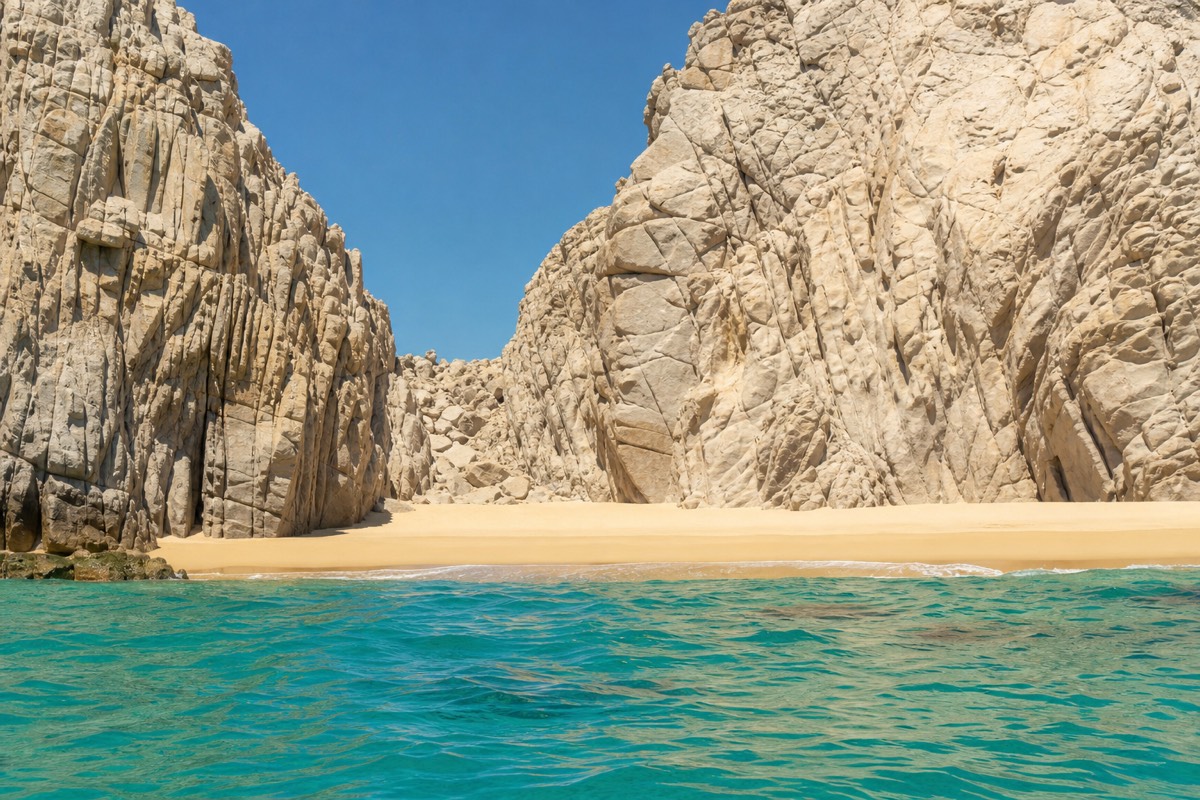
You can stand on the neck between them and look at two entirely different oceans, which is the reason the pair gets photographed so often. On the Cortez side the water is usually glassy in the morning, pale over sand, with boats idling offshore. Walk a short distance across the sand and the Pacific side is loud, with shorebreak dumping onto a steep beach and current running along it.
The width of that neck changes with the tide, so how much sand there is to walk on varies through the day and through the month. At higher water the crossing narrows considerably. Neither beach has facilities, shade or lifeguards, which shapes how long a visit is comfortable.
| Feature | Lover's Beach (Sea of Cortez side) | Divorce Beach (Pacific side) |
|---|---|---|
| Water | Sheltered, usually calm in the morning | Open Pacific swell, heavy shorebreak |
| Swimming | Generally fine near shore, watch for boat traffic | Not a swimming beach, strong current and dumping waves |
| Access | By boat or water taxi only, no road | Cross the sand neck from Lover's Beach |
| Best for | Short swim, snorkelling near Pelican Rock | Photographs, dramatic surf, standing well back |
| Facilities | None, bring water and take rubbish out | None |
| Crowds | Busiest late morning when water taxis run | Usually quieter, most people stop at the sand neck |
If you plan to get in the water at all, the sheltered side is the only reasonable option, and even there boat traffic is constant. Snorkellers generally do better a short hop away at Pelican Rock, Chileno Bay or Santa Maria Bay, which is where the snorkel itineraries head.
Where Is The Sea Lion Colony, And How Close Do Boats Get?
The colony hauls out on the rocks at Land's End, on ledges within sight of the arch itself. Boats pass close enough to hear them and smell them, holding position for a minute or two rather than approaching directly, because the animals are on protected rock inside a regulated area.
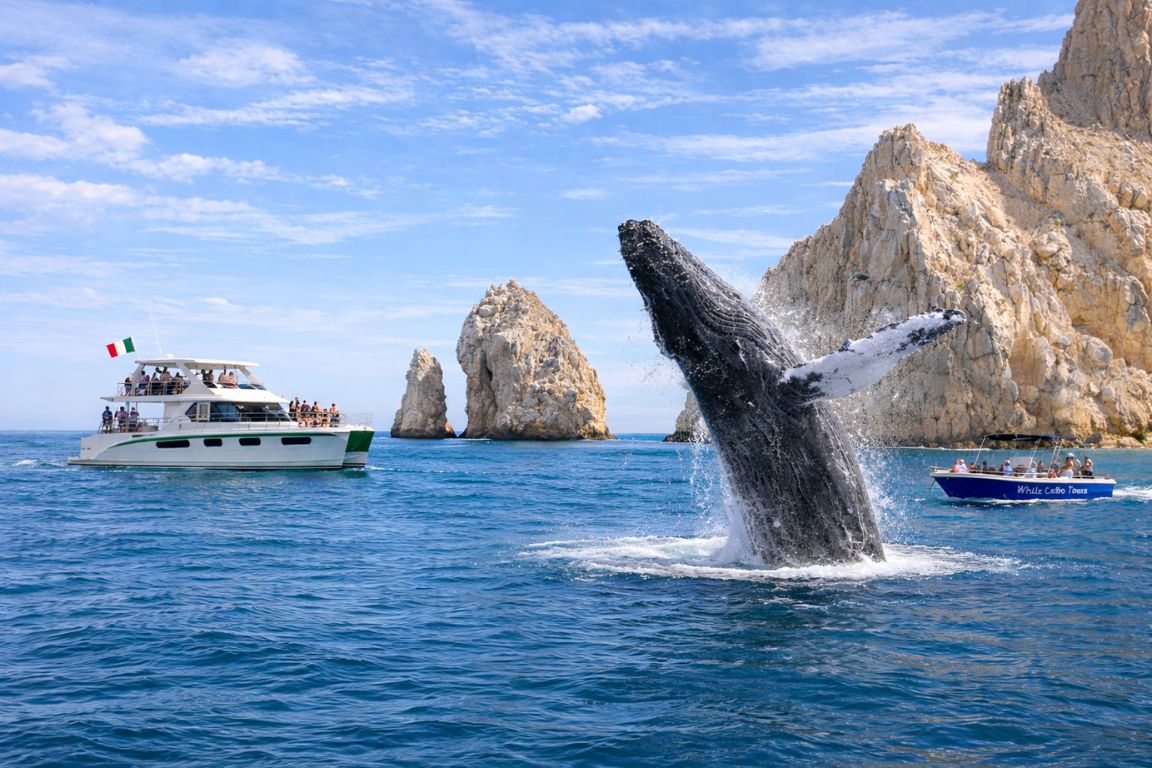
They are loud. The barking carries over an engine, and on a still morning you hear them before the boat rounds the point. Most of what you see is animals stacked on flat ledges just above the swell line, with a few swimming and rolling in the surge between the rocks.
Captains handle this stretch the same way they handle whales: approach slowly, hold, do not push. Mexican regulation covers marine wildlife across the area rather than whales alone, and licensed operators keep their distance from hauled-out animals. The animals are entirely used to boats, which is why they carry on doing nothing much while a catamaran drifts past.
For photographers this is the easiest wildlife on the whole trip. Sea lions are stationary, close and well lit in the morning, so it is a good place to test your settings before a whale forces you to react in half a second. The guide to shooting whales from a boat covers what those settings should be.
Which Boats Pass The Arch, And Which Ones Linger?
Nearly all of them pass it, because the route out of the harbour goes by. The difference is how long they hold. Sailing catamarans and private yachts build the Arch into the itinerary and slow down for it. Small biologist-led boats pass it efficiently and spend their time on whales.
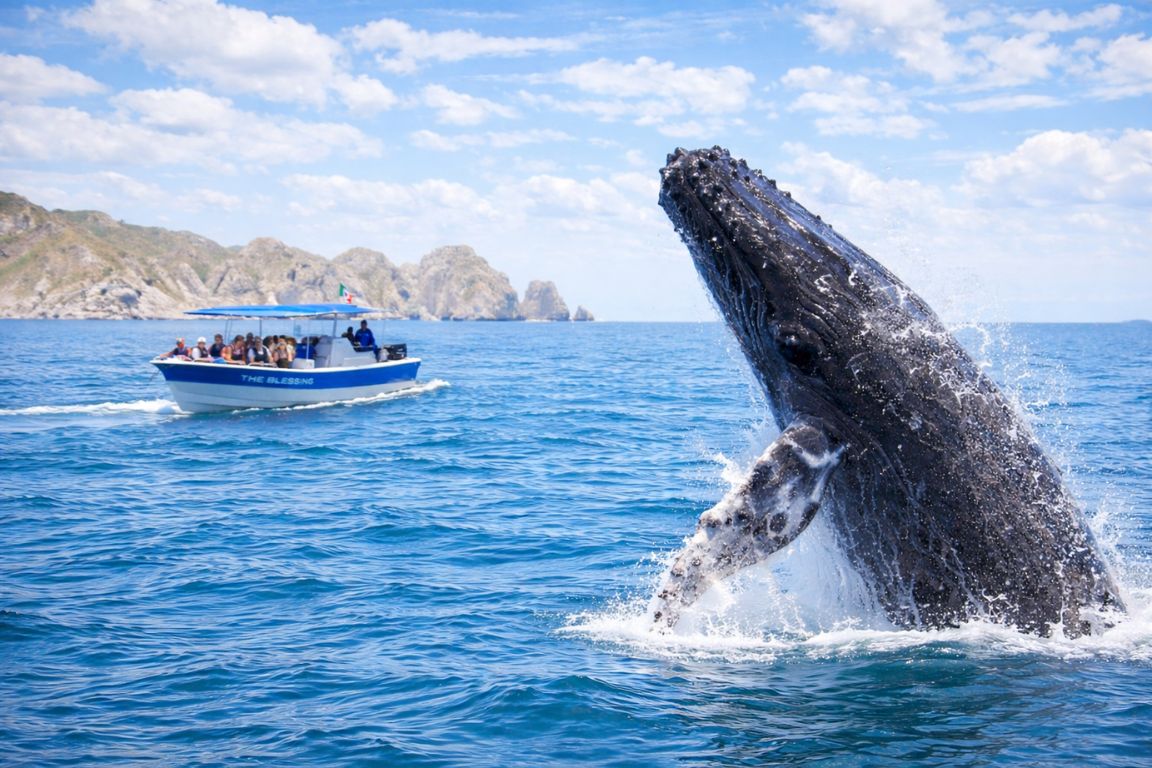
For a verified larger-boat format, the two-hour catamaran includes English and Spanish service, a light meal, a domestic bar and hotel pickup and drop-off arranged at least 48 hours ahead. Check the current listing for the route and date rather than relying on old price, rating or capacity figures.
A private charter changes the pace because the boat is reserved for your group. The verified Cabo Boat Adventures option runs three hours and includes food, drinks, snorkel gear and a paddleboard. It meets at IGY Dock C, does not promise hotel transport, and the assigned boat and language should be confirmed before paying.
For a focused small-group alternative, the verified biologist-led trip lasts 2.5 hours, caps the group at 12 and includes photos. Check the current route on the listing before assuming how long it pauses at the Arch.
| Verified boat option | Duration | Relevant inclusions | Route caveat |
|---|---|---|---|
| 45-foot private yacht | 3 hours | Lunch, premium bar, snorkel gear, towels and paddleboards | Coastal Arch/snorkeling product; not a dedicated whale trip |
| Cabo Boat Adventures private charter | 3 hours | Food, drinks, snorkel gear and paddleboard | Confirm current route, assigned boat and English |
| Catamaran whale watch | 2 hours on the water plus transfers | Light meal and domestic bar | Check the live itinerary for the Arch route |
Water Taxi Or Whale Tour: Which Way Should You See The Arch?
A water taxi puts your feet on Lover's Beach. A whale tour gives you the arch from the water with a guide and, in season, whales in the same two hours. They answer different questions, and plenty of visitors do both on different days.
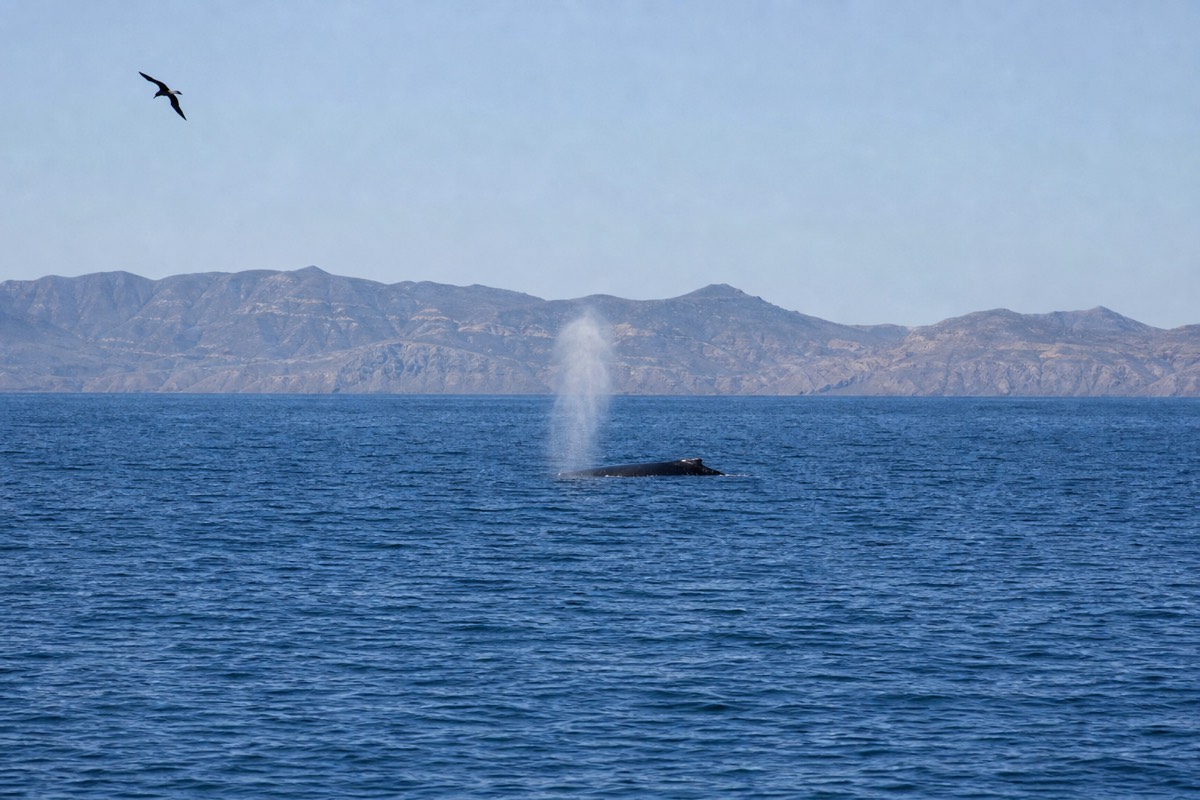
Water taxis are small open pangas that run from the marina and from Medano Beach. They are the only way to land on Lover's Beach, since no road reaches it. The trade is that you are buying transport rather than an experience: no commentary, no shade, no schedule beyond the one you negotiate. Agree the round-trip fare and the pickup time before you step aboard, carry small bills, and be clear about which beach and which return slot you have paid for.
The whale tour route covers the same rocks with a captain who does this several times a day and a guide explaining what you are looking at. You do not land, but between mid-December and mid-April you get the arch and whales on a single ticket, which is the strongest argument in its favour.
| Way to see the Arch | Best for | Check before going |
|---|---|---|
| Water taxi | Landing on Lover’s Beach | Agree fare and return pickup locally |
| 45-foot private yacht | Year-round private Arch and snorkeling day | Transport is extra; verify current route |
| Whale-focused boat | Whales are the primary goal in an eligible month | Confirm date and that the live itinerary includes the Arch |
When Is The Light Best For Photographing The Arch?
First light and the last hour before sunset. Early on, the granite takes warm colour and the sea has no chop to scatter it. Midday flattens everything and puts the sun behind the arch from most angles. Late afternoon gives silhouettes rather than texture.
Direction matters as much as time. The arch sits at the tip, so a boat can be north, south or west of it depending on the route, and each side gives a different picture. Morning boats usually approach with the sun behind them from the Sea of Cortez side, which lights the rock face rather than backlighting it. That is the frame most people have in mind when they picture the arch.
Wind is the second variable and it is more predictable than people expect. Mornings are calm, afternoons build. Flat water gives you a reflection under the opening and a stable deck to shoot from. By mid-afternoon you are working with chop, spray and a moving horizon.
| Time of day | Light on the rock | Sea state | What to shoot |
|---|---|---|---|
| Sunrise, first 30 minutes | Warm, low, strongly directional | Usually glassy | Colour on the granite, reflections under the opening |
| 07:00 to 09:00 | Clean side light, good texture | Calm | The classic side-on arch frame, sea lions on the ledges |
| 09:00 to 11:00 | Bright, contrast building | Light chop | Turquoise water, boats for scale |
| Midday | Flat and harsh, blown highlights | Choppy | Detail shots, sea caves, skip the wide view |
| 15:00 to 17:00 | Warming again, sun moving behind | Wind up, swell building | Backlit spray, waves through the opening |
| Sunset hour | Silhouette, sky colour behind the rock | Variable | Shapes rather than texture, from a sunset cruise or shore |
Can You See The Arch And Whales On The Same Trip?
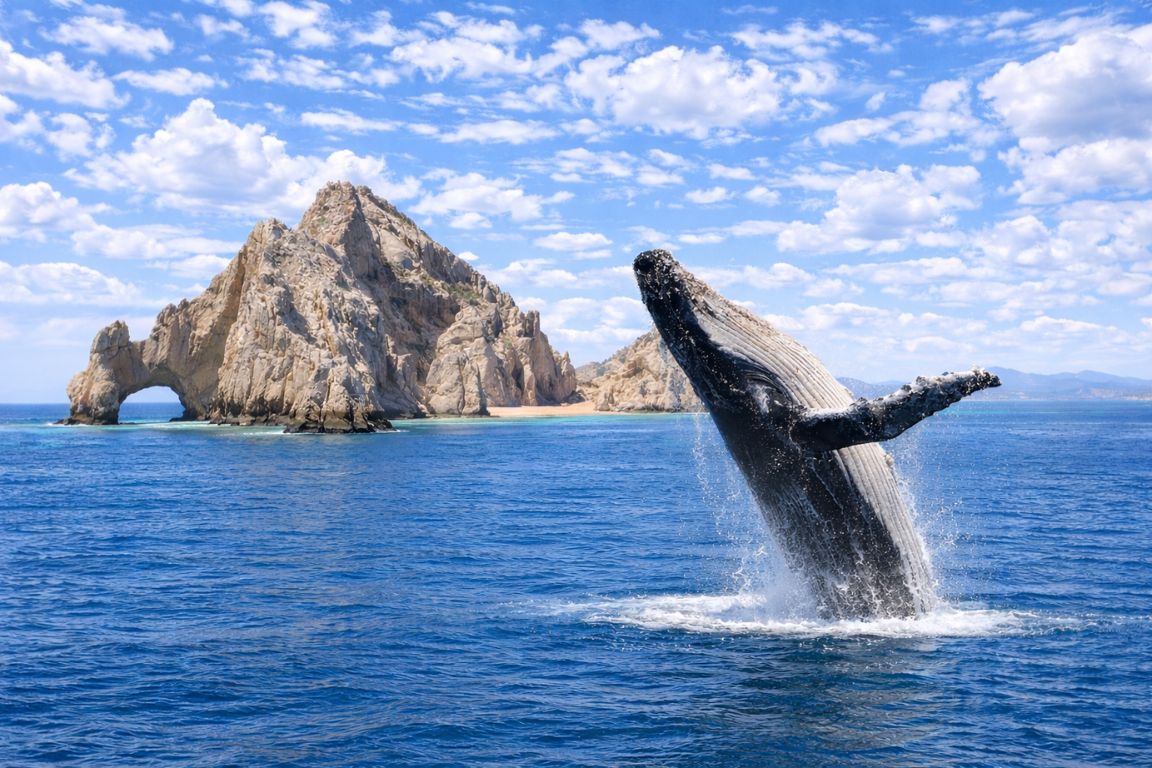
A Cabo whale itinerary may pass Land's End, but the exact route belongs to the current listing. January through March is the clearest general planning window; confirm a December or April date before expecting both experiences on one booking.
This is the single most useful fact for anyone planning a short Cabo trip. Visitors often budget a separate morning for Land's End and another for whales, then discover on the boat that they have paid twice for one route. Outside whale season the arch trip stands alone. Inside it, the whale tour absorbs it.
January through March is the strongest general window for combining the Arch with whale watching. December and April need a live date check, and no close sighting or breach can be promised. Outside whale season, choose the boat for the Arch, beach access or snorkeling rather than whales.
Timing within the day still matters. A morning departure gives calm water for both halves of the trip, which helps the arch photographs and helps the whale watching, since spotting a blow at distance is much harder across a broken surface. Afternoon departures see the same rocks in worse conditions.
What Do Sea Conditions Do To The Arch Route?
Swell decides how close a boat goes and how long it holds. Calm mornings allow a slow pass with the engines down. On a building Pacific swell the captain keeps more water between the hull and the rocks, moves through faster, and the deck becomes a poor camera platform.
The tip of the peninsula is where two sea states meet, so conditions can change within a few hundred metres. It is common to leave the harbour on flat water, round the point and find the Pacific side lumpy. Nothing about that is dangerous on a licensed boat, but it does explain why two people who booked the same tour a week apart describe different experiences.
| Condition | What the captain does | What you experience | Your move |
|---|---|---|---|
| Glassy, early morning | Slow pass, engines down, holds position | Reflections, sea lion sound, steady deck | Get to the bow rail early |
| Light chop | Normal route, brief hold | Comfortable, mild movement | Brace against the rail, shoot in bursts |
| Building afternoon wind | Wider line off the rocks, quicker pass | Spray on the windward side, tilting horizon | Sit low and central, protect the lens |
| Heavy Pacific swell | Stays well off the formations | Distant views, real boat motion | Take motion sickness medication before boarding |
| Strong onshore wind | May reroute into the Sea of Cortez side | Sheltered water, different angle on the arch | Accept the change, the whales do not care |
| Weather cancellation | Rare, decided by the operator | Reschedule or refund per the listing terms | Book early in your trip to leave room to move |
How captains read all of this, and what the safety framework behind it looks like, is covered in the guide on boat safety and sea conditions in Cabo.
What Does A Two-Hour Arch And Whale Route Actually Look Like?
Ten minutes to the rocks, ten minutes among them, then roughly ninety minutes of open-water searching before the return. The arch bookends the trip, since you pass it again coming home, usually with better light on the return leg from a morning departure.
The sequence below matches the itineraries operators publish for the standard two-hour departures. Private charters stretch each block, and the sunrise trip shifts the whole thing earlier so the rocks are lit warm on the way out rather than on the way back.
| Stage | What can be stated safely |
|---|---|
| Before departure | Confirm the exact meeting point or pickup window |
| Coastal route | Check the live itinerary for the Arch, beaches and snorkel stop |
| Whale search | Wildlife location and behavior vary; no timed sighting can be promised |
| Return | Use the listing duration and add separate transfer time where required |
Can You Walk To Lover's Beach?
No. There is no road, path or staircase down to it. Lover's Beach is reachable only by water, whether that is a water taxi from the marina or Medano Beach, a tour boat that anchors nearby, or a long swim that nobody sensible attempts through boat traffic.
That isolation is most of the appeal. A beach you can drive to at the end of the Baja peninsula would look very different by ten in the morning. As it stands, the number of people on the sand at any moment is capped by how many pangas have run in that hour.
It also means you need a plan for getting off it. Water taxi operators work on return slots, and the sensible approach is to fix the pickup time and the fare before you leave the marina, then stay near the landing point as it approaches. Phone signal is unreliable in the lee of the rocks, so do not rely on calling anyone.
Bring water, sun protection and nothing you cannot carry through a wet landing. There are no facilities, no shade beyond what the rocks throw early and late, and no shop. An hour or two is the natural length of a visit, which fits neatly either side of a whale tour on the same morning.
How Should You Fit The Arch Into A Short Cabo Trip?
Do not give it a slot of its own during whale season. Book a morning whale tour that names the Arch in its itinerary, and you have covered both. Spend the freed half-day on Lover's Beach by water taxi, or on a snorkel stop at Pelican Rock or Chileno Bay.
On a three-night trip that ordering works well. Day one lands and finds the headland from shore at Medano Beach in the evening, which costs nothing and sets up what you will see up close later. Day two is the boat: arch, sea lions, whales, back by mid-morning. Day three picks whatever the first two made you want more of.
Visitors staying at the eastern end of the corridor should read the San José del Cabo transfer guide first, because the marina is 33 km away and the morning needs a plan. Everyone else can walk to it.
One last piece of expectation management. The arch photographs better than it measures. It is not enormous, and first-time visitors sometimes register that before they register the setting: two oceans meeting at the end of a peninsula, sea lions on the rocks, and in winter, whales rolling through the same water. Seen as a place rather than a landmark, it earns the trip. If you want to weigh the boats against each other before choosing, the comparison of Cabo whale watching boats lays out the options.