Can You See Whales From The Beach In Cabo?
Free shore watching in Cabo is real, but each outing depends on whale location, visibility and patience. Here is where to look, what a distant sighting may look like through binoculars, and what changes when you join a boat tour.
Keep the free shore plan if confirmation is enough; pay for a boat when behavior, sound and interpretation change the value. Compare The Cabo Tour Options Below →
Elevation, binoculars and low glare make shore watching useful. A boat adds water-level scale, a guide and, on the biologist trip, guide photos and a hydrophone when conditions allow.
Can You See Whales From The Beach In Cabo?
Yes, you can see whales from shore in Cabo during the winter season, though sightings vary from day to day. Blows are the easiest sign to spot from an elevated Pacific-side viewpoint or a Medano-facing terrace, and binoculars can help with distant views.
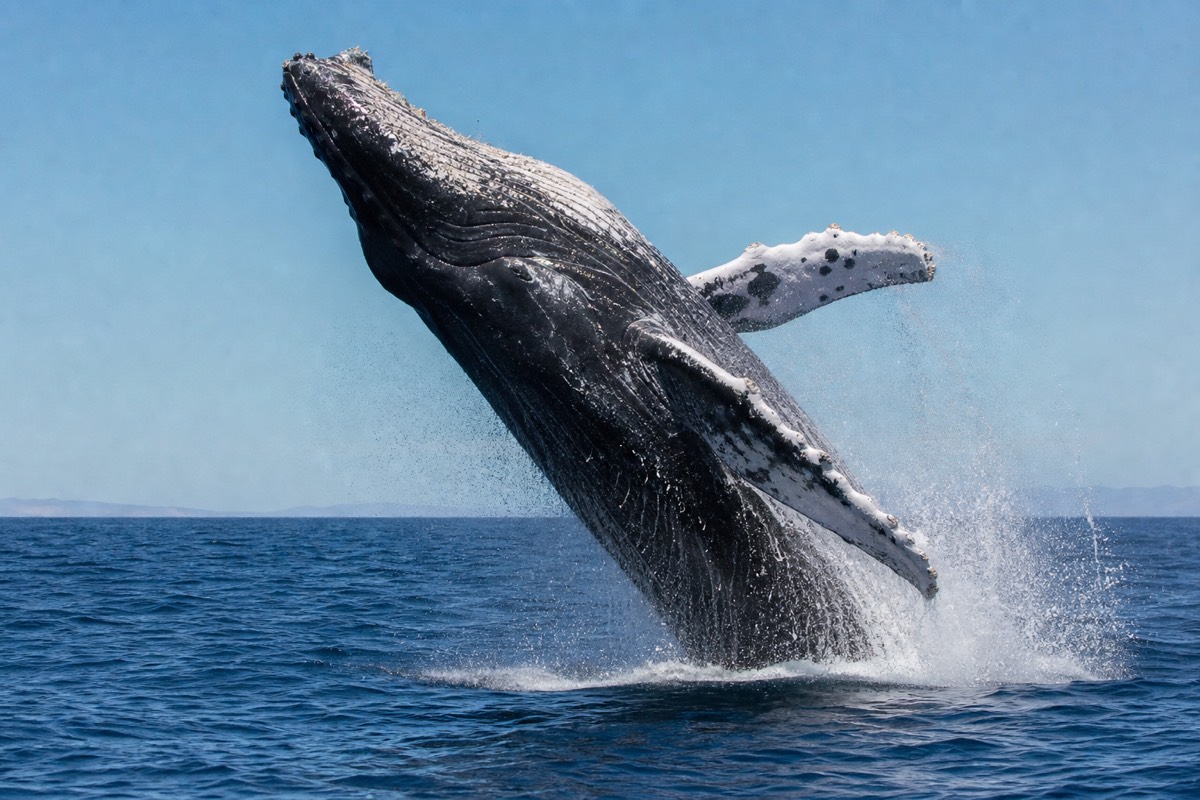
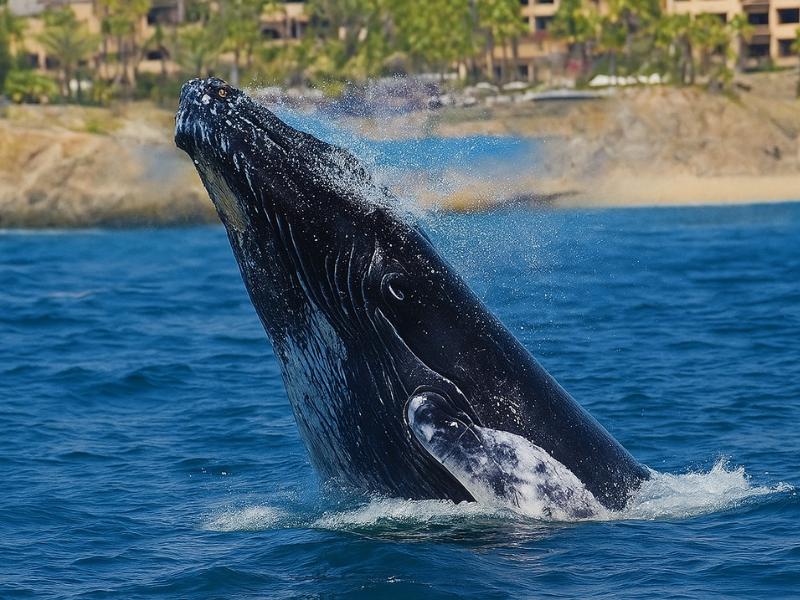
Shore sightings are not a consolation prize. Cabo San Lucas sits where the Pacific meets the Sea of Cortez, and humpbacks use the Los Cabos region during winter, so a patient observer may catch a blow or a dark back from land. The catch is scale: a balcony view compresses almost everything dramatic about the animal, and some watches end without a sighting.
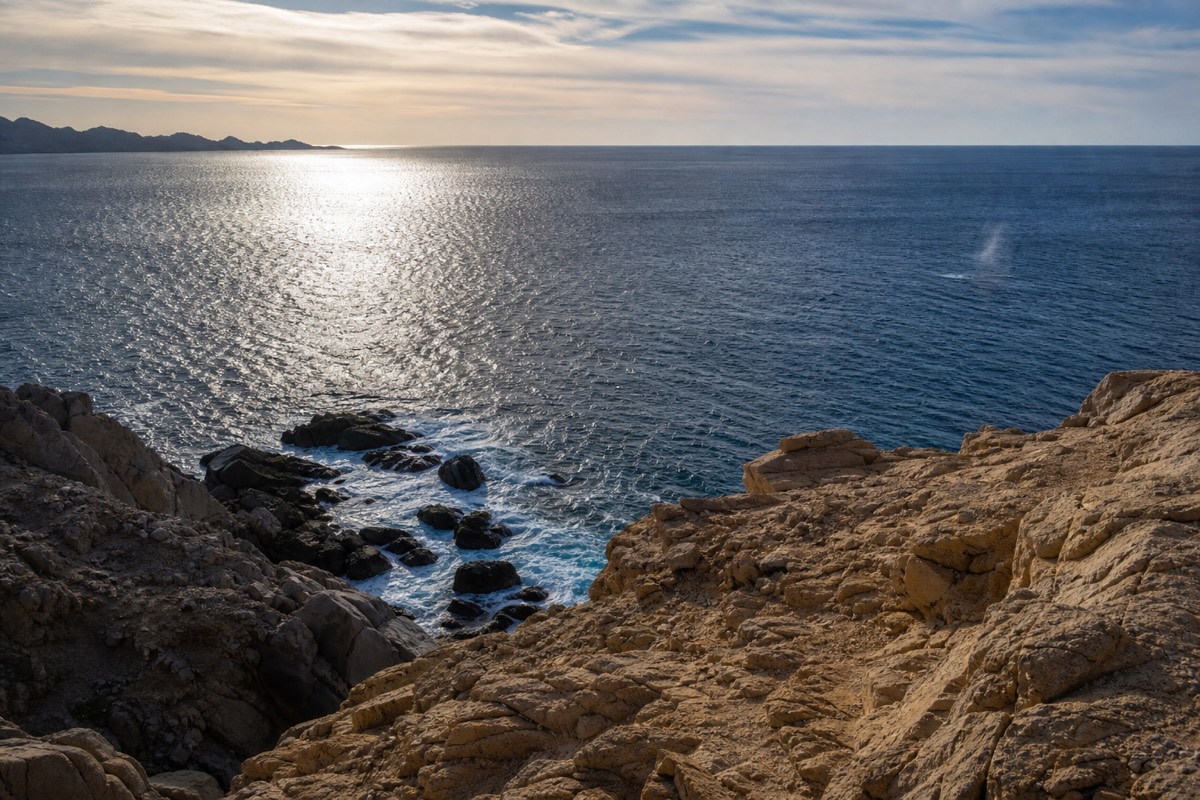
People who succeed at shore watching tend to do the same two things. They scan the horizon rather than the middle distance, because a blow is easier to catch against open sky than against textured water. And they keep watching the same patch of sea for a few minutes after a first sighting, since a traveling whale surfaces on a rough rhythm and usually gives you a second and third look before it moves on.
Where Along The Shore Should You Actually Stand?
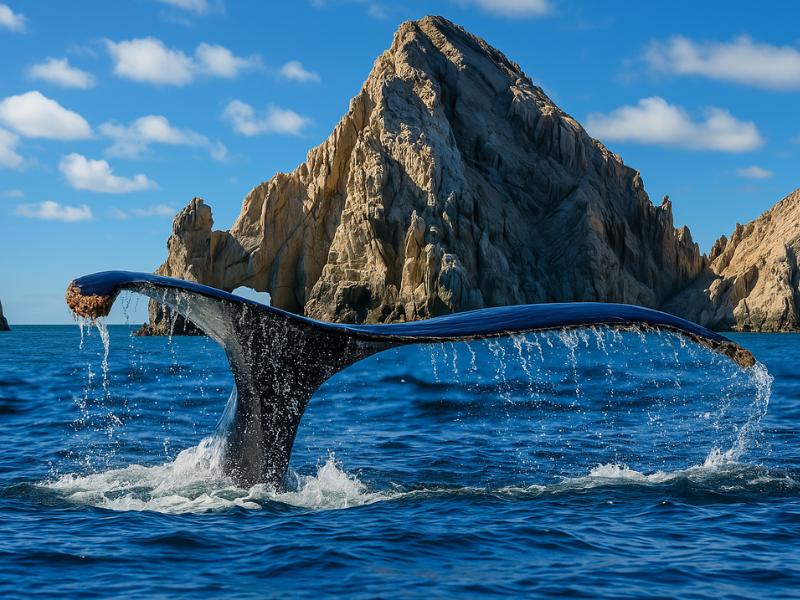
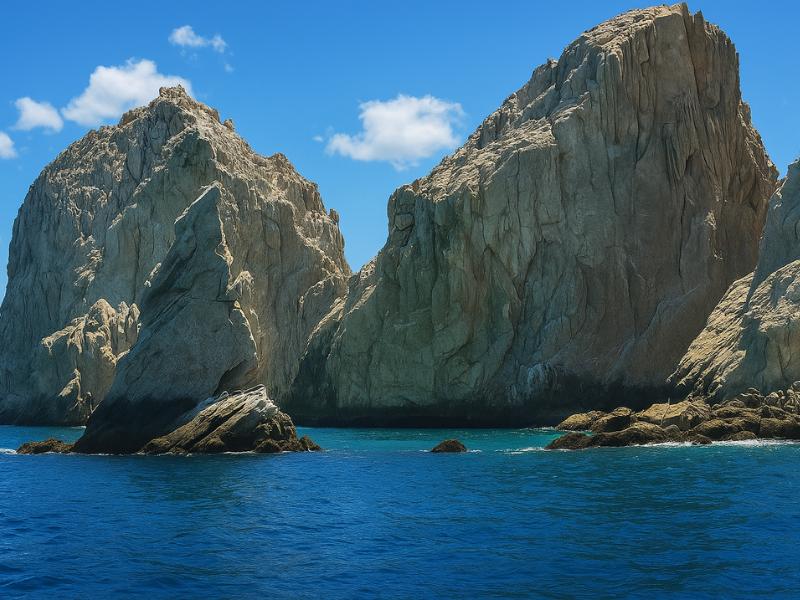
Height beats proximity. A viewpoint two or three floors above the water widens your search area far more than walking closer to the surf, which is why Pacific-side clifftop terraces and upper hotel floors facing Medano Beach out-perform standing at the waterline. Land's End gives a fixed reference for judging distance.
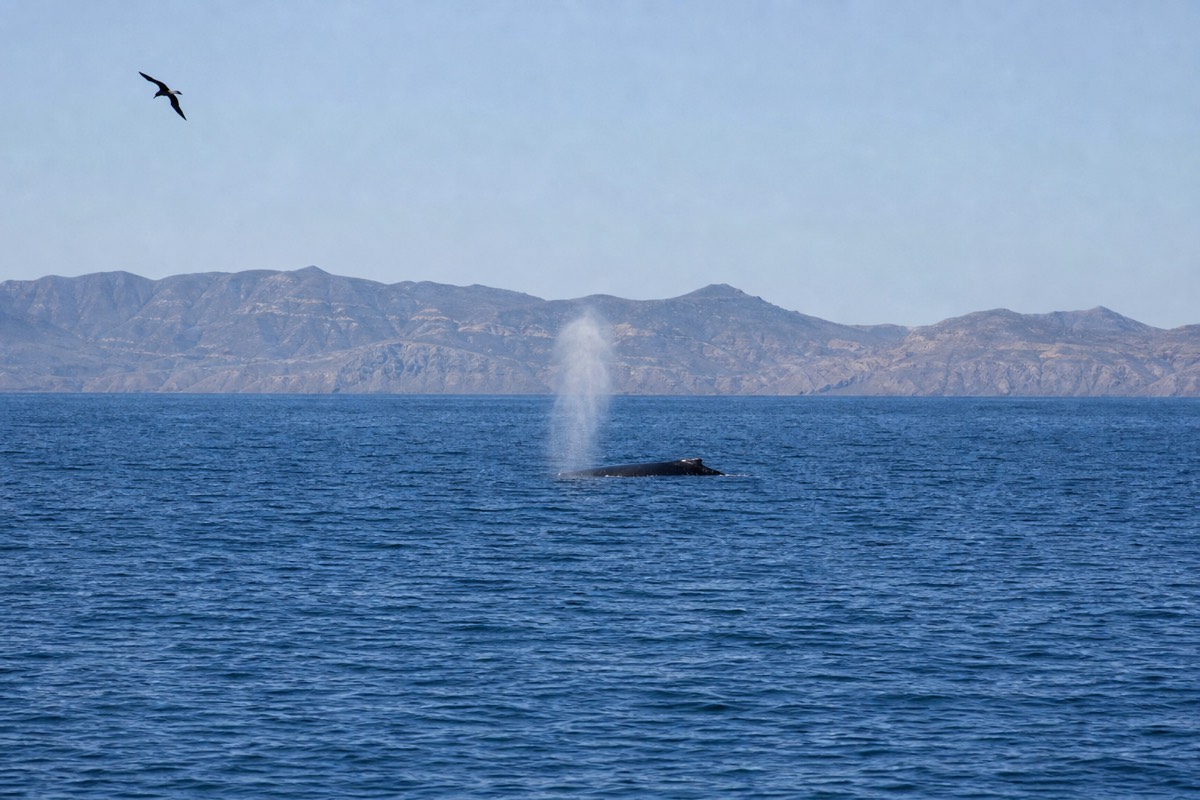
The Pacific side is the one to prioritize if you have a choice. Whales moving down the outer coast pass wide, open water there, and the elevated ground along that stretch means nothing blocks your sightline. On the Sea of Cortez side, hotels and restaurant decks facing Medano Beach look out across the bay toward Land's End, and the rocks at the point double as a distance marker: once you know how far away the arch is, judging whether a blow is near or far becomes much easier.
Two practical notes. Wind matters more than most people expect, because a blow in a stiff breeze disperses in about a second instead of standing up as a visible plume. And glare kills shore watching outright, so a viewpoint with the sun behind you is worth more than a viewpoint slightly closer to the water. If you want the geography laid out properly, our rundown of the best places to see whales in Cabo covers both coastlines.
Which Months Are Worth Watching The Horizon?
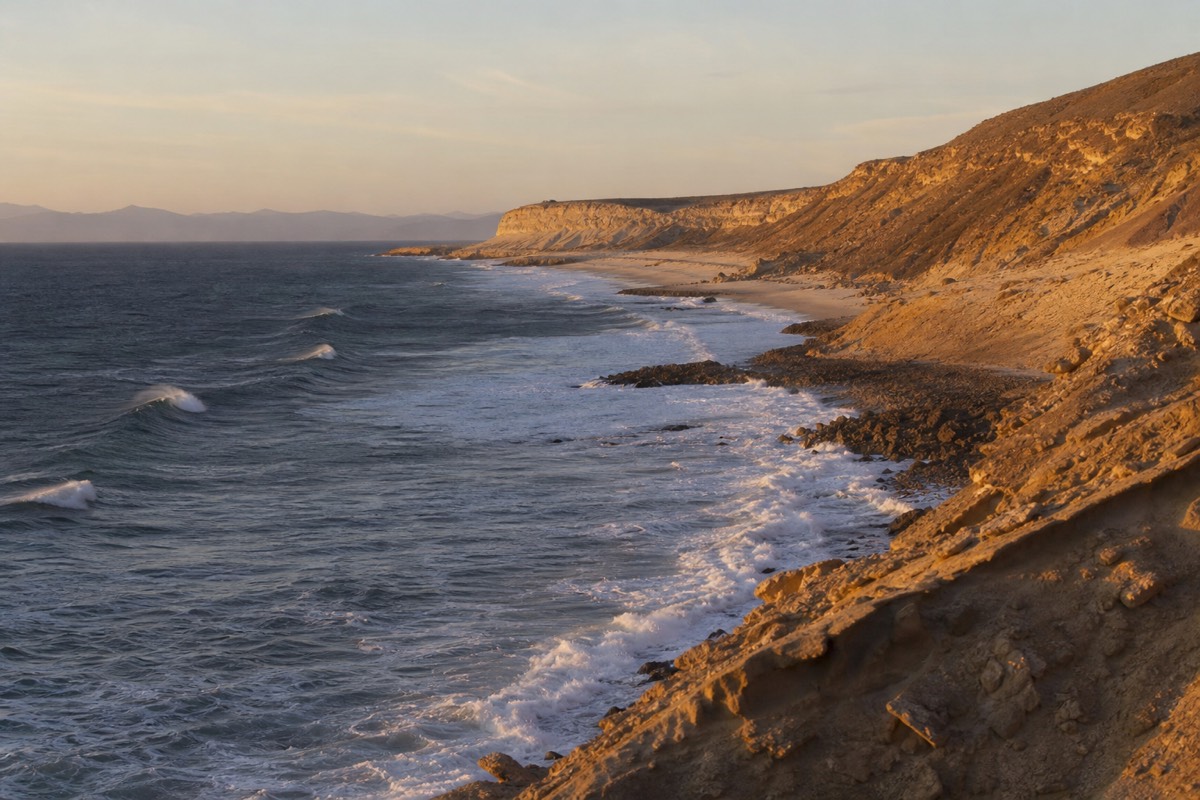
Mid-January through February is a strong time to try shore watching because humpbacks are common in the Los Cabos region during winter. Even then, boat sightings do not translate into predictable balcony or beach views. December and April can still produce sightings; November is possible but less dependable for a whale-focused plan.
| Period | What shore watching may show | Planning expectation |
|---|---|---|
| November | Occasional early humpback presence is documented in Los Cabos | Possible, but too inconsistent for a whale-focused plan |
| December | Migration activity builds and varies by day | Possible, with sightings varying from day to day |
| January | Core winter season; calm water can make blows easier to scan | Strong seasonal fit, though shore sightings remain uncertain |
| February | Core winter season; whale location and behavior still vary | Strong seasonal fit, but breach distance is unpredictable |
| March | Humpbacks remain in the region and mother-calf pairs may be present | Good seasonal fit, with day-to-day variation |
| April | Late-season presence is documented, with activity varying through the month | Possible; check the current season notice rather than a permanent cutoff |
SEMARNAT sets commercial whale-observation dates and restricted zones for each area in an annual notice, so Cabo does not have a permanent December 15-to-April 15 regulatory window. Check the current notice and tour schedule for exact operating dates. The broader season guide explains the usual migration pattern and what changes across the winter.
What Shore Watching Cannot Give You
Three things, and they happen to be the three things people remember. Behavior detail: the difference between a tail slap and a full breach is invisible past a certain distance. Song: humpback males sing all winter, and you hear it only through a hydrophone. And calves, which stay close to their mothers in water you cannot see into from land.
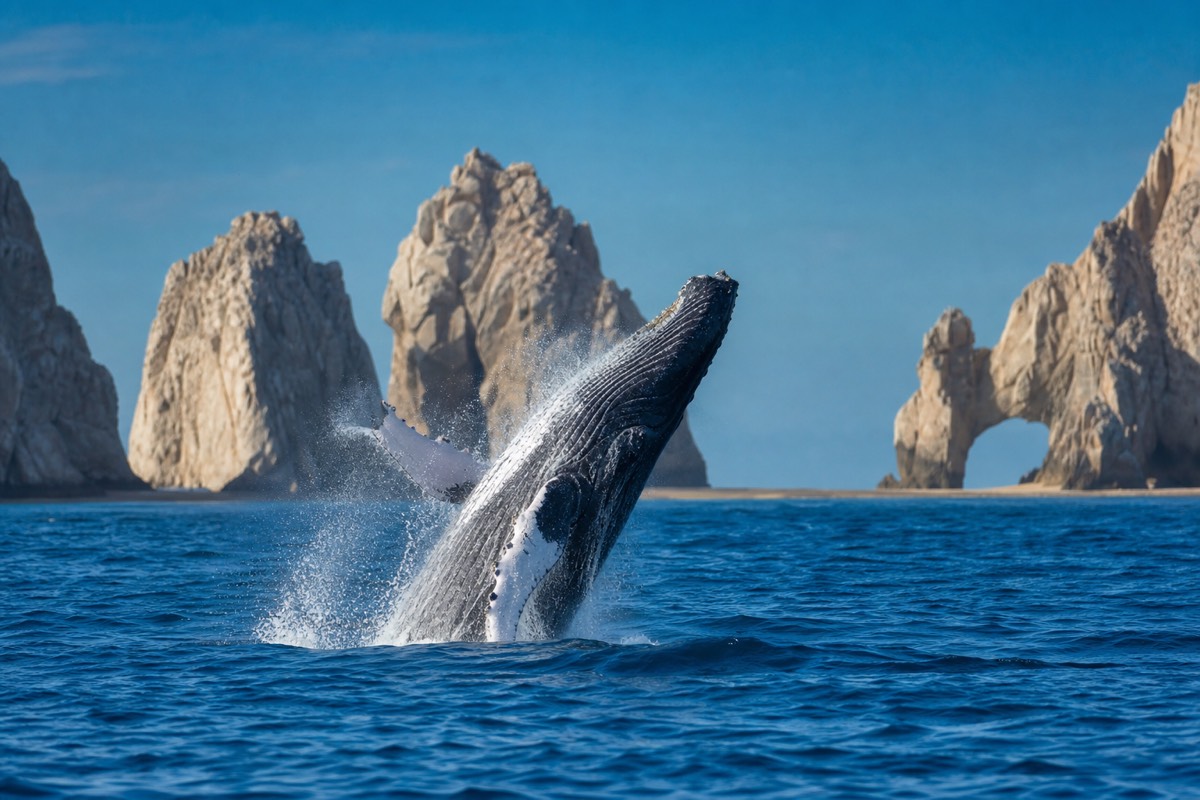
Distance compresses everything. From a terrace, a pectoral slap and a spy-hop look like the same small white disturbance. On the water, they are two completely different behaviors, and a guide who knows the species will call which one you are about to see a beat before it happens. The small-group trips that carry a marine biologist exist for exactly this reason, and the shared departures Cabo Whale Tours lists all leave from the main marina dock in Cabo San Lucas.
The hydrophone is the part nobody anticipates. Male humpbacks sing through the breeding season, long structured sequences that repeat and change over weeks, and several Cabo operators drop a hydrophone and put the audio through the boat speakers. It is the one element of a whale encounter that no viewpoint, no camera and no amount of patience on land can substitute.
Mother and calf pairs are the other gap. They favor calmer, sheltered water and they surface quietly, which is precisely the sighting profile that vanishes at distance. March is when those pairs are most present. From shore you would likely never register them at all.
When Does A Boat Earn The Upgrade?
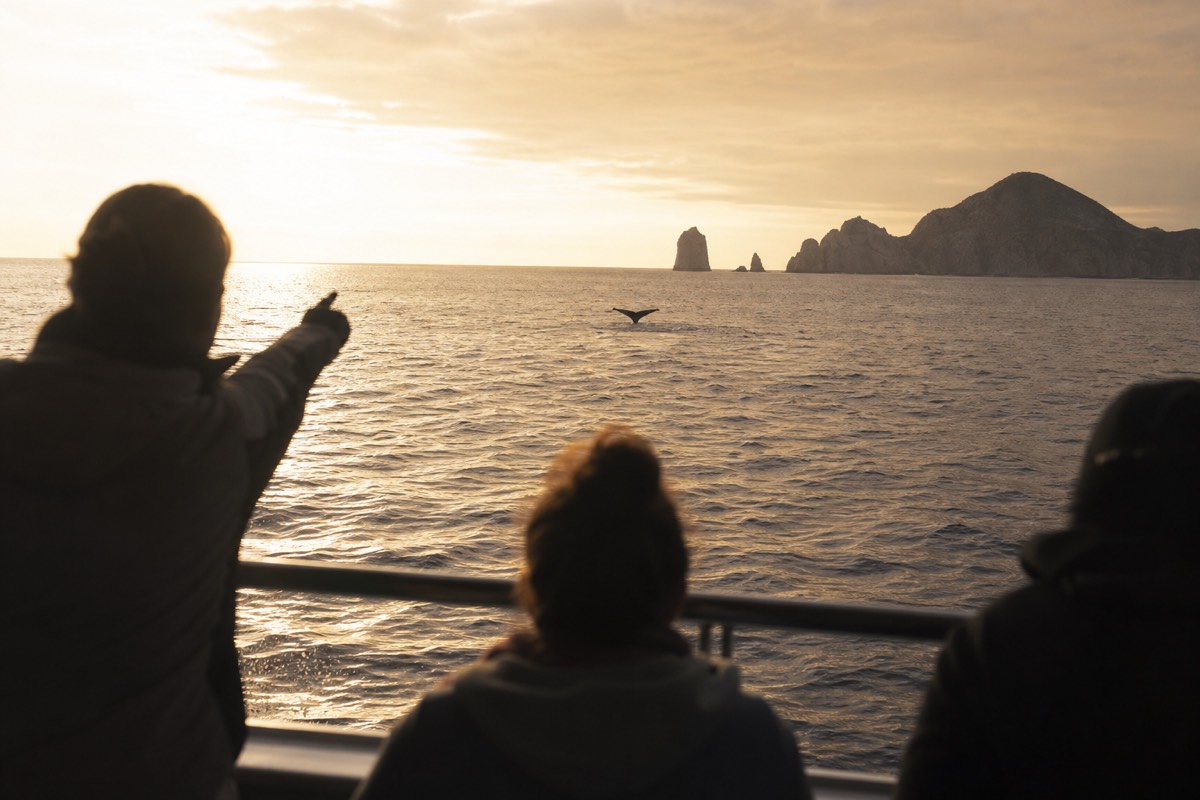
When you want behavior rather than confirmation. Shore watching answers the question "are there whales here". A guided trip answers "what are they doing, how big are they really, and what might a hydrophone pick up when conditions allow". Check the live listing for your date instead of using a static price comparison.
| What you get | From shore | On a whale-watching boat |
|---|---|---|
| Cost | Free | Check the live listing for your date |
| Blows and traveling whales | Possible with binoculars | Potentially clearer at water level, depending on distance and conditions |
| Breaching and tail slaps in detail | May appear as a distant splash | Can be easier to follow when whales display at a suitable distance |
| Hydrophone listening | Not part of shore watching | Available on some boats when equipment and conditions allow |
| Mother and calf pairs | Possible but difficult to identify at a distance | May be observed during the seasonal migration; each trip is different |
| Photographs | A long lens helps with distant subjects | Some listings include guide photos; check the stated inclusions |
| Weather and visibility | Wind, glare or rain can reduce what you see from land | Sea and weather conditions affect comfort, visibility and route |
Morning can offer cooler air and useful light, but sea conditions and whale behavior vary. Afternoon trips can still fit the itinerary. Compare the verified boat formats and check live departure details for your date.
What To Bring To A Free Whale Watch
Binoculars, first and by a wide margin. Anything in the 8x to 10x range turns a smudge into a recognisable animal, and without them shore watching is mostly guesswork. Add a hat, a seat you can hold for twenty minutes, and a viewpoint with the sun behind you.
Timing helps too. Early morning and the hour before sunset both give you low-angle light and usually calmer water, which makes blows stand out instead of dissolving into chop. Cloud cover is quietly your friend, since flat light removes the glare that ruins midday scanning.
One last thing worth doing properly: keep your distance discipline even from land. If you are on a paddleboard, a kayak or a rented jet ski and a whale surfaces nearby, the responsible whale watching rule is to hold position and let the animal choose, not to close the gap. NOAA Fisheries publishes the same guidance for recreational boaters in US waters, and the logic carries anywhere whales are breeding. Anyone weighing up the water in general can read our take on how safe Cabo boat trips really are.