Best Cabo Whale Watching Tours
Looking for the best Cabo whale watching tour? Choose small boats, expert guides, morning departures, and fair pricing—see which operators to book and which to avoid.
The Cabo San Lucas marina presents visitors with many whale-watching choices, and the signs do not always reveal the differences that matter. Compare the verified boat format, group limit, duration, guide, inclusions and meeting or pickup terms before choosing.
This guide compares the choices that change the trip: boat and group size, guide format, time on the water, inclusions, pickup or meeting-point logistics, and whether a shared or private boat fits your group. Use those differences to choose a product that matches your dates and priorities.
The best Cabo whale watch depends on what you want the boat to solve: guide depth, group size, transport, food or privacy. Use the section recommendations to compare those benefits before the complete end-of-article shortlist. Compare The Cabo Tour Options Below →
Start with the 2.5-hour biologist trip for a focused shared watch, compare the catamaran for arranged hotel transfers and a meal, and choose the private charter when a whole boat plus water activities matters most.
What Makes Cabo San Lucas Whale Watching Tours Different
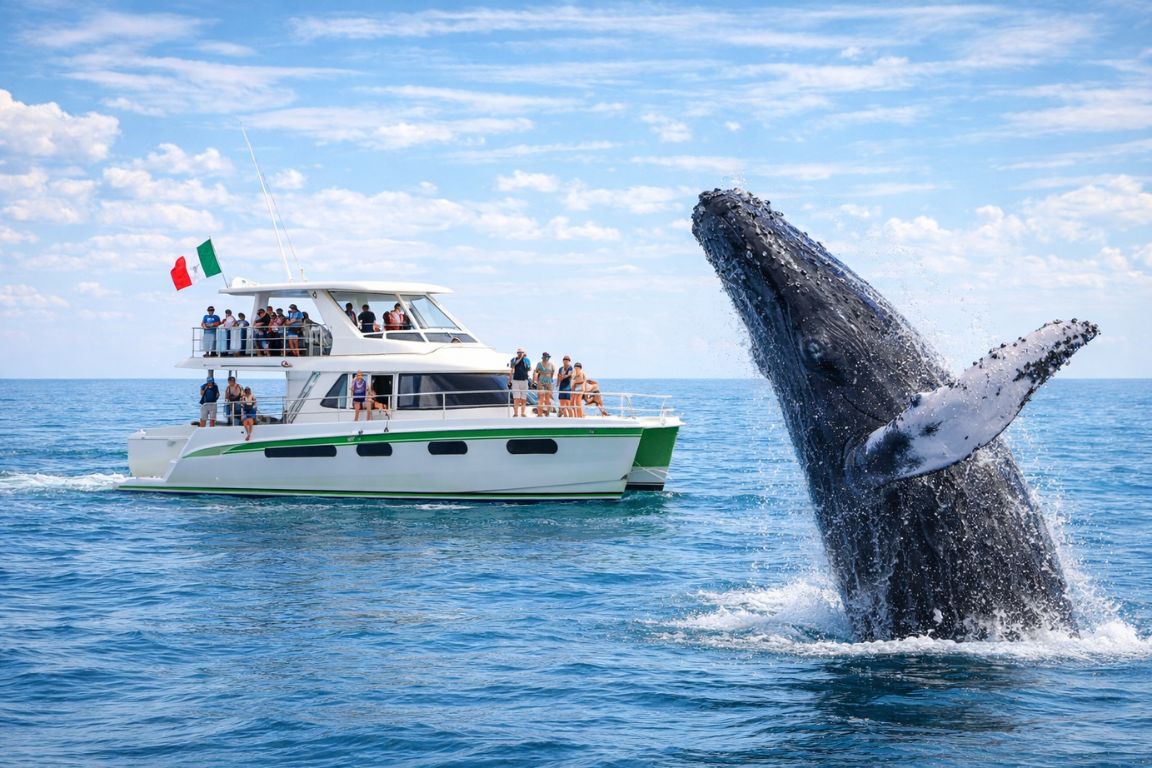
Boat size, guide format, duration and inclusions can change the experience. Compare those verified details on the specific listing rather than treating a price tier as a proxy for quality.
Boat size impact changes your entire whale watching experience. Small boats carrying 12-20 passengers maneuver quickly to follow whales, position perfectly for viewing angles, and give every passenger unobstructed access to railings and prime viewing spots. When a whale breaches on the port side, you move three feet and you’re there. The boat captain can make tight turns, adjust speed instantly, and position the vessel to maximize encounters without disturbing the whales.
Medium boats with 25-35 passengers offer some maneuverability but start feeling crowded when everyone rushes to one side for whale sightings. You’re competing for rail space, taller people block shorter people’s views, and the boat takes longer to reposition when whales move.
Large boats and catamarans holding 40-60+ passengers feel stable and comfortable but turn slowly, can’t chase whales effectively, and create viewing competitions. When whales surface on one side, half the passengers are stuck on the wrong side of the boat. By the time they navigate through the crowd, the whale has dived. Large boats work fine when whales are abundant and stationary, but struggle when whales are moving or encounters are brief.
Catamarans provide the most stable platform with least rocking motion, making them ideal for seasickness-prone passengers. The trade-off is size and maneuverability. Most catamarans carry 40-50+ passengers and can’t follow whales as effectively as smaller single-hull boats.
Guide quality differences separate educational experiences from glorified boat rides. Experienced marine naturalist guides know whale behaviors, predict movements, explain what you’re seeing, and teach you about humpback biology, migration patterns, and conservation. They identify individual whales by fluke patterns, explain why a whale is tail-slapping versus breaching, and position the boat based on reading whale behavior rather than just following randomly.
Basic captains point when whales appear and say “there’s a whale” without context or education. They don’t explain behaviors, don’t share fascinating details about what you’re witnessing, and treat whale watching as simply driving a boat near whales. The whales themselves don’t change, but understanding what you’re seeing makes encounters significantly more meaningful and memorable.
Experienced guides also know local waters intimately. They communicate with other experienced captains via radio, understand where whales congregate based on time of year and recent patterns, and maximize your chances of quality encounters through expertise rather than luck.
Tour duration variations directly impact how much whale watching time you actually get versus how much time you spend transiting to and from whale areas. Budget 90-minute tours include maybe 45-60 minutes of actual whale watching after subtracting 15-20 minutes travel each way to reach whale zones. These tours find whales, watch briefly, then rush back to the marina to load the next group.
Standard 2-2.5 hour tours provide 90-120 minutes of whale watching time, allowing you to follow whales longer, wait for behaviors like breaching, and not feel rushed. If the first whale you find is just logging calmly at the surface, you have time to search for more active whales rather than settling for whatever you find first.
Premium 3-4 hour tours offer extended time with whales, lunch or snacks, sometimes additional stops at Lover’s Beach or snorkeling spots, and the most relaxed pacing. These work well for photographers wanting optimal lighting conditions throughout different times of morning or early afternoon.
The tour duration directly correlates with how satisfied guests feel. Ninety-minute tours leave many people wanting more time, especially when whales are active and displaying interesting behaviors right as the tour ends. Two to three hour tours hit the sweet spot of sufficient whale time without overstaying (even amazing whale watching gets tiring after 3+ hours in sun and wind).
Group size effects change the social dynamic and personal attention you receive. Tours with 12-15 passengers feel intimate. The guide knows everyone’s names, answers individual questions, positions people for best photos, and creates a shared small-group experience. You’re not fighting strangers for space or shouting over crowd noise to hear the guide.
Medium groups of 20-30 passengers still allow reasonable personal interaction with guides but start losing the intimate feeling. You’re one of many faces, the guide speaks to the group generally rather than individuals, and viewing spots get competitive during prime whale moments.
Large groups of 40-60+ passengers eliminate any personal connection with guides. You’re in a crowd, guides use microphones to address everyone, and the experience feels impersonal and transactional. Some people prefer this anonymity and crowd energy, treating whale watching as an event rather than intimate wildlife encounter. Most people prefer smaller groups when they understand the difference.
| Verified factor | Biologist-led shared trip | Catamaran | Cabo Boat Adventures private charter |
|---|---|---|---|
| Format | Shared, maximum 12 | Shared; check current group limit | Private; boat assigned from a fleet |
| Duration | 2.5 hours | 2 hours on the water, plus transfers | 3 hours |
| Decision point | Learning, photos and small group | Hotel transfers, meal and domestic bar | Privacy, snorkeling and paddleboarding |
Types Of Cabo Whale Watching Tours Available
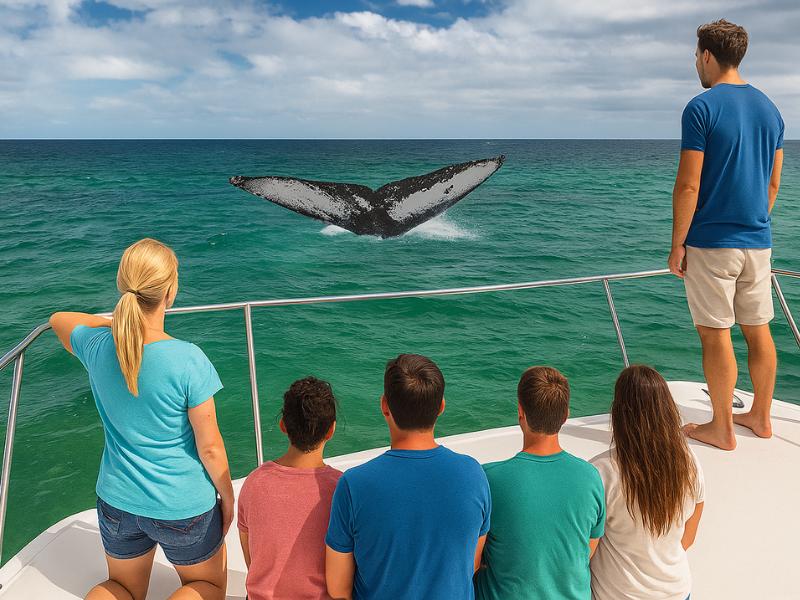
Shared tours vary by boat and product. The verified biologist-led option lasts 2.5 hours and caps the group at 12; the catamaran lasts two hours on the water and includes arranged hotel transfers, a light meal and a domestic bar.
A private charter reserves the boat for your group. The verified Cabo Boat Adventures product lasts three hours and includes food, drinks, snorkel gear and a paddleboard; confirm the assigned vessel, language, access and current terms.
Comfort features and inclusions vary by product. Use the live listing to verify seating, shade, restroom, food, drinks, group limit and guide format instead of assuming that a price label guarantees them.
A combined outing can trade whale-search time for other activities. The verified private charter includes snorkeling and paddleboarding, while the 45-foot yacht is a coastal snorkeling product rather than a dedicated whale trip.
For photos, verify the group limit, boat layout and whether crew photos are included. The biologist-led trip caps the group at 12 and includes photos; no product can promise a breach or a particular viewing angle.
| Trip | Best fit | Verified inclusions | Before paying |
|---|---|---|---|
| Biologist-led shared trip | Focused shared whale watch | Photos, water, restroom; hydrophone when conditions allow | Check date and Plaza Bonita meeting instructions |
| Catamaran | Visitors who want arranged hotel transfers | Light meal and domestic bar | Arrange pickup at least 48 hours ahead |
| Cabo Boat Adventures | Private group with water activities | Food, drinks, snorkel gear and paddleboard | Confirm assigned boat, language, access and Dock C instructions |
Small Boat Vs Large Boat Cabo Whale Watching Tours
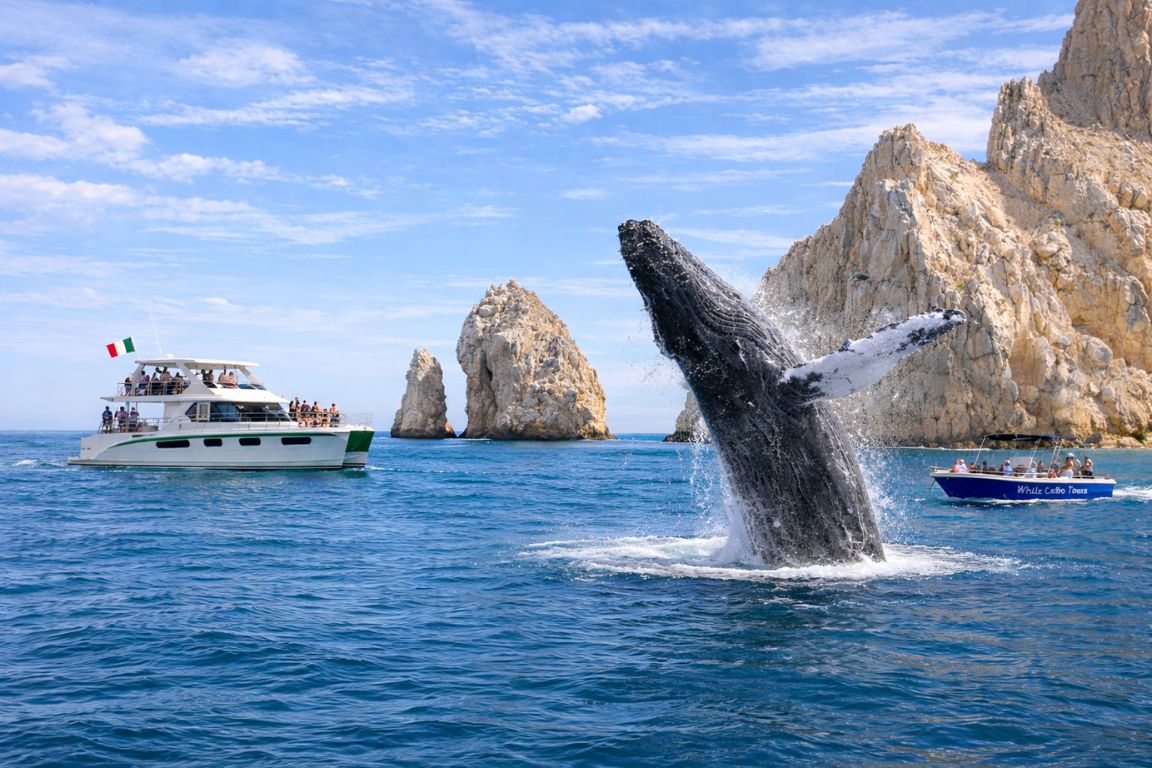 Small boat advantages center on maneuverability and intimacy. Boats carrying 12-20 passengers turn quickly when whales change direction, accelerate and decelerate smoothly to maintain optimal viewing distance, and position precisely to give passengers the best angles for watching and photography. When a whale surfaces 100 yards to the left, small boats reposition in 30 seconds. Large boats take 2-3 minutes turning their bulk, and by then the whale has moved or dived.
Viewing angles improve dramatically on small boats because every passenger can reach the railings without fighting through crowds. When whales breach on one side, you shift a few feet and you’re there with clear sightlines. The boat sits lower to the water than large vessels, putting you closer to whale encounters and creating more intimate, eye-level perspectives.
Personal attention from guides happens naturally with 12-20 people versus impossible with 50+ passengers. Guides learn names, answer individual questions, help position people for photos, and share the experience conversationally rather than broadcasting through microphones. You feel like you’re whale watching with a knowledgeable friend rather than attending a lecture for masses.
The intimate experience of small boats creates shared moments with your small group. Everyone witnesses the same breaches simultaneously, excitement feels collective rather than chaotic, and you bond with fellow passengers over spectacular encounters. The quieter atmosphere lets you hear whale exhalations and tail slaps clearly instead of being drowned out by crowd noise.
Large boat advantages start with stability. Big catamarans and large single-hull vessels rock less in choppy conditions, reducing seasickness significantly for sensitive passengers. The wider beam and heavier displacement smooth out wave motion, making the ride more comfortable for people worried about getting sick or those who just prefer solid footing.
Lower cost attracts budget-conscious travelers. Compare the complete live totals for the specific products rather than assigning fixed price bands to boat size. A family of four pays $240-320 on large boats versus $380-480 on small boats, a $140-160 difference that matters when traveling on tight budgets.
Bathroom facilities exist on most large boats, essential for people with medical conditions, young children with unpredictable bathroom needs, or anyone uncomfortable without restroom access for 2-3 hours. Small boats often lack bathrooms entirely or have tiny marine heads that some people find claustrophobic and unpleasant. Large boats offer actual bathrooms with space to move.
Shade structures cover portions of large boat decks, providing sun protection for fair-skinned passengers, seniors sensitive to heat exposure, and anyone wanting breaks from direct sunshine. Small boats typically offer minimal shade, leaving passengers in full sun for entire tours.
Real experience differences between boat sizes affect your actual whale watching beyond the marketing descriptions. On small boats, you see whales from every angle because the boat repositions constantly to optimize viewing. You watch whales breach from directly ahead, from the side, from behind as they dive, and from close enough to see barnacles on their skin. The captain positions expertly because maneuvering is effortless.
Large boats see whales from wherever the boat happens to be pointing when whales surface. Repositioning large vessels takes time and fuel, so captains position once and hope whales cooperate. Sometimes they do, sometimes whales surface on the far side requiring passengers to move across crowded decks while whales are visible for 30 seconds before diving.
Guide interaction on small boats involves actual conversation. You ask questions, guides elaborate, dialogue happens naturally. On large boats, guides announce information through speakers or megaphones to address everyone simultaneously. Questions get lost in crowd size or require shouting to be heard. The education becomes one-directional broadcasting rather than interactive learning.
Photo opportunities improve on small boats because you’re not fighting 40 other people for rail space all holding phones and cameras. You position yourself, take your time, adjust angles, and capture quality images without elbows in your ribs or someone’s head blocking your shot. Large boats create photography competitions where aggressive passengers camp at railings all tour while polite passengers miss shots entirely.
The social atmosphere differs dramatically. Small boats foster camaraderie among passengers sharing an intimate adventure. Conversations start naturally, excitement gets shared, and you leave knowing names and making temporary friends. A larger shared boat can feel busier, while a verified group cap gives a clearer sense of the onboard format.
| Format | Verified size detail | Logistics | Trade-off to check |
|---|---|---|---|
| Biologist-led shared boat | Maximum 12 | Plaza Bonita; no hotel transport promise | Not wheelchair accessible; restrictions apply |
| Catamaran | Check current group limit | Hotel pickup and drop-off arranged 48 hours ahead | Two hours is on-water time; not wheelchair suitable |
| Private fleet boat | Private; capacity depends on assigned vessel | IGY Dock C; no hotel transport promise | Confirm vessel, language and access |
For couples and honeymooners, compare the small-group trip’s 12-guest limit with a private charter’s exclusive booking. Use the current complete totals to decide how much privacy and the included services are worth to your group.
Serious photographers require small boats. The positioning flexibility, unobstructed rail access, and ability to follow whales for optimal angles make large boats completely unsuitable for quality photography. The crowding and limited movement doom photo opportunities.
Budget travelers with tight financial constraints should choose large boats accepting the trade-offs. Seeing whales from a crowded boat beats not seeing whales at all because you couldn’t afford better options. The whales themselves are the same regardless of boat size.
Seasickness-prone passengers benefit from large boat stability. The reduced rocking motion prevents or minimizes nausea for sensitive people. Small boats move more with waves, potentially triggering seasickness despite Dramamine and other precautions.
Families with young children face difficult choices. Small boats offer better whale viewing but lack bathrooms and space for restless kids. Large boats provide bathrooms and room to move but create viewing challenges. Consider your children’s specific needs: bathroom urgency versus attention span versus ability to see over crowds.
Large groups of 6-8+ people should evaluate private small boat charters. The per-person cost becomes competitive with group tour pricing while delivering vastly superior experience. For a larger party, compare the live shared total with the whole-boat total and decide whether privacy and included activities justify the difference.
Seniors prioritizing comfort should choose large boats with bathroom access, shade, seating, and stable platforms over small boat agility and viewing quality. Comfort and safety matter more than optimal whale watching angles for many older travelers.
First-time whale watchers often default to large boats due to lower prices without understanding the experience difference. If budget allows, first-timers benefit enormously from small boat experiences creating powerful memories and understanding of what whale watching can be at its best.
Not sure about taking kids or older family members? Our breakdown of is whale watching in Cabo safe helps you decide based on your group.
What’s Included In Different Cabo Whale Watching Tours
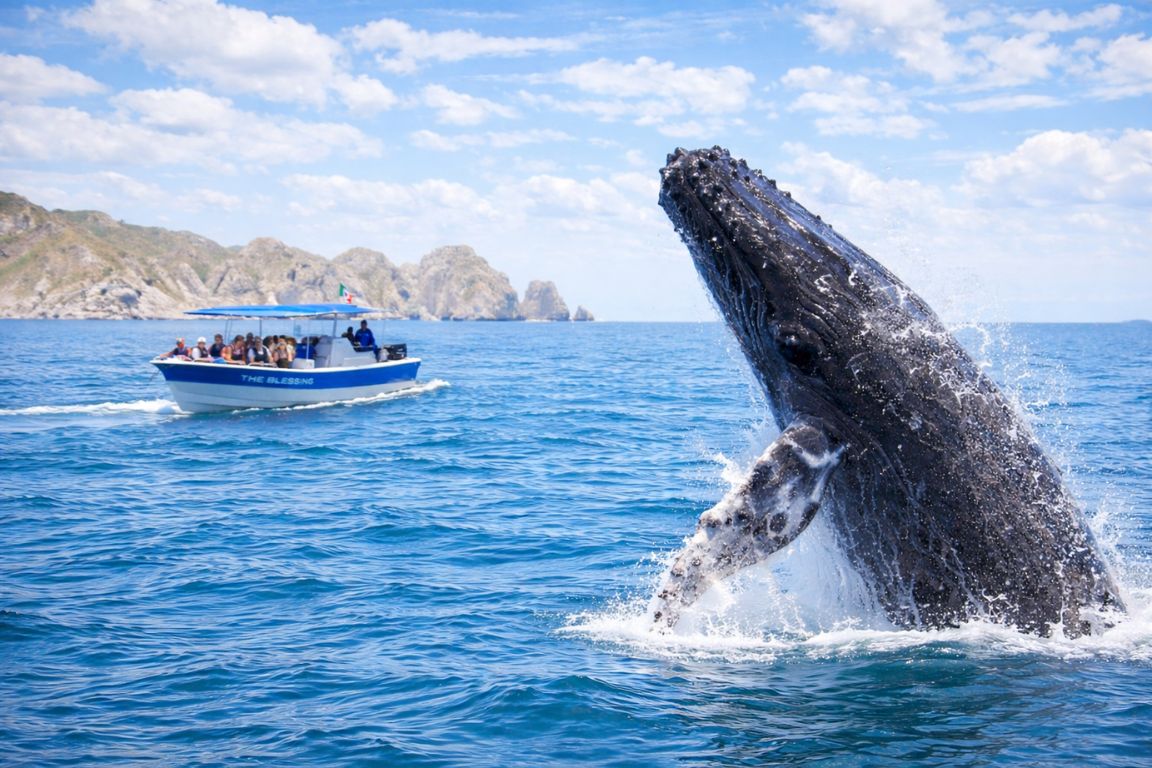
Basic budget tours include the boat ride, basic captain or guide, and bottled water. Mid-range tours add light snacks, experienced guides with education, longer durations, and better boats. Premium tours justify higher pricing with gourmet food and drinks, professional photography services, marine biologist guides, luxury boats, and comprehensive experiences lasting 3-4 hours.
Budget tour inclusions for $60-80 deliver the bare minimum to legally and safely operate whale watching tours. You get transportation on a boat (usually large vessels holding 40-60 passengers) from the marina to whale watching areas and back. A captain drives the boat and points out whales when spotted, providing minimal education or interpretation. Bottled water is provided, sometimes one bottle per person, sometimes a cooler you share. Basic safety equipment like life jackets exists somewhere on the boat, shown during brief safety briefings or just pointed out.
The tour lasts 90-120 minutes total including 15-20 minutes travel each way, leaving 60-80 minutes actual whale watching time. No snacks beyond maybe some crackers or cookies in a shared basket. No professional photos, you’re responsible for your own photography. No marine fees included, you pay $2-5 per person separately. No hotel pickup, you meet at the marina. No bathroom on many budget boats, or if present, very basic marine heads.
Budget tours function as transportation to see whales without frills, extras, or enhanced experiences. You’re paying strictly for boat access to whale areas with someone driving who knows where whales generally appear. The experience quality depends entirely on the whales themselves since the operator provides minimal value-add beyond basic transportation and pointing.
Mid-range tour inclusions at $85-120 represent the sweet spot where operators add meaningful value justifying moderate pricing. You get smaller boats (20-30 passengers typically) with better maneuverability and less crowding than budget operations. Experienced guides who’ve worked Cabo waters for years provide education about whale behaviors, biology, migration patterns, and answer questions throughout the tour. The educational component transforms whale sightings into learning experiences.
Tour duration extends to 2-2.5 hours total, providing 90-120 minutes with whales instead of rushing back after brief encounters. Light snacks are included: granola bars, fresh fruit, crackers, chips, or simple refreshments beyond just water. Some operators include sodas and juice alongside water. Safety briefings are thorough and professional, safety equipment is well-maintained and visible, and guides take safety seriously.
The boats themselves are better maintained, cleaner, and more comfortable than budget options. Seating exists for everyone even if some passengers prefer standing. The guide provides interpretation using wireless microphones or speaking directly to the group, explaining what you’re seeing rather than just pointing. Some mid-range operators include basic group photos taken by crew and emailed after tours.
Radio communication between boats allows guides to share whale locations, increasing your chances of finding active whales quickly. The overall experience feels professional, organized, and worthwhile rather than just checking a box. Mid-range tours deliver actual value for money instead of bare minimum service.
Premium tour inclusions justifying $150-250+ pricing provide luxury experiences with comprehensive services and premium quality throughout. You get small boats (12-18 passengers maximum) ensuring intimate experiences with personal attention from guides. The boats themselves are newer, premium vessels with comfortable seating, shade structures, onboard bathrooms, and superior stability.
Marine biologist guides or highly experienced naturalists provide in-depth education rivaling university lectures but delivered engagingly and accessibly. They identify individual whales, explain complex behaviors, discuss current research, and answer detailed questions with expertise far exceeding basic guides.
Gourmet food and beverages replace simple snacks. Premium tours serve quality breakfast items, fresh fruit platters, cheese and crackers, sandwiches or wraps, and sometimes full meals depending on tour length. Open bars provide beer, wine, cocktails, premium sodas, juices, and specialty drinks. Some luxury operators include champagne toasts for celebrations.
Professional photography services mean dedicated photographers capture your experience, providing digital photo packages included in pricing or available for reasonable additional fees. The quality exceeds phone photos significantly, capturing professional-grade images you’d struggle to get yourself while focusing on experiencing rather than photographing whales.
Extended durations of 3-4 hours allow comprehensive whale watching without rushing, sometimes including additional stops at Lover’s Beach, Arch viewing, or brief snorkeling opportunities. The pacing feels relaxed and unhurried compared to efficient but rushed standard tours.
Premium boats include comfortable cushioned seating, shade covering significant deck areas, clean modern bathrooms with running water and functioning facilities, underwater viewing windows on some vessels, and sound systems playing whale songs or providing ambient atmosphere during quiet moments.
Personalized service includes guides learning passenger names, catering to individual interests and questions, adjusting tour focus based on group preferences, and generally treating passengers as valued guests rather than anonymous tour participants. Hotel pickup and drop-off is often included or available at minimal cost.
The cumulative effect of premium inclusions creates experiences justifying 2-3x standard tour pricing for travelers prioritizing quality, comfort, education, and comprehensive service over basic whale viewing.
| Trip | Included | Transport | Restriction or confirmation |
|---|---|---|---|
| Biologist-led | Photos, water, restroom; hydrophone when conditions allow | Meet at Plaza Bonita | Not wheelchair accessible; pregnancy, back and medical restrictions |
| Catamaran | Light meal and domestic bar | Hotel pickup/drop-off arranged 48 hours ahead | Not suitable for wheelchair users |
| Private charter | Food, drinks, snorkel gear and paddleboard | Meet at IGY Dock C | Confirm assigned vessel, English and access |
Cabo Whale Watching Tour Prices: What You Actually Get
Current prices vary by product and date. Compare the complete live total with the verified duration, group format, inclusions, meeting or pickup terms and restrictions.
Price breakdown by tier reveals exactly what differentiates cost levels. Tours priced at $60-75 put you on large boats (40-60 passengers) with basic captains providing minimal education, 90-120 minute durations, water only, and no extras. You’re paying purely for boat transportation to whale areas. The low price reflects high passenger volume spreading fixed costs across many people and minimal service delivery keeping operational costs down.
Tours priced at $85-100 represent entry-level quality experiences with medium boats (25-35 passengers), experienced guides offering real education, 2-2.5 hour durations, light snacks and beverages, and professional operation. The moderate price increase buys significantly better experience through smaller crowds, knowledgeable guides, and longer whale watching time.
Tours priced at $105-135 deliver optimal value with small boats (18-25 passengers), expert guides, full 2.5-3 hour durations, quality snacks and drinks, well-maintained equipment, and personalized attention. This pricing tier represents where most quality operators position themselves, balancing excellent experience delivery with accessible pricing for travelers willing to pay moderate premiums for quality.
Tours priced at $150-200 enter premium territory with very small boats (12-18 passengers), marine biologist guides, 3-4 hour durations, gourmet food and open bars, superior boats with comfort features, and comprehensive service. The higher pricing reflects lower passenger counts reducing revenue per trip, premium guide salaries, better food and beverage costs, and luxury boat maintenance expenses.
Tours priced at $200-250+ represent ultra-premium experiences often including professional photography, champagne service, exclusive small groups (6-12 passengers), celebrity naturalist guides, or private charter elements within group tour structures. The pricing reflects positioning as luxury products for travelers prioritizing best-possible experiences regardless of cost.
Check the live listing for fees and exclusions, then include transport and any optional gratuity in the full trip total. Do not rely on a generic per-person allowance.
Tips for guides and crew represent expected expenses though technically optional. Standard tipping runs $10-20 per person for excellent service, $5-10 for adequate service. On $100 tours, tips add 10-20% to actual costs. Groups often pool tips, and families calculate tips per person rather than per family.
Professional photo packages cost $25-40 when offered, providing digital downloads of images taken by crew during tours. These exceed phone photo quality but add unexpected costs if you assumed photography was included. Some premium tours include photos, most mid-range and budget tours charge separately.
Hotel pickup services when available add $10-20 per person each way, totaling $20-40 roundtrip. Most tours don’t include pickup, requiring you to reach the marina independently. Operators offering pickup charge premium for the convenience.
A $100 quoted tour often costs $120-140 actual spending when adding marina fees ($3), tips ($15), and transportation to marina ($10-20), creating 20-40% cost increases beyond advertised pricing.
Do not assume a group discount. Compare the current whole-party shared total with the current whole-boat private total in the same currency.
Private charters for large groups sometimes cost less per person than individual group tour bookings. Eight people paying $110 each for group tours spend $880 total, while private charters for 8 people run $800-1,000 making per-person costs competitive at $100-125 each with vastly superior experience.
Children’s pricing varies by operator. Some charge full adult rates for all ages, others offer 10-25% discounts for children under 12. Children under 3-4 sometimes go free when sitting on parent’s laps, though policies vary widely.
Multi-tour packages bundling whale watching with other activities sometimes offer 10-20% savings versus booking separately, though evaluating true value requires comparing apples-to-apples since combo tours often reduce whale watching time compared to dedicated tours.
Prices and availability can change by date. Use January through March as the seasonal planning window, then check the live listing for the exact total and departure.
Presidents Day weekend and Spring Break weeks see the steepest premiums with some operators adding 20-40% surcharges for specific high-demand dates. A tour normally priced at $100 might cost $120-140 on February 15th weekend.
Christmas week (December 20-31) represents mini-peak pricing despite being early season, with 10-20% premiums over early December due to holiday travel demand.
December 1-15 and April 15-30 offer the lowest pricing as operators incentivize bookings during slower periods with whale activity still good but tourist numbers moderate.
Not all months are equal for whale watching. Our guide to the best time to see whales in Cabo shows you peak season versus the shoulder months.
| Compare on the live listing | Why it matters |
|---|---|
| Complete current total for the same party | Keeps the comparison tied to the selected date |
| On-water time plus separate transfer time | Makes two-hour and 2.5-hour products comparable |
| Included food, drinks, photos and equipment | Shows what the current total actually covers |
| Cancellation, meeting and pickup terms | Prevents logistics from becoming an unplanned cost |
Morning Vs Afternoon Cabo Whale Watching Tours
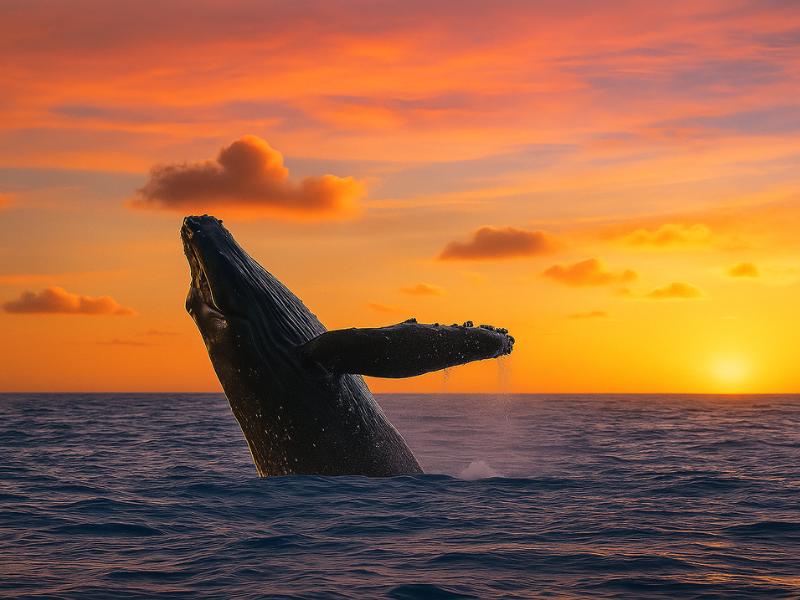
Morning advantages start with calmer seas providing smoother rides and better whale spotting conditions. Ocean conditions are typically flattest between 8am-11am before afternoon winds pick up, creating easier viewing with less boat movement and clearer visibility for spotting distant spouts. The glassy morning water lets you see whale shapes underwater before they surface, and the calm conditions reduce seasickness significantly for sensitive passengers.
More active whales appear during morning hours when they’re energized after resting overnight. Breaching, tail slapping, and spy-hopping behaviors occur more frequently in mornings compared to afternoons when whales often settle into calmer traveling or resting modes. The increased activity creates more dramatic encounters and better chances of witnessing spectacular behaviors that make whale watching memorable.
Cooler temperatures make mornings more comfortable for extended time on boats in direct sun. December through February mornings start at 68-75°F, warming to comfortable 75-80°F by late morning. March and April mornings begin at 72-78°F, reaching 82-88°F by noon. The moderate morning temperatures prevent overheating and sun exhaustion that afternoon tours encounter, especially during warmer March-April periods.
Better lighting for photography comes from morning sun angles creating softer, more flattering light compared to harsh midday sun or late afternoon shadows. The golden morning light between 8am-10am produces excellent photo conditions with good contrast and color without the blown-out highlights of noon sun. Whale spouts photograph dramatically backlit against morning sky, and breaches capture beautifully in clear morning light.
Choose a departure from the live schedule and current sea forecast. Do not assume that one time is available or that it guarantees more active whales.
Lighting differences create dramatic golden hour conditions for 3pm-5pm tours extending into late afternoon. The warm sunset lighting produces stunning photography with rich colors and long shadows across water, though whale activity tends to be calmer. Photographers specifically seeking golden hour light choose afternoon tours accepting reduced whale activity trade-offs.
Schedule flexibility allows afternoon tours to work for visitors with morning activities already booked. Combining morning fishing charters, golf rounds, or spa appointments with afternoon whale watching lets travelers pack more into single days, though this requires energy for multiple activities.
Warmer temperatures appeal to visitors who dislike cool morning conditions. Afternoon tours starting at 2pm-3pm encounter full warmth of 80-90°F conditions, comfortable for cold-averse travelers but potentially too hot for heat-sensitive visitors.
Pricing differences between morning and afternoon tours remain minimal at most operators. Morning and afternoon departures typically charge identical rates since costs don’t change based on departure time. The few operators offering slight afternoon discounts reduce prices only $5-10 per person (maybe 5-10% off), insufficient motivation to choose afternoon over morning unless schedule requires it.
Some budget operators run more afternoon tours to maximize boat utilization, offering these at standard low prices rather than discounts. Premium operators focus on morning departures exclusively, eliminating afternoon options entirely since they prioritize quality over quantity.
Last-minute afternoon bookings occasionally secure deals when operators have empty boats and offer on-the-spot discounts to fill capacity, but this occurs unpredictably and shouldn’t be planned around.
| Check before choosing a departure | Planning use |
|---|---|
| Exact time on the live listing | Departure schedules and availability change |
| Weather and sea conditions | Wildlife behavior and smooth water cannot be guaranteed by a time slot |
| Meeting point or pickup window | Transfers add time beyond the listed catamaran cruise |
| Cancellation terms | Use the product rule that applies to the booked date |
Practical recommendation for when to choose each option: Choose morning tours as default for best overall experience combining optimal whale activity, sea conditions, and weather. Morning delivers the highest probability of memorable encounters with active whales under ideal viewing conditions.
Check live availability as soon as the travel date is fixed. A fixed lead-time rule cannot guarantee a preferred departure.
Choose afternoon tours when morning slots are completely sold out and you’re visiting during peak season with no morning availability. Better to whale watch in afternoon than skip it entirely because mornings were full.
Select afternoon tours when other morning activities take priority and you’re determined to fit multiple experiences into single days. Just understand you’re compromising whale watching quality for schedule convenience.
Consider afternoon tours for golden hour photography if you’re serious photographer prioritizing dramatic lighting over whale activity levels. The sunset light justifies the trade-off for photography-focused visitors.
Avoid afternoon tours during March-April when temperatures reach 85-90°F creating uncomfortable conditions in direct sun for extended periods. The heat exhaustion risk and discomfort outweigh any afternoon advantages during warmest months.
Skip afternoon tours if you’re prone to seasickness since afternoon chop increases nausea risk significantly compared to calm morning conditions. The sea state difference matters enormously for motion sickness sensitivity.
Private Cabo Whale Watching Charters Vs Group Tours
Private charter benefits center on complete control over your whale watching experience. Flexibility means choosing your departure time within reasonable windows (typically 8am-3pm availability), deciding how long to stay with specific whales instead of following the captain’s schedule, and leaving early if someone feels sick or staying longer if whales are spectacular. You control the pace entirely rather than accommodating a group’s collective timeline.
Intimacy creates romantic or family-focused experiences without strangers sharing your moments. Proposals, anniversary celebrations, or family reunions happen privately without performing for audiences or competing with other passengers for attention. The boat becomes your private space for the duration, allowing genuine connection with travel companions.
Customization lets you request specific focuses like extended photography time requiring particular boat positioning, educational deep-dives into whale biology with guides tailoring content to your knowledge level, or combining whale watching with brief stops at Lover’s Beach or snorkeling spots. Private charters accommodate special requests that group tours with fixed schedules cannot.
No strangers means avoiding personality conflicts with difficult passengers, loud families disrupting peaceful whale watching, or crowded rail competition during prime viewing moments. Your group alone shares the experience, creating memories together without external interference or social obligations to people you don’t know.
If you prefer a more personal experience, here are the private Cabo whale watching charter experiences that give you way more control over the trip.
Group tour benefits make whale watching accessible and affordable for most travelers. Lower cost represents the primary advantage with individual tickets at $85-120 per person versus private charters at $600-1,200 total. Solo travelers and couples pay dramatically less joining groups than booking private charters.
Social atmosphere creates communal excitement when whales breach or perform spectacular behaviors. Shared gasps, collective wonder, and bonding with strangers over amazing encounters adds energy and social dimension some people prefer over intimate private experiences. Meeting fellow travelers from different places and backgrounds enriches the adventure for social personalities.
Shared excitement amplifies emotional responses when multiple people witness extraordinary moments simultaneously. The collective joy when a whale breaches repeatedly creates memorable social experiences beyond just seeing whales. Some travelers specifically enjoy the group energy and wouldn’t want private isolation.
Break-even math shows when private charters make financial sense versus group tours. Solo travelers pay $85-120 for group tours versus $600-1,200 alone for private charters, making group tours the only logical choice unless money is completely irrelevant. Couples pay $170-240 combined for group tours versus $600-1,200 private, with group tours remaining far more economical.
Groups of four people pay $340-480 combined for group tours versus $600-800 for basic private charters or $800-1,000 for quality private experiences. Private charters start becoming competitive at four people if you value the flexibility and intimacy enough to pay $150-250 per person premium.
There is no fixed group-size break-even. Compare complete live totals for the same party, then decide whether privacy and the included water activities justify the difference.
A larger party can make a private total more competitive, but savings are not guaranteed. Compare the current whole-party totals and confirm the private boat capacity before paying.
Special occasions justify private charter premiums regardless of break-even math. Proposals create unforgettable romantic moments when you’re alone with your partner (plus discreet crew) rather than surrounded by strangers with cameras. The ability to time the proposal precisely, have champagne ready, and celebrate privately without audience makes the experience worth significant premiums.
A private charter can provide a setting reserved for your group. Confirm the assigned boat, itinerary and complete total before choosing it for an anniversary or honeymoon.
Family celebrations like milestone birthdays, graduations, or reunions create bonding experiences when extended families book private charters together. Three generations watching whales without strangers interrupting conversations or grandparents competing with crowds for viewing space makes celebrations more meaningful and comfortable.
Surprise celebrations work only on private charters where you control timing and can coordinate with crew on surprises like champagne toasts, decorations, or special moments. Group tours don’t accommodate surprise planning or personalized celebrations.
| Decision | Shared trip | Private charter |
|---|---|---|
| Price comparison | Use the complete current total for the whole party | Use the complete current total for the whole boat |
| Control | Captain follows the listed shared itinerary | Private booking; confirm customization with the operator |
| Included extras | Product-specific | Food, drinks, snorkel gear and paddleboard |
| Language and access | Biologist trip is English/Spanish; restrictions apply | Confirm English, assigned vessel and access |
How To Choose The Best Cabo Whale Watching Tour For You
Decision factors determine which tour type matches your specific situation and priorities. Budget sets initial parameters with $60-85 tours delivering basic whale viewing, $85-120 tours providing quality experiences with better boats and guides, and $150-250+ tours offering luxury and comprehensive service. Determine your comfortable spending range before evaluating other factors.
Group size affects cost calculations and tour type decisions. Solo travelers and couples find group tours most economical at $85-120 per person. Groups of four reach the threshold where private charters become competitive. Groups of six or more often save money booking private charters while getting superior experiences, making group size a primary decision factor.
Choose a format around the experience you value: guide interpretation, included photos, hotel pickup or privacy. Compare current totals and operator-confirmed details instead of assuming a fixed saving or better whale encounters from one boat type.
Physical limitations including seasickness susceptibility, mobility challenges, bathroom needs, and stamina influence tour choices significantly. Seasickness-prone passengers benefit from large boat stability over small boat maneuverability. Travelers requiring bathroom access need boats with facilities rather than small boats lacking bathrooms. Limited mobility passengers need boats with minimal steps, handrails, and accessible boarding.
Solo travelers face per-person cost burdens making budget considerations critical. Group tours at $85-120 represent the economical choice versus $600-1,200 private charters for one person. Within group tours, solo travelers should prioritize small to medium boats (15-30 passengers) over large boats for better social opportunities to meet other travelers and avoid feeling lost in crowds of 50+ people.
Morning departures work better for solo travelers wanting to meet other passengers during high-energy whale encounters. The shared excitement of morning whale activity creates natural conversation starters and bonding opportunities with fellow passengers.
Mid-range tours ($95-120) provide best value for solo travelers balancing cost with quality experience. Budget tours save $20-30 but significantly compromise experience quality through crowding and minimal service. The moderate investment in mid-range tours pays off with better memories and satisfaction.
Couples choosing between romantic intimate experiences versus adventurous social experiences follow different paths. Romantic couples prioritizing privacy and intimacy should book small boat tours (12-20 passengers) or splurge on private charters for proposals, anniversaries, or honeymoons. The intimate setting, personalized attention, and absence of crowds create romantic atmosphere worth premium pricing.
Adventurous couples open to social experiences and prioritizing value over romance do well with mid-range group tours on medium boats (20-30 passengers). The balance of reasonable crowds, quality service, and moderate pricing delivers excellent whale watching without romantic isolation or premium costs.
For a special occasion, compare the private charter with the shared trip using current group totals. Confirm the assigned vessel, language and activity plan before deciding whether the private option fits the celebration.
Families with kids require careful tour selection based on children’s ages, attention spans, and needs. Kid-friendly operators running tours with bathrooms onboard, snacks included, shorter durations (2 hours vs 3-4 hours), and guides experienced with children prevent family stress and meltdowns.
Boat sizes for families balance viewing quality against practical needs. Small boats offer best whale viewing but lack bathrooms and space for restless children. Large boats provide bathrooms and room for kids to move around but create viewing challenges and crowding. Medium boats (25-35 passengers) often represent the best compromise for families, providing reasonable whale viewing quality, bathroom access, and manageable crowds.
Keeping children engaged requires choosing morning tours when kids are fresh rather than cranky afternoon tours, selecting operators whose guides actively engage children with age-appropriate whale education, and avoiding extended 3-4 hour tours that exhaust young children’s attention spans. Standard 2-2.5 hour tours work best for most families with children under 12.
Families with multiple children (4+ people total) should evaluate whether private charters at $600-900 total provide better value than $340-480 in group tour tickets. The flexibility to leave early if kids meltdown, accommodate bathroom needs without waiting, and avoid disturbing other passengers when children get fussy makes private charters attractive for families despite higher costs.
Seniors and accessibility considerations prioritize comfort, safety, and ease over optimal whale viewing. Large boats with stability, bathroom facilities, shade structures, and seating accommodate seniors better than small boats with superior maneuverability but more movement, less shade, and minimal amenities.
Comfort-focused options include tours specifically advertising wheelchair accessibility, boats with covered seating areas protecting from sun exposure, operators with reputation for slower pacing and senior-friendly service, and larger vessels where moving around doesn’t require athletic balance or agility.
Seniors with mobility limitations should verify boat boarding process involves minimal steps, handrails are available throughout vessels, and crew assists passengers with boarding and movement. Some boats require stepping down from docks onto rocking vessels, challenging for seniors with balance or knee problems.
Bathroom access becomes non-negotiable for many seniors, eliminating small boats without facilities from consideration. Large boats with proper bathrooms (not just tiny marine heads) provide essential comfort for seniors who cannot comfortably go 2-3 hours without restroom access.
We’ve mapped out how to plan your visit to Cabo whale tours based on what actually matters – booking, timing, and avoiding common mistakes.
For a shared trip, compare the verified 2.5-hour biologist-led boat with the two-hour catamaran. The first caps the group at 12 and includes photos and a hydrophone when conditions allow; the second adds a light meal, a domestic bar and hotel transfers arranged at least 48 hours ahead. Choose the three-hour Cabo Boat Adventures charter only when a private boat, snorkeling and paddleboarding are the priority.
FAQ: Choosing Cabo Whale Watching Tours
1. What’s the best whale watching tour in Cabo San Lucas?
The best tour depends on your priorities. Small boat tours (12-20 passengers) with experienced guides at $95-120 offer optimal whale viewing quality for most travelers. Budget-conscious visitors do fine with large boat tours at $60-85 accepting crowding trade-offs. Special occasions justify private charters at $600-1,200 total for intimacy and flexibility.
2. How much do Cabo whale watching tours cost?
Tours range $60-250+ per person. Budget tours cost $60-85 (large boats, basic service), mid-range tours $85-120 (better boats, experienced guides), premium tours $150-250+ (luxury boats, comprehensive service). Add $15-40 per person for hidden costs like marina fees, tips, and transportation.
3. Are small boats or large boats better for whale watching?
Small boats (12-20 passengers) deliver superior experiences through better maneuverability, unobstructed viewing, and personal attention but cost more ($95-150). Large boats (40-60 passengers) provide stability and lower cost ($60-85) but feel crowded with limited viewing angles. Choose small boats if budget allows, large boats for seasickness concerns or strict budget limits.
4. What’s included in a whale watching tour?
Basic tours include boat ride, captain/guide, and water. Mid-range adds experienced guides, light snacks, longer duration (2-2.5 hours), and education. Premium tours include gourmet food/drinks, marine biologist guides, professional photos, and luxury boats. Marina fees ($2-5), tips ($10-20), and hotel pickup ($10-20 each way) typically cost extra.
5. Should I book a private whale watching charter?
Private charters ($600-1,200 total) make sense for special occasions (proposals, anniversaries), groups of 6+ people (per-person cost becomes competitive), families needing flexibility for kids, or anyone prioritizing complete privacy and customization. Solo travelers and couples pay far less with group tours ($85-120 per person).
6. How far in advance should I book a whale watching tour?
Book 6-8 weeks ahead for peak season (February-March), especially Presidents Day and Spring Break. January needs 3-4 weeks advance. December and April work with 2-3 weeks notice. Last-minute bookings limit options to whatever’s available, usually afternoon tours or large boats.
7. Are morning or afternoon whale watching tours better?
Morning tours (8am-10am) are generally superior with calmer seas, more active whales, cooler temperatures, and better photography light. Afternoon tours (2pm-4pm) work when mornings sell out or schedule requires it, but expect warmer temperatures, choppier seas, and less active whales. Pricing is usually identical.
8. What’s the difference between cheap and expensive whale watching tours?
Cheap tours ($60-85) use large boats (40-60 passengers) with basic captains, minimal education, 90-120 minute duration, and water only. Mid-range tours ($85-120) offer smaller boats (20-30 passengers), experienced guides, 2-2.5 hours, snacks, and real education. Expensive tours ($150-250+) provide luxury boats (12-18 passengers), marine biologist guides, gourmet food/bar, 3-4 hours, and comprehensive service. You’re paying for boat size, guide expertise, tour length, and service quality.
Glossary: Cabo Whale Watching Tour Terms
Small Boat vs Large Boat: Small boats carry 12-20 passengers, offering superior maneuverability, unobstructed viewing, and personal attention at $95-150 per person. Large boats hold 40-60+ passengers, providing stability and lower cost ($60-85) but crowded conditions and limited whale-following ability. Boat size fundamentally changes the whale watching experience.
Group Tour vs Private Charter: Group tours mix strangers on scheduled departures at $60-150 per person with fixed routes and timing. Private charters book entire boats exclusively for your group at $600-1,200 total, providing complete flexibility over schedule, route, and duration. Private charters become cost-competitive for groups of 6+ people.
Marine Naturalist Guide: Experienced guide with marine biology education or extensive whale behavior knowledge, providing in-depth interpretation of whale activities, biology, and conservation. Superior to basic captains who simply point at whales without educational context. Premium and mid-range tours typically employ marine naturalist guides.
Tour Duration: Total time from marina departure to return, typically 90 minutes (budget tours), 2-2.5 hours (mid-range), or 3-4 hours (premium). Longer durations provide more actual whale watching time after subtracting 15-30 minutes travel each way to whale areas. Duration directly impacts encounter quality and satisfaction.
Combo Tour: Packages combining whale watching with additional activities like snorkeling, lunch cruises, or Arch tours in single bookings. Typically cost $120-200 and last 4-6 hours but reduce dedicated whale watching time to 60-90 minutes versus 90-150 minutes on whale-only tours. Trade-off between activity variety and focused whale watching quality.
Peak Season Pricing: Price increases of 15-30% during high-demand February-March whale watching season, especially Presidents Day weekend and Spring Break weeks. Tours costing $95-105 in December may reach $110-135 in February. Reflects higher tourist demand and fuller boats during peak months.
Licensed Operator: Tour company holding valid Mexican permits and insurance to legally conduct whale watching tours. Licensed operators follow marine wildlife protection regulations, maintain safety equipment, and carry liability insurance. Look for displayed permits and licenses when choosing operators to ensure legal, safe operations.
Ready To Book Your Best Cabo Whale Watching Experience?
Choose by verified fit: group limit, duration, guide format, inclusions, meeting point or pickup, and accessibility restrictions. Check the current listing for price and cancellation terms before paying.
A lower price can reflect a different boat format or fewer inclusions, but it does not by itself prove poor quality. Compare the verified trip details and choose the trade-off that matters to your group.
For a shared trip, the verified biologist-led option lasts 2.5 hours and caps the group at 12. It includes photos, water, a restroom and a hydrophone when conditions allow. It meets at Plaza Bonita in the marina, and it does not include hotel transport.
Check dates on the small-group biologist tour or the sunrise whale watching tour if you want an earlier, lower-priced departure.
The whales are here. The question is whether you’ll see them from a crowded boat where you’re just another tourist, or from a quality tour where guides know your name and position the boat perfectly for that breach you’ll talk about for years.
Use the current listing to confirm dates, price, meeting or pickup terms and restrictions before paying.