Private Whale Watching Charter Experiences In Cabo San Lucas
Are private Cabo whale charters worth it? See when splitting costs beats group tours, which boats to choose, and who should (and shouldn’t) book private.
Private and shared trips solve different problems. Compare the current total for your group, then decide whether privacy, food and drinks, snorkeling and paddleboarding are worth the difference. A shared biologist-led trip may be the stronger fit when those extras do not matter.
This guide compares private and shared formats by group needs, time, inclusions, meeting-point logistics and the value of having the boat to yourselves. Current prices and date availability belong on the live listing, while the article should explain what each format changes.
A private Cabo charter earns its place when the whole group values privacy and the included water activities. Compare the whole-boat choice with a shared alternative before the final selector. Compare The Cabo Tour Options Below →
The verified private charter lasts three hours and includes food, drinks, snorkeling gear, a paddleboard and a floating mat. The operator assigns the yacht, so vessel, English, capacity, access and transfers belong in the separate detail check.
What Is A Private Whale Watching Charter In Cabo?
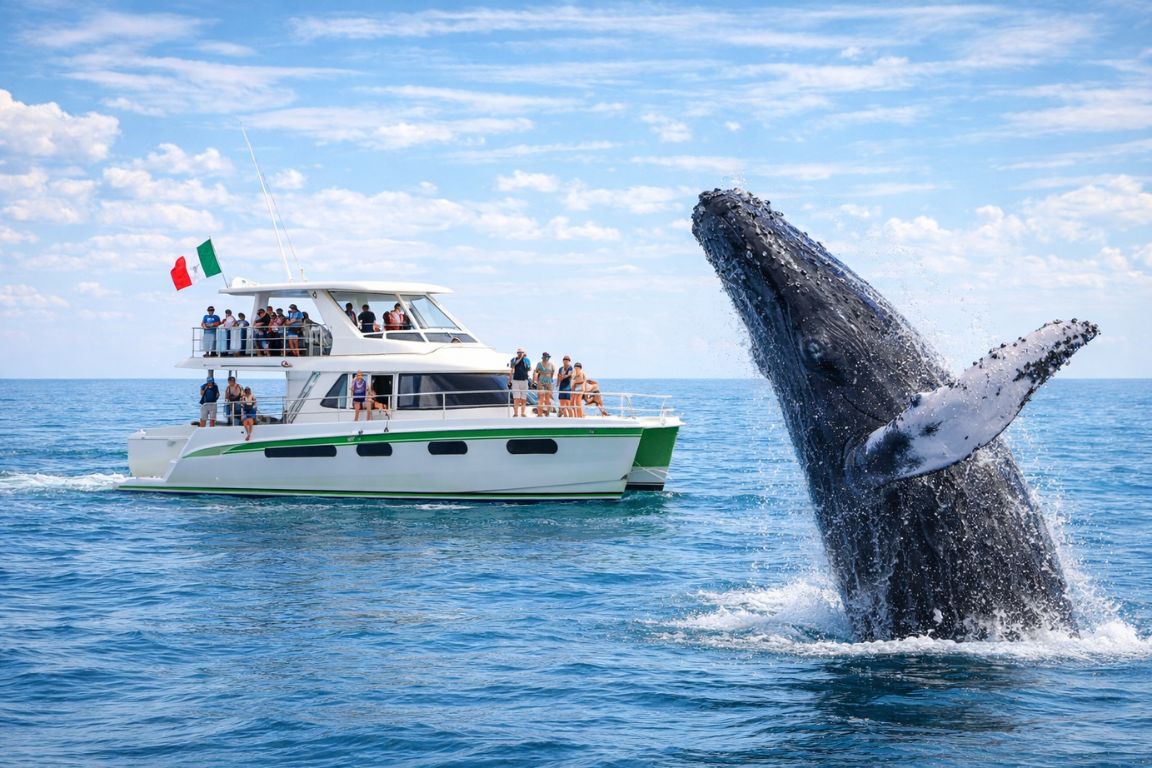
A private charter reserves the boat for your group. The verified Cabo Boat Adventures listing lasts three hours and includes food, drinks, snorkel gear and a paddleboard; current price and capacity belong on the live listing.
Private bookings reserve a boat for the listed period. Deposit, schedule, route changes and customization depend on the operator terms, so confirm them on the current listing before paying.
The booking process requires more planning than group tours since you’re coordinating custom arrangements rather than joining pre-scheduled departures. You discuss group size, desired duration, food and beverage preferences, any special requests (celebrations, proposals, specific activities), and confirm all details in written contracts specifying exactly what’s included and excluded. The operator holds the boat exclusively for your reservation, turning away other potential bookings for your time slot.
Private charters provide flexibility impossible with group tours, including choosing exact departure times within operator windows rather than fixed 8:30am or 2pm slots, adjusting duration mid-tour if your group wants to extend or shorten time on water, and changing plans based on conditions or preferences such as staying longer with active whales or leaving early if someone feels seasick.
What’s included in private charters varies by operator and price point but standard inclusions cover the boat itself with all required safety equipment, experienced captain navigating and positioning for optimal whale viewing, crew members (typically 1-2 additional staff beyond captain) assisting passengers and handling boat operations, and knowledgeable guide providing whale education and interpretation. Most charters include basic beverages like water, sodas, and beer, though quantities and quality vary.
Mid-range and premium charters add substantial food beyond simple snacks, ranging from fruit platters and sandwiches to full catered meals depending on pricing tier. Open bars with beer, wine, cocktails, and premium spirits appear on higher-end charters. Some operators include professional photography services capturing your group’s whale encounters and experience. Fishing equipment, snorkel gear, and paddleboards sometimes come included allowing activity combinations beyond pure whale watching.
The flexible itinerary represents a key inclusion, with captains adjusting routes, speeds, and focus based on your group’s interests rather than following fixed group tour schedules. If your group wants to spend extended time with a particular whale pod displaying interesting behaviors, private charters accommodate this. If children get bored or someone feels seasick, you can adjust plans or return early without disappointing other paying passengers.
Group size capacity depends on vessel selection, with different boat types accommodating varying passenger loads. Small panga boats and sport fishing vessels typically handle 4-6 passengers comfortably, sometimes squeezing 8 people but feeling cramped at capacity. Medium sport fishing boats and center console vessels accommodate 6-10 passengers with comfortable spacing and seating for everyone. Large catamarans and yachts hold 8-12 passengers, sometimes up to 15 on the largest vessels, providing ample space, multiple seating areas, and room to move around freely.
The capacity isn’t just about fitting bodies on boats but ensuring comfortable enjoyable experiences. A boat rated for 10 passengers might feel crowded with 10 adults plus crew in limited space, while 6-8 passengers on the same vessel creates comfortable conditions with adequate seating and viewing access for everyone. Operators typically recommend group sizes below maximum rated capacity for optimal comfort.
Compare a private whole-boat total with the shared whole-party total in the same currency. The format changes privacy and inclusions, while route and scheduling flexibility must be confirmed with the operator.
Group tours share boats with 15-50 strangers creating social but crowded environments, while private charters keep your group isolated from other tourists. Group tour captains balance competing interests and comfort levels among diverse passengers, while private charter captains cater exclusively to your group’s preferences. Group tours optimize for efficiency and volume, maximizing daily trips and passenger throughput, while private charters optimize for your group’s satisfaction without consideration for other bookings.
The cost structure fundamentally differs with group tours spreading operating costs across many individuals paying separately, keeping per-person prices moderate but total boat revenue high. Private charters concentrate all revenue from your single booking, requiring higher total costs but potentially lower per-person costs for larger groups who would pay separately on group tours.
A family of six from Arizona originally booked a group tour for $110 per person totaling $660. The morning of departure, their 4-year-old woke up sick and they worried about him disrupting other passengers or needing to leave early. They switched to a private charter for $850, spending just $190 more total but gaining the flexibility to leave whenever needed. The child felt better mid-tour, they stayed the full three hours, and the parents said the relief of not stressing about bothering strangers was worth way more than $190. They enjoyed the whale watching instead of managing anxiety about their son’s behavior around other tourists.
| Decision factor | Shared biologist trip | Private Cabo Boat Adventures charter |
|---|---|---|
| Format | Shared, maximum 12 | Boat reserved for your group |
| Duration | 2.5 hours | 3 hours |
| Activities | Whale-focused | Food, drinks, snorkeling and paddleboarding |
| Before paying | Check date and Plaza Bonita meeting point | Confirm assigned boat, English, access and Dock C instructions |
Private Whale Watching Charter Costs In Cabo
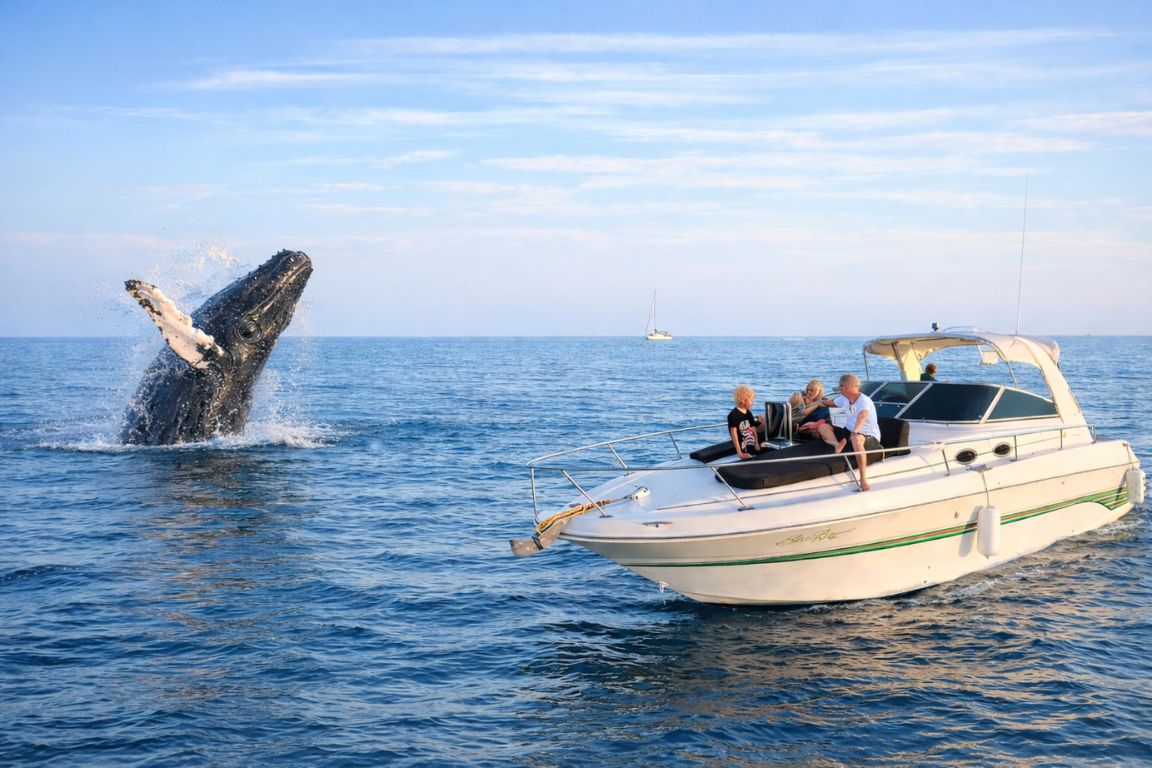
Do not infer licensing, safety, boat type or inclusions from a generic price tier. Verify the exact vessel, operator terms and included items on the listing.
Basic charters include the boat, captain, basic safety equipment, and water or minimal beverages. Snacks might be simple crackers or chips rather than substantial food offerings. The captain provides basic whale spotting and positioning but educational commentary stays minimal compared to dedicated marine naturalist guides on premium charters.
Do not infer licensing, insurance, safety standards or boat condition from a generic price tier. Verify the selected operator and exact product terms. Basic charters work fine for budget-conscious groups prioritizing whale viewing over comfort, families willing to bring their own substantial snacks and drinks, or visitors who’ve done whale watching before and don’t need extensive education.
The 2-3 hour duration provides adequate whale watching time with approximately 1.5-2 hours actually with whales after subtracting travel time to and from whale areas. The shorter timeline keeps costs down but feels somewhat rushed compared to more relaxed longer charters, requiring efficient whale finding and limited flexibility for extended viewing of particularly active whales.
A price label does not verify the assigned vessel or amenities. The current Cabo Boat Adventures listing assigns a boat from its fleet, so confirm capacity, comfort and access directly.
Mid-range inclusions add substantial value beyond basic charters with quality snacks and light meals (fruit platters, sandwiches, chips, salsa), open beverage service including beer, wine, sodas, water, and sometimes basic cocktails, experienced guides providing educational whale commentary and interpretation, and good safety equipment with proper life jackets and first aid supplies clearly maintained and accessible.
The 3-4 hour duration represents the sweet spot for whale watching, providing 2-3 hours of actual whale time allowing relaxed viewing without rushing, time to find multiple whale pods if first encounters disappoint, and flexibility to stay longer with active whales displaying interesting behaviors. The extended time also accommodates combination activities like brief snorkeling stops or visits to the Arch and Lover’s Beach when groups want variety beyond pure whale watching.
Mid-range charters deliver optimal value for most private charter bookings, balancing reasonable costs against genuine quality improvements over basic charters. The better boats, substantial food and drinks, knowledgeable guides, and adequate duration create satisfying experiences justifying the moderate premium over budget options without requiring luxury-tier spending.
For a higher-comfort private boat, compare the current listing by vessel, duration, food, drink, shade, restroom, gear and transport rather than a generic luxury tier.
Luxury inclusions elevate every aspect with gourmet catered meals prepared by experienced crew or brought aboard from quality restaurants, premium open bars featuring top-shelf liquor, craft cocktails, fine wines, and specialty beverages, professional photography and videography services capturing your whale encounters, marine biologist guides or highly experienced naturalists providing comprehensive education, and white-glove service with attentive crew catering to every need.
The 4-6 hour duration allows comprehensive experiences combining extended whale watching with additional activities like quality snorkeling at prime locations, leisurely lunch service with time to relax and enjoy food, visits to multiple sites including Arch, beaches, and sea lion colonies, and completely unhurried pacing letting groups savor every aspect without feeling rushed.
Luxury charters appeal to honeymooners and anniversary couples willing to splurge on once-in-lifetime experiences, corporate groups entertaining important clients where premium service justifies business expense, milestone celebrations like 50th birthdays or retirement trips where memories matter more than budgets, and luxury travelers accustomed to premium services who consider standard charters inadequate for their expectations.
No fixed party size guarantees cost parity. Enter the current shared total for the whole group and the current private whole-boat total before deciding.
For groups of four people, private charters cost $150-375 per person compared to $85-150 group tours, still representing premiums of $65-225 per person though the gap narrows. Some families of four find the $260-900 total premium worthwhile for flexibility with young children, avoiding personality conflicts with stranger passengers, and customization options. Other families conclude the premium isn’t justified when group tours provide adequate whale watching at lower costs.
Groups of six people reach the break-even threshold where private charters become financially competitive. Six people pay $510-900 total for group tours versus $600-1,200 for private charters, making per-person costs $100-250 on private charters versus $85-150 on group tours. Compare the live whole-boat total with the complete shared total for the same party, then decide whether privacy and the listed inclusions justify the difference.
Groups of eight or more people find private charters cheaper or equivalent to group tours on a per-person basis. Eight people pay $680-1,200 for group tours versus $800-1,500 for private charters, making per-person costs $100-188 on private charters competitive with $85-150 group tour rates. Large groups actually save money or break even while gaining all private charter benefits, making private charters obvious choices for groups of 8-12 people.
What affects pricing includes multiple factors beyond just boat rental. Boat size and quality represent the primary cost drivers with larger vessels requiring more fuel, maintenance, insurance, and crew compensation. A 25-foot panga costs dramatically less to operate than a 45-foot yacht, directly impacting charter rates. Premium boats with luxury amenities, modern equipment, and excellent condition command higher rates than older basic vessels even at similar sizes.
Charter duration multiplies costs since longer trips require more fuel consumption, extended crew time, additional food and beverage provisions, and opportunity costs preventing operators from running multiple shorter charters daily. A 6-hour charter costs roughly double a 3-hour charter reflecting the additional resources and foregone alternative bookings.
Use January through March as the clearest whale-planning window, but check the exact date for current price and availability. Do not assume a seasonal premium or discount.
We’ve put together a complete Cabo whale watching season calendar so you know exactly when to book based on whale activity.
Inclusions dramatically impact pricing with all-inclusive charters featuring gourmet catering, premium bars, and professional photography costing substantially more than basic charters providing only water and minimal snacks. The food, beverage, and service costs add directly to charter rates, with quality ingredients and experienced crew commanding appropriate compensation.
Operator reputation and positioning influence pricing independent of actual service quality. Established operators with strong reputations charge premiums based on brand value and consistent quality, while newer operators discount to build clientele. Resort-affiliated charters often cost more due to commission structures and perceived prestige versus independent operators offering equivalent services at lower rates.
| Compare | How to use it |
|---|---|
| Current full-group total | Enter the same party size and currency for both choices |
| Included food, drinks and equipment | Decide whether the extras replace other spending |
| Transport to the meeting point | The private listing does not promise hotel transport |
| Cancellation terms | Use the live rule for the exact date |
Private Charter Boat Options In Cabo
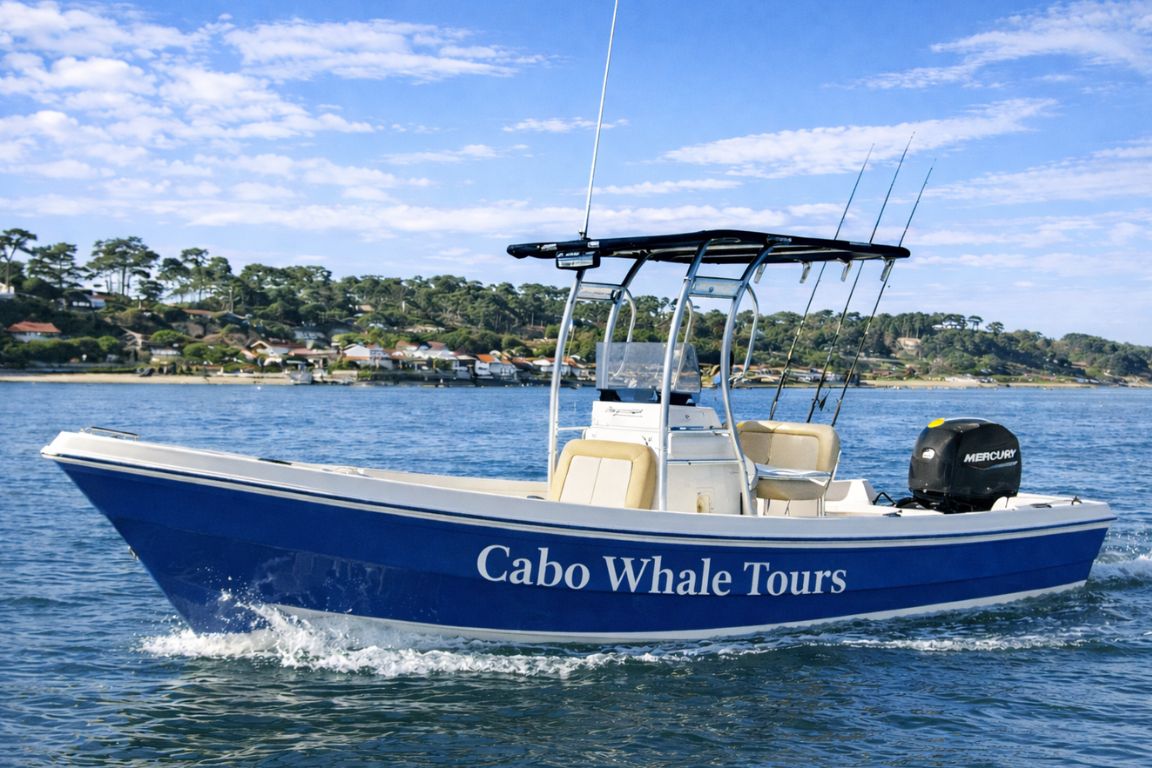
Panga boats cost $600-900 for private charters accommodating 4-6 passengers in basic open-hull fishing vessels common throughout Baja. These simple fiberglass boats range 22-26 feet with single outboard motors, open bench seating, minimal shade (sometimes a small canvas top), and no enclosed areas or bathrooms. The stripped-down design prioritizes function over comfort, providing reliable transportation to whale areas without amenities.
The maneuverability advantages of pangas shine during whale encounters with quick acceleration allowing fast repositioning when whales surface in different directions, tight turning radius enabling precise positioning for optimal viewing angles, and shallow draft permitting closer approaches to coastal areas where whales sometimes congregate. The smaller size and responsive handling let captains follow active whales more effectively than larger slower vessels.
Pangas work well for small groups prioritizing budget and whale viewing over comfort, experienced boaters comfortable with basic conditions, shorter 2-3 hour charters where minimal amenities suffice, and travelers who’ve done whale watching before knowing what to expect from simple vessels. The lack of bathroom facilities limits panga charters to shorter durations for most passengers, though hardy travelers manage longer trips.
The exposed open design means full sun exposure with minimal shade requiring aggressive sun protection, direct exposure to wind and spray getting passengers wet during rougher conditions, and no retreat from elements if weather turns challenging. Seasickness-prone passengers struggle more on pangas than larger more stable vessels.
Sport fishing boats cost $800-1,200 for private charters accommodating 6-8 passengers on dual-purpose vessels designed for fishing but excellent for whale watching. These boats range 28-35 feet with enclosed cabins, fighting chairs that convert to seating, shade from hardtops or canvas covers, small marine head bathrooms, and adequate deck space for moving around.
The comfortable design includes cushioned seating in cockpit areas and inside cabins, protection from sun and wind under hardtops, storage for personal belongings and provisions, and generally well-maintained condition since fishing charters demand reliability. The versatility means some operators offer combination charters doing whale watching then trolling for fish, or focusing entirely on whales using fishing boats simply because they’re well-suited vessels.
Sport fishing boats balance maneuverability and stability better than pangas or large yachts, turning reasonably quickly to follow whales while providing more stable platforms than small pangas reducing seasickness. The moderate size handles Cabo’s typically calm whale season conditions well, occasionally encountering challenges in rougher weather but generally performing admirably.
These boats suit mid-sized groups wanting comfort without luxury pricing, families needing bathroom access but not requiring extensive amenities, travelers considering combination whale watching and fishing charters, and visitors prioritizing practical comfort over basic panga conditions or luxury yacht features.
Center console boats cost $900-1,300 for private charters accommodating 6-10 passengers on modern sporty vessels featuring central helm stations with 360-degree deck access. These boats range 27-32 feet with walk-around designs allowing passengers to move freely to any side when whales surface, T-tops or bimini covers providing shade over helm and seating areas, cushioned seating arrangements around the console and bow areas, and small console-mounted bathrooms on larger models.
The stable modern construction uses deep-V hulls cutting through chop smoothly, higher freeboards reducing water spray over the sides, and contemporary design elements creating comfortable ride quality. The center console layout maximizes usable deck space compared to traditional fishing boat designs with raised bows and enclosed cabins taking up room, allowing groups to spread out and access railings from all angles.
These boats excel for photography-focused charters with unobstructed 360-degree access enabling photographers to quickly reposition for optimal angles, stable platforms providing steady shooting conditions, and modern clean styling creating attractive backgrounds for photos. The contemporary design appeals to younger travelers and groups prioritizing style alongside function.
Center console boats work well for active groups who want to move around during encounters rather than staying seated, photography enthusiasts needing positioning flexibility, moderate-sized groups (6-10 people) wanting comfortable modern vessels, and travelers valuing style and contemporary design over traditional fishing boat or luxury yacht aesthetics.
Catamarans cost $1,200-2,000 for private charters accommodating 8-12 passengers on dual-hull vessels providing maximum stability for whale watching. These boats range 35-45 feet with wide beam designs creating spacious deck areas, trampolines or nets stretched between hulls for unique seating, enclosed salon cabins with seating and tables, proper bathrooms with running water, and extensive shade coverage from hardtops and canvas.
The stability advantage from twin-hull design dramatically reduces rocking motion compared to single-hull vessels, making catamarans virtually immune to seasickness for most passengers even in moderate chop. The minimal rocking creates comfortable platforms for extended time on water, easy movement around decks without balance concerns, and relaxed atmosphere where passengers can sit or stand without constantly bracing against boat motion.
The spacious deck layouts provide room for larger groups to spread out without crowding, multiple seating areas allowing people to choose sunny spots or shaded areas, and social spaces where groups can gather comfortably for meals or conversations. The trampolines between hulls create unique lounging areas popular with younger passengers and kids.
Catamarans suit larger groups (8-12 people) who need space to avoid feeling crowded, seasickness-prone passengers prioritizing stability above all else, families with young children who need room to move around, extended 4-6 hour charters where comfort matters for long durations, and groups wanting social gathering spaces beyond just whale viewing positions.
Luxury yachts cost $2,000+ for private charters accommodating 10-15 passengers on premium vessels designed for comfort and service. These boats range 40-60+ feet with multiple deck levels including air-conditioned interior salons, spacious bow seating areas with cushioned sun pads, flybridge upper decks with 360-degree views, full bathrooms with showers, full galleys for meal preparation, and professional crew including captain, mate, and sometimes steward or chef.
The ultimate comfort features include premium sound systems, flat-screen entertainment, full bars with refrigeration, formal dining areas for catered meals, luxurious upholstered seating throughout, and five-star service standards with attentive crew anticipating needs. The scale and appointments create floating luxury hotels rather than simple charter boats, with every detail designed for comfort and elegance.
Luxury yachts work for corporate entertainment and client hospitality where premium service justifies business expenses, milestone celebrations like significant anniversaries or retirement parties where splurging makes sense, very large groups (10-15 people) who need substantial space, extended 6-8 hour charters combining whale watching with luxury dining and relaxation, and luxury travelers for whom standard charters feel inadequate regardless of cost.
Boat selection factors determine which vessel type matches your charter needs and priorities. Group size establishes baseline requirements with 4-6 people fitting on pangas, 6-10 people needing sport fishing boats or center consoles, and 8-15 people requiring catamarans or yachts. Trying to squeeze too many people on small boats creates uncomfortable crowded conditions, while booking oversized boats for small groups wastes money on unnecessary capacity.
Comfort priority influences vessel selection with budget-conscious groups accepting basic panga conditions, moderate comfort seekers choosing sport fishing boats or center consoles, and luxury-focused travelers requiring catamarans or yachts. The comfort expectations must align with budget realities since premium comfort requires premium pricing.
Budget constraints limit boat options with pangas serving budget-constrained groups, sport fishing boats and center consoles fitting moderate budgets, and catamarans and yachts requiring substantial spending. The vessel selection must realistically match available budget rather than hoping for luxury boats at economy pricing.
Seasickness concerns heavily influence boat selection with prone passengers strongly preferring catamaran stability over single-hull vessels, sport fishing boats and center consoles providing moderate stability acceptable for most people, and pangas presenting highest seasickness risk from more pronounced motion. Groups including seasickness-prone members should prioritize stability over other factors to prevent ruined experiences.
Curious about ocean conditions? Here’s the honest answer to is whale watching in Cabo safe, including when to skip it and when it’s fine.
| Verified option | Format | Included | Confirmation needed |
|---|---|---|---|
| Cabo Boat Adventures | Three-hour private charter; vessel assigned from a fleet | Food, drinks, snorkel gear and paddleboard | Assigned vessel, capacity, access and English |
| 45-foot coastal yacht | Three-hour private coastal trip; not a dedicated whale product | Lunch, premium bar, snorkel gear, towels and paddleboards | Transport costs extra; confirm current route |
Private Whale Watching Charter Inclusions
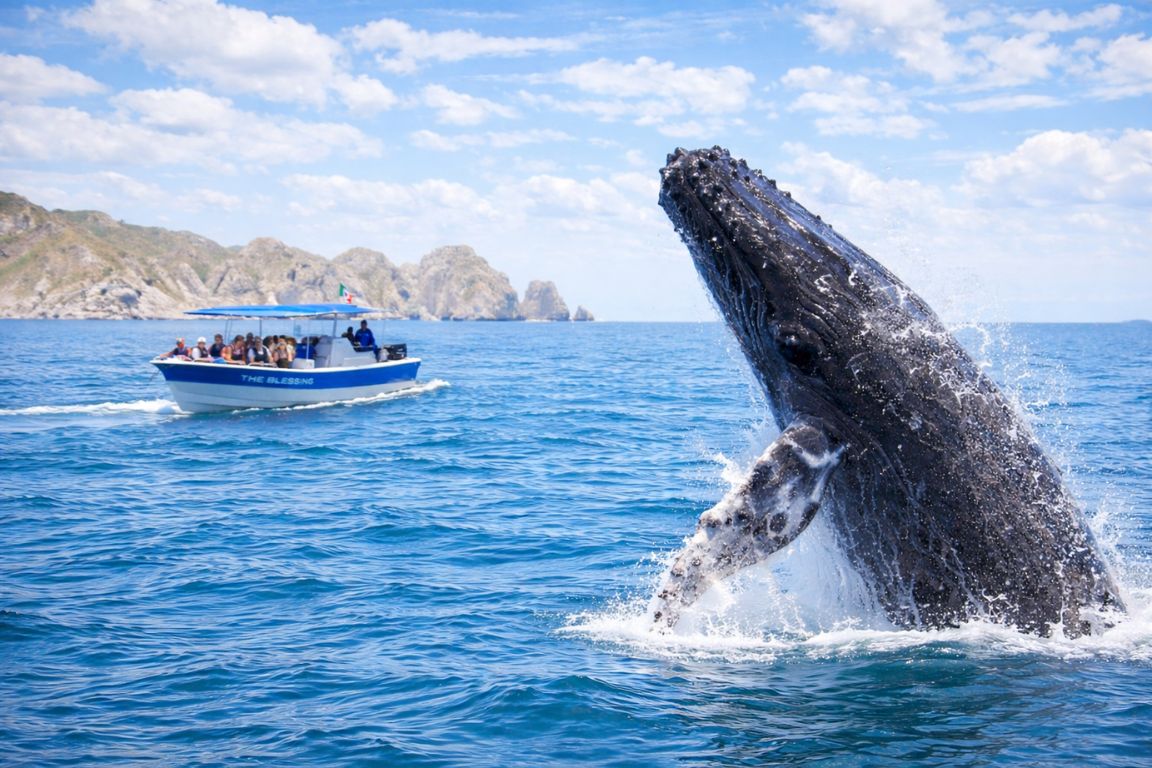
Standard inclusions on basic private charters cover the essential components required for safe legal whale watching operations. The boat itself represents the primary inclusion, providing transportation from marina to whale areas and back with adequate seating for your group size. The captain operates the vessel, navigates to productive whale locations, positions for optimal viewing, and ensures safety throughout the charter. Basic crew typically includes one additional mate assisting with docking, passenger boarding, safety briefings, and general boat operations.
Basic safety equipment meets legal requirements with properly sized life jackets for all passengers stored in accessible locations, fire extinguisher mounted and current, first aid kit available, radio communication for emergencies, and required navigation lights and safety gear. The equipment fulfills minimum standards without premium additions like extensive medical supplies or specialized rescue equipment.
Water provision ensures adequate hydration with bottled water or cooler water available throughout the charter, though quantities vary by operator with some providing generous supplies and others offering minimal amounts requiring passengers to bring supplemental beverages. The water represents the baseline beverage inclusion, with anything beyond water falling into higher service tiers.
Standard charters at the $600-800 level typically include nothing beyond these basics, operating on minimal-cost models providing functional whale watching without extras. Passengers should bring their own substantial snacks, additional beverages, sun protection, medications, and any other items needed for comfort during the charter.
Mid-range additions elevate the experience beyond bare minimum through substantial food, beverage, and equipment enhancements. Snacks move from nonexistent or minimal crackers to quality offerings including fresh fruit platters with melons, pineapples, grapes, and berries, sandwich platters with variety of fillings from simple ham and cheese to more elaborate options, chips and salsa or guacamole providing savory options, granola bars and cookies for sweet treats, and sometimes light lunch items like wraps or quesadillas on longer charters.
Beverage service expands significantly with sodas including Coke, Sprite, and other soft drinks in coolers, beer selection typically Mexican brands like Corona, Pacifico, or Modelo in adequate quantities, bottled water in generous amounts ensuring nobody goes thirsty, and sometimes juice boxes or other beverages accommodating kids and non-drinkers. The open beverage approach means drinking what you want when you want without rationing or additional charges.
Fishing equipment appears on some mid-range charters using sport fishing boats, including rods and tackle allowing trolling for fish during transit or after whale watching concludes, though serious fishing requires dedicated fishing charters rather than whale watching charters with incidental fishing capabilities. Snorkel gear including masks, fins, and snorkels enables brief snorkeling stops at reefs or beaches when groups want activity variety beyond pure whale watching.
The $800-1,200 mid-range tier delivers genuine value through these additions, transforming basic transportation to whale areas into comfortable well-provisioned experiences where groups feel cared for rather than just transported. The food and beverage quality matters, with mid-range operators providing fresh quality items rather than bottom-shelf provisions.
Need help with the travel details? Our guide on how to get to Cabo San Lucas walks you through flights, ground transportation, and timing.
Premium inclusions on luxury charters justify $1,200-2,000+ pricing through comprehensive high-end service and amenities. Gourmet food preparation involves chef-prepared dishes or catering from quality Cabo restaurants, creating proper meals rather than simple snacks. The offerings might include breakfast service with fresh pastries, fruit, and egg dishes for morning charters, lunch service with quality entrees, sides, and desserts for extended charters, or appetizer spreads with cheeses, meats, seafood, and specialty items.
Open bar service provides top-shelf liquor including premium vodka, tequila, rum, and whiskey, craft cocktails mixed by experienced crew with fresh ingredients and proper technique, fine wines both red and white in temperature-controlled storage, champagne or sparkling wine for celebrations and toasts, specialty drinks tailored to group preferences, and premium beer selections beyond basic Mexican brands. The bar service rivals quality restaurants rather than simple coolers with beer.
Professional photography and videography services employ dedicated crew members or contracted professionals capturing your whale encounters and group experiences, using quality camera equipment producing superior images compared to phone cameras, taking hundreds of photos throughout the charter ensuring great shots despite challenging marine conditions, editing and delivering digital galleries within days after the charter, and sometimes including printed photos or albums for premium packages.
Extended time allowances let luxury charters run 5-6 hours accommodating leisurely pacing, multiple activity combinations, full meal service, and comprehensive experiences without rush. The longer durations combined with premium service create all-day adventures rather than efficient whale viewing trips.
Food and beverage expectations vary dramatically by price tier, directly correlating with charter costs. Basic $600-800 charters provide water only or water plus minimal snacks like crackers or chips, requiring passengers to bring substantial food and beverages if they want more than hydration during 2-3 hour trips. The bare-bones provisioning reflects razor-thin margins at budget pricing, with operators cutting every possible cost including food and drinks.
Mid-range $800-1,200 charters deliver satisfying food and beverage service with fresh fruit, sandwiches or wraps, chips and salsa, cookies or bars, sodas, beer, and generous water. The provisions keep adults and kids fed and hydrated throughout 3-4 hour charters without anyone feeling hungry or thirsty. The quality varies from acceptable to good depending on specific operator, but mid-range charters generally provide legitimate value through solid provisioning.
Premium $1,200-2,000+ charters offer restaurant-quality dining experiences with gourmet prepared foods, premium alcohol, craft cocktails, fine wines, and comprehensive service. The food and beverage components alone might cost $200-400 of the total charter fee, representing significant value for groups who would otherwise dine at quality restaurants. The provisions transform charters into floating dining experiences combining whale watching with premium eating and drinking.
| Cabo Boat Adventures detail | Verified status |
|---|---|
| Food and drinks | Included |
| Snorkel gear and paddleboard | Included |
| Hotel transport | Not promised |
| Language | Not stated; confirm English with the operator |
| Boat and access | Assigned from a fleet; confirm before paying |
Private Charter Scheduling And Flexibility
Departure time flexibility allows private charter groups to choose exact departure times within reasonable operator windows, typically 7am-3pm availability. Morning departures between 8am-10am remain optimal for whale watching due to calmer seas, more active whales, and cooler temperatures, but private charters accommodate groups preferring 7am early starts to maximize time on water or 11am-noon late morning departures fitting better with sleep schedules or other activities.
The flexibility eliminates the rigid 8:30am or 2pm fixed departure slots that group tours enforce, accommodating late risers who struggle with early mornings, families with young children needing flexible breakfast and preparation timing, visitors coordinating whale watching around other scheduled activities, and groups with jet lag or travel fatigue affecting wake-up capabilities.
Operators require reasonable notice for departure timing, typically finalizing exact times 24-48 hours before charters rather than day-of decisions, but the ability to choose preferred windows rather than accepting predetermined slots represents significant advantage over group tours. The chosen departure time holds exclusively for your group without other bookings interfering or requiring compromise.
Do not assume a private charter can extend, return early or add time at a fixed hourly rate. Confirm any schedule flexibility and extra-time price with the operator before departure.
If conditions disappoint with whales scarce or inactive, rough seas causing discomfort, or group members experiencing seasickness or fatigue, private charters can cut trips short returning to marina early without disappointing other paying passengers. The early termination might not provide refunds since crew time and fuel were committed, but ending uncomfortable situations beats suffering through remaining charter time when nobody’s enjoying themselves.
The duration flexibility particularly benefits families with young children whose attention spans and comfort levels are unpredictable, seasickness-prone passengers who might feel fine or might need to return quickly, first-time boaters uncertain how they’ll handle extended ocean time, and groups with varying stamina where some members tire before others.
Mid-tour changes allow groups to adjust plans dynamically responding to developing situations rather than following fixed itineraries regardless of circumstances. If whales appear particularly active with breaching, tail slapping, and impressive displays, captains can stay with those specific whales for extended periods rather than moving on schedule to check other areas. The flexibility to linger with spectacular encounters means not missing peak moments because predetermined itineraries demand moving along.
If someone feels seasick, develops headache or discomfort, or needs bathroom breaks, private charters can pause whale watching to address needs without considering other passengers’ schedules. The ability to accommodate individual situations prevents minor issues from ruining entire experiences, with captains adjusting plans ensuring everyone’s basic comfort and safety.
Adding activities mid-tour responds to changing group interests with captains incorporating brief snorkeling stops if conditions are perfect and groups express interest, detouring to visit sea lion colonies at Pelican Rock when time allows, stopping at Lover’s Beach or Divorce Beach for photos and exploration, or trolling fishing lines during transit if groups want to try catching fish alongside whale watching.
Weather flexibility simplifies rescheduling compared to group tours juggling multiple separate bookings from different parties. When weather forecasts predict rough seas, high winds, or storms making whale watching uncomfortable or unsafe, private charter operators coordinate directly with your single group to reschedule for alternative dates during your Cabo stay. The one-on-one communication streamlines decision-making without negotiating with multiple unrelated parties.
Group tours facing weather cancellations must accommodate dozens of individual bookings from unrelated travelers, some with fixed departure schedules, others with flexibility, creating complex rescheduling logistics. Private charters deal only with your group’s constraints and availability, making alternative date coordination much simpler.
The rescheduling typically occurs 12-24 hours before departure when weather forecasts become reliable, with operators proactively contacting groups suggesting alternative dates rather than waiting for conditions to deteriorate. The advance notice allows groups to adjust other Cabo plans accordingly, rebooking restaurants or activities to accommodate shifted whale watching schedules.
Wondering when to book? Check out our guide on the best time to see whales in Cabo – you don’t want to show up during the off-season.
Itinerary customization tailors experiences to group-specific interests and priorities rather than following one-size-fits-all routes. Groups focused purely on whale watching can dedicate entire charter time to finding and observing whales, checking multiple areas, following active pods extensively, and maximizing cetacean encounters without diluting time on other activities. The whale-only focus appeals to serious wildlife enthusiasts, photographers needing extended shooting opportunities, and visitors who’ve done other Cabo activities on previous trips or separate days.
Combination itineraries blend whale watching with complementary activities for groups wanting variety and comprehensive marine experiences. Common combinations include whale watching for 90-120 minutes followed by snorkeling at quality reefs like Santa Maria or Chileno Bay, whale watching plus visits to the Arch and sea lion colonies for photography and landmark viewing, or whale watching combined with beach stops at Lover’s Beach or Divorce Beach for swimming and exploration.
The customization extends to specific interests like photography-focused itineraries with captains positioning boats optimally for shooting angles and lighting, education-focused trips with guides providing in-depth whale biology and behavior information, or celebration-focused charters incorporating special moments like proposal setups or anniversary toasts at appropriate times.
Group input throughout charters allows real-time preferences to shape the experience rather than captains dictating all decisions. When multiple whale pods are visible in different directions, captains can ask groups which whales to approach rather than unilaterally choosing, accommodating preferences for closer whales versus more active distant whales. When whale activity is slow, captains check whether groups want to keep searching or shift to alternative activities like snorkeling or sightseeing.
The collaborative approach creates ownership and investment in the experience with groups feeling heard and accommodated rather than passive passengers following predetermined routes. Captains balance group input with professional expertise, sometimes explaining why certain suggestions won’t work due to safety, regulations, or practical constraints, but genuinely considering preferences whenever feasible.
The input opportunity particularly benefits diverse groups with varying interests, allowing democratic decision-making, families with kids whose needs change throughout trips as children get tired or bored, and visitors with specific goals like photographers needing certain positions or angles who can communicate directly with captains.
Private Charters Vs Group Tours: Making The Decision
Decision factors require evaluating multiple competing considerations to determine which tour type matches your specific situation. Group size fundamentally affects the financial equation with solo travelers and couples paying dramatic premiums for private charters ($300-750 per person versus $85-150 on group tours), while groups of 6+ people reach cost parity or savings making private charters financially sensible choices. Budget constraints establish hard limits on viable options with tight budgets eliminating private charters regardless of benefits, moderate budgets opening private possibilities for larger groups, and generous budgets allowing private charters even for couples when desired.
Priorities determine whether private charter advantages justify costs, with travelers prioritizing flexibility, privacy, and customization willing to pay premiums, while those simply wanting to see whales without complications finding group tours perfectly adequate. Special needs including young children requiring flexibility, seasickness concerns demanding itinerary adjustments, mobility limitations needing accommodation, or celebration coordination requiring privacy push decisions toward private charters despite higher costs.
The decision-making process requires honest assessment of what matters most personally rather than theoretical preferences. Many people claim they’d prefer private charters when presented abstractly but choose group tours when facing actual price differences and realizing whales appear equally spectacular from either boat type. Others dismiss private charters as unnecessary luxuries until specific situations like young children melting down or proposal planning make flexibility and privacy genuinely valuable.
Choose private when privacy and the included activities justify the current whole-boat total. A party of six does not automatically reach cost parity.
Special occasions including proposals, honeymoons, milestone anniversaries, significant birthdays, retirements, or family reunions justify private charter premiums through creating once-in-lifetime memories and accommodating celebration needs. The $300-500 per couple premium becomes minor expense within larger celebration budgets, and the privacy, timing control, and customization enable proper celebration impossible on group tours with strangers present.
Flexibility needs from young children requiring unpredictable bathroom breaks, snack timing, and potential early exits make private charters worth premiums for families who would otherwise stress constantly about disturbing other group tour passengers. Parents paying $200-400 premiums to avoid anxiety about toddler behavior around strangers often report the relief alone justified the additional cost.
A private booking can give a group more control over pacing, but it does not establish medical or accessibility suitability. The Cabo Boat Adventures listing assigns a vessel from a fleet, so anyone with mobility, pregnancy, back or medical concerns should confirm the exact boat and operator requirements before paying.
Photography enthusiasts needing optimal positioning, extended time with whales for multiple shooting opportunities, and ability to request specific approaches benefit enormously from private charter flexibility that group tours with fixed routes and timing cannot provide. Serious photographers often find private charters essential for quality work rather than optional upgrades.
When to choose group tours includes solo travelers and couples on budgets where $170-300 total for two people beats $600-1,500 private charters by such margins that private benefits can’t justify 2-4x cost increases. The math simply doesn’t work for small groups unless celebrating special occasions or needing specific flexibility that group tours cannot accommodate.
Simple straightforward experiences without complications suit group tours perfectly, with travelers wanting reliable whale viewing at reasonable cost finding group tours deliver exactly what’s needed without paying for unnecessary customization and privacy. The social atmosphere on group tours appeals to some personalities who enjoy meeting other travelers and sharing collective excitement when whales breach.
First-time whale watchers uncertain about their interest level should try group tours before committing to expensive private charters, ensuring they actually enjoy whale watching before investing heavily in premium experiences. The group tour provides excellent introduction to whale watching, with future trips upgrading to private charters if the experience exceeded expectations and justified enhanced investment.
Travelers with very limited Cabo time prioritizing efficiency benefit from group tours’ fixed schedules integrating easily into packed itineraries, departing and returning at predetermined times enabling precise planning of other activities without coordination negotiations that private charters require.
We’ve done the legwork comparing the best Cabo whale tours so you don’t have to sort through dozens of similar-sounding operators.
The middle ground exists through small group tours accommodating 12-20 passengers providing compromise between private charter intimacy and large group tour economy. These small group tours cost $95-135 per person, moderately above large group tour pricing but far below private charter rates for couples and small groups. The reduced passenger counts create less crowded experiences with personal attention from guides, easier rail access for viewing, and more intimate atmosphere than 40-60 passenger large boats.
Small group tours appeal to couples wanting better experiences than large boats without private charter costs, solo travelers willing to pay modest premiums for quality improvements, groups of 3-4 people where private charters remain expensive but small group tours provide enhanced experiences at reasonable incremental costs, and travelers valuing middle-ground balance between economy and luxury.
Budget reality check forces honest assessment whether privacy and flexibility justify concrete dollar amounts rather than abstract preferences. Can couples justify spending $400-1,000 extra for private charters versus $200-300 total for group tours? The premium buys privacy from strangers, flexible departure times, customizable itineraries, and ability to adjust duration, but whales breach identically regardless of boat type. The value proposition depends entirely on personal priorities and financial situations.
For families of four, the reality check asks whether $260-900 premiums justify flexibility with children, avoiding stranger interactions, and customization options. Some families easily justify premiums knowing stress reduction and flexibility with unpredictable kids makes vacation enjoyable versus stressful. Other families conclude group tours provide adequate whale watching at dramatically lower costs, using savings for other Cabo activities or future travel.
Groups of six face easier decisions with premiums narrowing to $90-600 total or just $15-100 per person, making private charters more accessible and justified. The budget question becomes whether modest per-person premiums justify substantial experience improvements, with most groups of six concluding private charters represent good value.
| Choose based on | Shared biologist trip | Private charter |
|---|---|---|
| Party preference | Shared boat, maximum 12 | Boat reserved for your group |
| Water activities | Not listed as a snorkel stop | Snorkel gear and paddleboard included |
| Language | English and Spanish | Confirm with operator |
| Access | Not wheelchair accessible; other restrictions apply | Confirm the assigned fleet boat |
| Cost | Check current total for all travelers | Check current whole-boat total |
FAQ: Private Whale Watching Charters In Cabo
1. How much does a private whale watching charter cost in Cabo?
Check the current whole-boat total on the live listing. The verified charter lasts three hours; do not infer boat type, capacity or service tier from an old market range.
2. How many people can fit on a private whale watching boat?
4-15 passengers depending on vessel type. Panga boats accommodate 4-6 people, sport fishing boats 6-8 people, center consoles 6-10 people, catamarans 8-12 people, and luxury yachts 10-15 people. Optimal comfort comes from staying slightly below maximum capacity.
3. Is a private charter worth it for 2 people?
For a couple, compare the current shared total with the current private whole-boat total. Privacy may justify the difference, but whale sightings are never guaranteed by either format.
4. What’s included in a private whale watching charter?
The verified Cabo Boat Adventures listing includes food, drinks, snorkel gear and a paddleboard. Hotel transport is not promised, language is not stated, and the assigned vessel and access need confirmation.
5. How far in advance should I book a private charter?
4-8 weeks for peak season (February-March), 2-4 weeks for shoulder season (December, April). Valentine’s Day and Presidents Day need 8-10 weeks advance. Last-minute bookings sometimes available but limit boat selection and preferred times. Earlier booking secures better vessels and operators.
6. Can we customize our private whale watching charter?
Yes, extensively. Choose departure time within operator windows (7am-3pm typically), adjust duration mid-tour, stay longer with active whales or leave early if needed, add activities like snorkeling or beach stops, request specific focus like photography or education, and coordinate celebrations or proposals. Customization is a primary private charter benefit.
7. Do private charters see more whales than group tours?
No, whale sightings are similar on both. Whales don’t prefer private boats over group tour boats. Success rates depend on season, captain experience, and luck, not tour type. Private charters offer better viewing experiences through unobstructed rail access, optimal positioning, and extended time with whales when found, but don’t see more whales overall than competent group tour operators.
Glossary: Private Whale Watching Charter Terms
Private Charter vs Group Tour: Private charter books entire boat exclusively for your group at flat rate ($600-1,500 total) with complete flexibility over schedule and itinerary. Group tour sells individual tickets ($85-150 per person) on scheduled departures shared with 15-50 strangers following fixed routes and timing. Private charters cost more for small groups but become competitive for 6+ people.
Panga vs Yacht: Panga is small open 22-26 foot fiberglass fishing boat ($600-900) accommodating 4-6 passengers with basic amenities and excellent maneuverability. Yacht is large 40-60+ foot luxury vessel ($2,000+) accommodating 10-15 passengers with premium comfort, multiple decks, air-conditioned cabins, and comprehensive service. Represents opposite ends of charter boat spectrum.
Charter Duration: Total time from departure to return, typically 2-6 hours for whale watching. Standard charters run 3-4 hours providing 2-3 hours actual whale time after transit. Shorter 2-hour charters feel rushed, longer 5-6 hour charters include extended activities or luxury dining. Duration directly affects pricing and experience quality.
Exclusive Booking: Reservation securing entire boat for your group only, preventing operator from accepting other bookings for your time slot. Guarantees privacy, flexibility, and that all passengers are your chosen companions. Contrasts with group tours mixing unrelated parties on shared boats.
All-Inclusive Charter: Pricing structure including boat, crew, food, beverages, equipment, and sometimes activities in single total price without additional charges except tips. Provides budget certainty versus à la carte pricing where extras cost additional. Common on luxury charters, rare on basic charters charging for everything separately.
Split Charter: Arrangement where two unrelated small groups share one private charter boat, splitting costs while maintaining some private charter benefits. Example: two couples sharing 6-passenger boat, each paying $400 of $800 total charter versus $300 private or $170 group tour. Rare but occasionally offered by operators with partial bookings.
Captain’s Discretion: Authority allowing captains to make final decisions about routes, whale approaches, safety adjustments, and tour modifications based on professional judgment. Charter contracts typically include captain’s discretion clauses granting captains override authority on safety and operational matters regardless of passenger preferences.
All-Inclusive Charter: Charter pricing including boat, crew, comprehensive food service, full beverage/bar service, equipment, fuel, and gratuities in single upfront price. Eliminates surprise costs and tipping calculations. Contrasts with base charters where food, drinks, extended time, and tips cost extra beyond quoted rates.
Ready To Book Your Private Cabo Whale Watching Charter?
A private charter makes sense when privacy and the included food, drinks, snorkeling and paddleboarding matter to the group. Do not assume that private means accessible, medically suitable or able to return on demand. Confirm the assigned fleet boat, language, access and operator rules before paying.
Check dates on the Los Cabos private yacht charter rather than making assumptions about costs or availability. Group size, travel dates, desired boat type, duration preferences, and special requests all affect pricing and feasibility. Compare the private yacht for groups of up to 18 with the small-group biologist-led tour to see which fits your group size and budget.
The verified Cabo Boat Adventures charter lasts three hours and includes food, drinks, snorkel gear and a paddleboard. It meets at IGY Dock C and does not promise hotel transport. Because the boat comes from a fleet, confirm the assigned vessel, access details and English-language availability with the operator.
Review the Los Cabos private yacht for groups of up to 18, or the small-group biologist-led tour if a shared boat is a better fit for your dates and group size.
The whales breach the same on private charters and group tours. The difference is everything around the whale watching – who you share it with, how much control you have, and whether the experience accommodates your specific needs or forces you to fit predetermined schedules.
Before paying, confirm the assigned boat, language, capacity, access, meeting point and current terms with the operator.