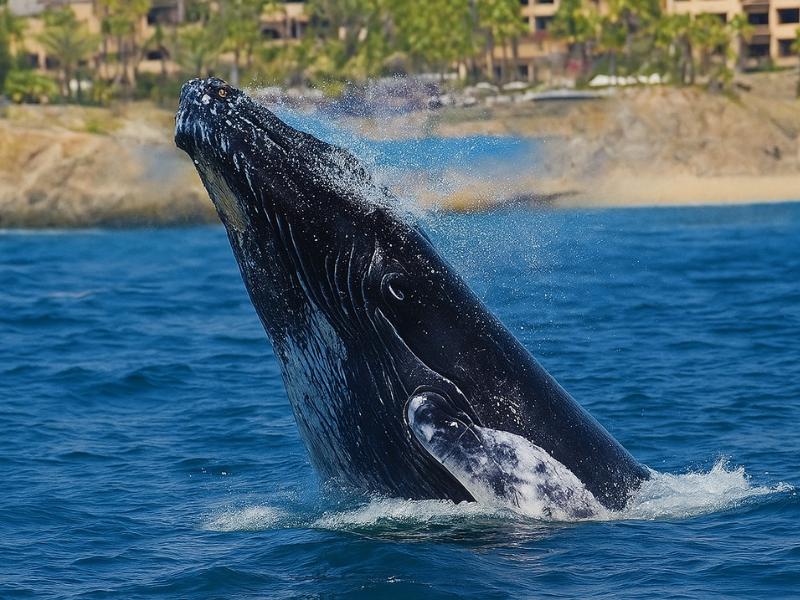
Cabo Whale Watching Season Guide + Complete Calendar
Cabo's whale season centers on winter and early spring, with January through March the strongest planning window. Use the calendar for seasonal fit, then check live product dates and availability.
Visitors sometimes assume Cabo whale watching runs year-round, then discover that a summer or fall trip does not match the seasonal migration. The confusion is understandable because Cabo is marketed as a marine wildlife destination even when the whale window is not stated clearly.
This guide breaks the Cabo whale season down month by month: when the migration reaches local waters, when activity is strongest, when whales begin leaving, and how weather and crowds change across the season. Use it to judge whether your existing dates fit before comparing boats.
Use the calendar to choose the wildlife window, then use the boat format to decide what the day should include. Compare The Cabo Tour Options Below →
January through March is the strongest seasonal match. December and April need an exact-date check; compare the verified formats only after the complete calendar and FAQ.
When Is Whale Watching Season In Cabo San Lucas?
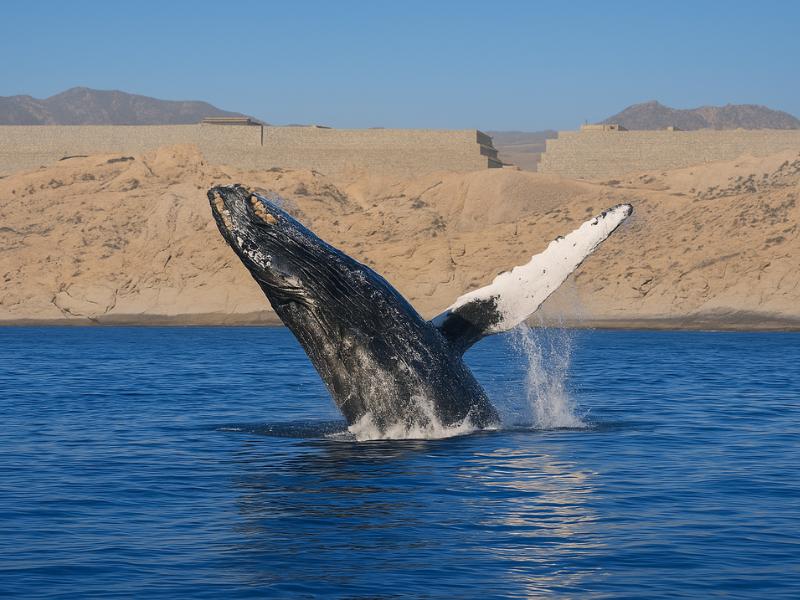
Whale watching season in Cabo San Lucas runs December through April, with peak whale activity and highest sighting success rates occurring January through March. Whales are completely absent from Cabo waters May through November when they migrate back to Alaska feeding grounds.
Migration timeline follows predictable annual patterns driven by whale breeding and feeding cycles. Humpback and gray whales leave Alaska and Pacific Northwest feeding grounds in late October through November, swimming south at speeds of 3-5 miles per hour covering roughly 80-100 miles daily. The 3,000+ mile journey takes 6-8 weeks, with first scout whales arriving in Cabo waters in early December, typically around December 5-10. Whale numbers build throughout December as the migration continues, reaching full population by mid-to-late December.
Peak whale season spans January through March when thousands of humpback and gray whales occupy Cabo waters simultaneously. This three-month period represents the core breeding and calving season when whale populations reach maximum density, behaviors are most active and dramatic, and sighting success rates hit 95-98%.
The departure migration begins in April as whales start the long journey back to Alaska. Early April still sees good whale numbers with mothers and newborn calves preparing for travel. Mid-to-late April shows declining whale populations as more whales depart northward. By early May, nearly all whales have left Cabo waters, with only occasional late stragglers remaining. The return journey to Alaska takes similar 6-8 weeks, with whales arriving back in northern feeding grounds by June to feast on abundant krill and fish throughout summer and fall.
Why whales come to Cabo centers on breeding and calving needs requiring warm protected waters. Alaska’s cold nutrient-rich waters provide excellent feeding grounds where whales bulk up consuming tons of fish and krill daily, building thick blubber layers sustaining them through winter. But these same cold waters prove too harsh for breeding and calving activities.
Newborn whale calves lack the thick blubber insulation adult whales possess, making them vulnerable to hypothermia in cold northern waters. Cabo’s warm 72-77°F water temperatures during winter months provide comfortable conditions for vulnerable newborns to develop strength and blubber before facing the cold northern migration.
The Sea of Cortez and Pacific waters around Cabo offer relatively protected bays and areas where mothers can give birth and nurse calves without fighting rough open ocean conditions constantly. The calmer waters reduce energy expenditure for mothers caring for demanding newborns.
Breeding behaviors including mating, competitive male displays, and courtship occur more successfully in warm comfortable waters where whales can focus energy on reproduction rather than staying warm. The annual migration to warm waters maximizes breeding success and calf survival rates.
Not all months are equal for whale watching. Our guide to the best time to see whales in Cabo shows you peak season versus the shoulder months.
Season length spans five months total from December through April, but quality varies dramatically by month with peak performance concentrated in the middle three months. December represents the building season as whales arrive gradually with early month sighting success around 50-60%, increasing to 70-80% by late December. January through March delivers peak season quality with 95-98% sighting success, maximum whale numbers, most active behaviors, and optimal viewing conditions. April marks the declining season as whales depart with early April maintaining 80-85% success dropping to 60-70% by late April.
The five-month window creates planning flexibility allowing visitors to choose between early season December deals with good but not guaranteed sightings, peak season January-March excellence with premium pricing and crowds, or late season April value pricing with declining but still decent whale encounters.
A family from Michigan booked a Cabo trip last July specifically wanting to see whales after watching nature documentaries about Baja whale watching. They arrived excited, showed up at the marina asking about whale tours, and I had to explain whales left in May and wouldn’t return until December. They were genuinely shocked, saying the travel website never mentioned seasonal limitations. They ended up booking a dolphin tour instead but felt disappointed the entire time because they’d planned the whole vacation around seeing humpback whales breach. They rebooked for the following February and had the whale experience they’d originally wanted, but it required waiting eight months and planning a second Cabo trip.
| Season Phase | Months | Whale Numbers | Sighting Success Rate | Primary Behaviors | What to Expect |
|---|---|---|---|---|---|
| Pre-Season | November | Rare scouts only | 10-20% | Occasional early arrivals | Don’t plan trips around whales |
| Early Season | December | Building gradually | 60-80% (50-60% early, 70-80% late) | Fresh arrivals, energetic, establishing territories | Good deals, fewer crowds, decent odds |
| Peak Season | January | High | 95-98% | Active mating, competitive pods, breaching | Excellent whales, increasing crowds |
| Peak Season | February | Maximum | 98%+ | Peak breaching, maximum activity | Most whales, most crowds, highest prices |
| Peak Season | March | High | 95-98% | Mother-calf pairs, nursing, protective | Excellent whales, Spring Break crowds |
| Late Season | April | Declining | 70-85% (80-85% early, 60-70% late) | Departing whales, mothers with calves | Fewer crowds, declining whales, better prices |
| Off-Season | May-October | None | 0% | Whales in Alaska feeding | No whale watching available |
Complete Month-By-Month Cabo Whale Watching Calendar
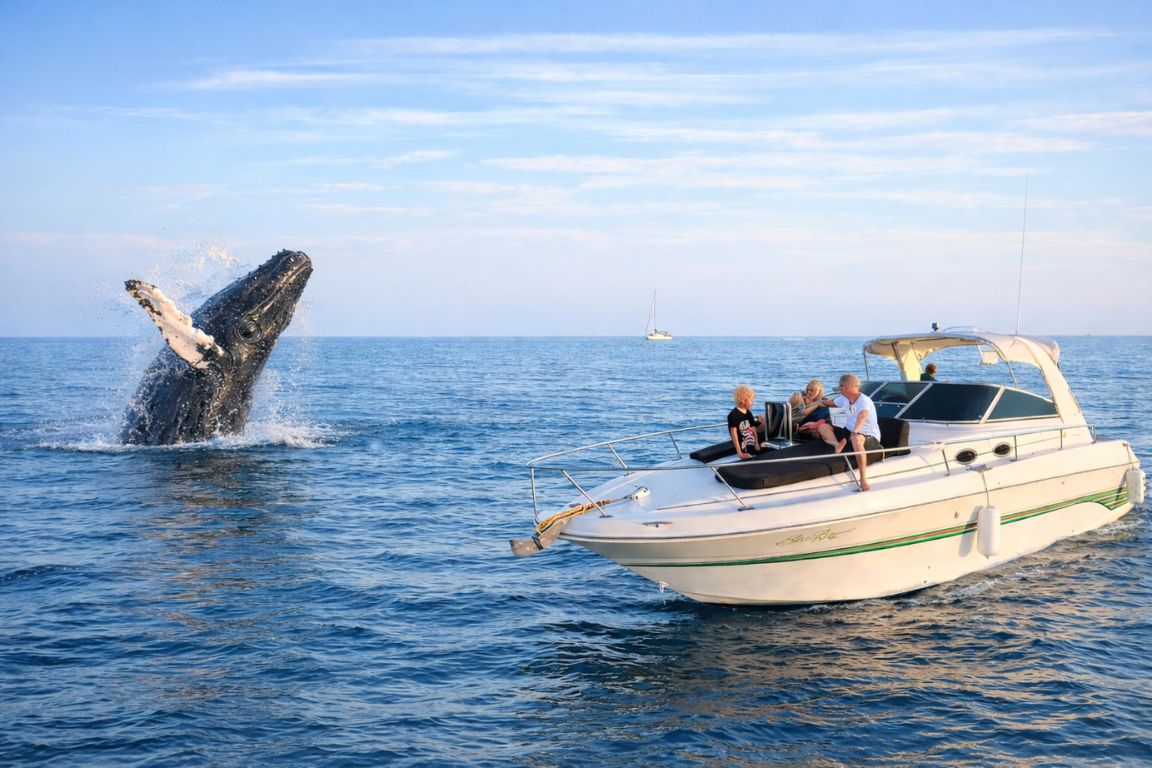
Whale activity builds in December, is strongest from January through March, and winds down in April. For May through November travel, plan around dolphins or another marine activity instead of a seasonal whale trip.
November pre-season brings occasional scout whales, typically single animals or small groups arriving early from Alaska, appearing around mid-to-late November in maybe 10-20% of years. These rare early arrivals create excitement among local captains but don’t justify planning trips around whale watching in November. The vast majority of humpback and gray whale populations remain in Alaska feeding through November, with serious migration not beginning until late month. Visitors booking November trips hoping for whales face 80-90% disappointment rates, essentially gambling on unlikely early arrivals. November works perfectly for other Cabo activities like fishing, diving, and beach time, but whale watching remains unreliable and not recommended for trip planning purposes.
December season beginning marks official whale watching season start as migration brings increasing numbers throughout the month. Early December (December 1-15) sees 50-65% sighting success as first wave arrivals establish presence in Cabo waters. The whales arriving this early tend to be energetic and active, fresh from the long migration and displaying territorial behaviors as they claim preferred areas. Mid-December (December 10-20) improves to 65-75% success as whale numbers build steadily with more arrivals daily. Late December (December 20-31) reaches 70-80% success approaching reliable encounter rates, though still below January-March peak performance.
December weather provides pleasant cool conditions with morning temperatures 68-75°F warming to 75-80°F by midday, comfortable for boat tours without overheating. Sea conditions stay generally calm with occasional winter storms creating 2-3 rough days per month. Tourist crowds remain moderate except Christmas week (December 20-31) when families flood Cabo for holiday vacations creating temporary peak-season crowds and pricing.
December can have lighter demand than the peak months, but prices and availability change by date and product. Check the live listing, especially around Christmas week, and keep the wildlife outcome unpromised.
January excellent conditions deliver 95-98% sighting success as full whale populations occupy Cabo waters engaging in active mating behaviors, competitive male pods vying for females, frequent breaching and tail slapping, and energetic displays throughout tours. The high activity levels create dramatic memorable encounters with whales performing spectacular behaviors rather than just calmly surfacing to breathe.
January weather continues cool comfortable conditions with morning temperatures 65-75°F, the coolest month of whale season requiring light jackets early morning that get removed as sun warms midday. Sea conditions remain calm and predictable with minimal storms, creating optimal viewing with glassy water allowing distant spout spotting and underwater whale shape visibility.
Tourist crowds build throughout January starting moderate early month and reaching busy levels by late January as word spreads about excellent whale activity. The increasing crowds remain manageable compared to February-March chaos, offering good balance between quality whale encounters and reasonable tourism levels.
Pricing increases from December baseline to $95-120 range as demand builds and operators recognize January delivers peak-quality experiences. Tours start booking 3-4 weeks in advance by mid-to-late January, requiring earlier planning than December but not the extreme advance booking February demands.
February peak performance represents the absolute pinnacle of Cabo whale watching with 98%+ sighting success, maximum whale numbers creating encounters with multiple whales visible simultaneously in all directions, peak breaching frequency with whales launching out of water repeatedly, and most active behaviors across all whale season months. Some February days deliver almost too many whales with captains having difficulty choosing which pods to follow as whales surround boats everywhere.
February weather warms slightly from January with morning temperatures 68-78°F, perfect comfortable conditions neither too cold nor too hot for extended boat time. Sea conditions stay calm and stable with minimal weather disruptions, maybe 1-2 rough days entire month.
Tourist crowds peak throughout February making it the single busiest whale watching month. Valentine’s Day week (February 10-17) brings couples seeking romantic whale encounters, Presidents Day weekend (mid-February, varies by year) creates the busiest single period of entire season with maximum boat traffic and full tour bookings, and general February demand from visitors worldwide targeting peak whale month fills boats consistently.
February can bring higher demand, especially around Valentine's Day and Presidents Day. Use the live listings to compare current prices and departure availability, and do not treat a booking as a guaranteed wildlife outcome.
We’ve done the legwork comparing the best Cabo whale watching tours so you don’t have to sort through dozens of similar-sounding operators.
March excellent with families maintains 95-98% sighting success continuing February’s peak performance while adding mother-calf pair sightings as whales who gave birth in January-February begin showing babies to tour boats. The mothers display protective behaviors staying close to calves, teaching them to surface and breathe properly, and occasionally approaching boats seemingly to show off offspring. Watching newborn whale calves learning to breach with awkward belly-flops creates adorable memorable moments.
March weather warms further with temperatures 72-82°F, getting genuinely warm by late month especially on calm sunny days. The warming creates comfortable conditions for cold-averse visitors but can feel hot for extended sun exposure by late March.
Tourist crowds stay heavy throughout March due to Spring Break extending 3-4 weeks as different school districts and universities schedule breaks at different times. Early March, mid-March, and late March all experience Spring Break impacts from various regions, creating sustained high tourism rather than single-week spike. Family groups with kids dominate March crowds compared to February’s couples and mixed groups.
March can be busy during Spring Break. Check current product prices and departure availability once your dates are fixed rather than relying on a static rate or lead-time claim.
April winding down shows 70-85% sighting success as whale populations decline throughout the month with whales departing on return migration to Alaska. Early April (April 1-15) maintains 80-85% success with good whale numbers including many mother-calf pairs taking time heading north. Late April (April 15-30) drops to 60-75% success as most whales have departed, leaving only stragglers and late-departing mothers with young calves.
The whales present in April display calmer behaviors than peak season, focusing on traveling north with fewer dramatic breaches and more purposeful steady swimming. Mothers with calves move slowly, stopping frequently for nursing and rest, creating extended peaceful viewing opportunities rather than action-packed encounters.
April weather heats up significantly with temperatures 75-88°F, getting genuinely hot by late April especially midday. The warming creates less comfortable boat conditions requiring more sun protection and hydration, though early morning tours remain pleasant.
Tourist crowds drop sharply after Spring Break ends (typically first week of April), with mid-to-late April returning to moderate tourism levels. The declining crowds create peaceful uncrowded whale watching for visitors willing to accept lower sighting odds.
Pricing decreases to $90-115 range as operators reduce rates to maintain bookings with declining whale numbers and tourist demand. The lower pricing combined with fewer crowds creates value opportunities for flexible travelers. Tours book easily 2-4 weeks in advance with good availability throughout April.
May through October off-season brings zero whales as entire populations migrate to Alaska by early May, spending summer and fall months feeding in cold nutrient-rich northern waters. Visitors arriving May through October asking about whale watching get disappointment, with tour operators redirecting to year-round dolphin watching, snorkeling, fishing, and other marine activities.
The complete absence of whales during these months results from biological necessity, with whales requiring massive food intake rebuilding blubber depleted during winter breeding season when they barely eat. Alaska’s abundant krill and fish populations provide essential feeding grounds supporting whale survival, making the seasonal migration non-negotiable.
Off-season visitors should embrace non-whale marine activities rather than mourning missing whale season, with May-October offering excellent diving, snorkeling, fishing, and dolphin watching conditions without winter crowds.
| Month | Whale Numbers | Sighting Success | Primary Behaviors | Weather (Air Temp) | Crowds | Pricing | Booking Window | Best For |
|---|---|---|---|---|---|---|---|---|
| November | Rare scouts | 10-20% | Occasional early arrivals | 75-82°F | Light | N/A | Don’t book | Not recommended |
| December | Building | 60-80% | Fresh arrivals, energetic | 68-78°F | Moderate (except Christmas) | Check live listing | 2-3 weeks (4-6 Christmas) | Budget seekers, fewer crowds |
| January | High | 95-98% | Mating, competitive, breaching | 65-75°F | Building to busy | Check live listing | 3-4 weeks | Excellent whales, manageable crowds |
| February | Maximum | 98%+ | Peak activity, maximum breaching | 68-78°F | Peak all month | Check live listing | 6-8 weeks | Best whales, don’t mind crowds |
| March | High | 95-98% | Mother-calf pairs, protective | 72-82°F | Heavy (Spring Break) | Check live listing | 6-8 weeks | Baby whales, families |
| April | Declining | 70-85% | Departing, calmer behaviors | 75-88°F | Decreasing | Check live listing | 2-4 weeks | Fewer crowds, decent whales |
| May-Oct | None | 0% | Whales in Alaska | 80-95°F | Varies | N/A | N/A | No whale watching |
Early Season (December): What To Expect
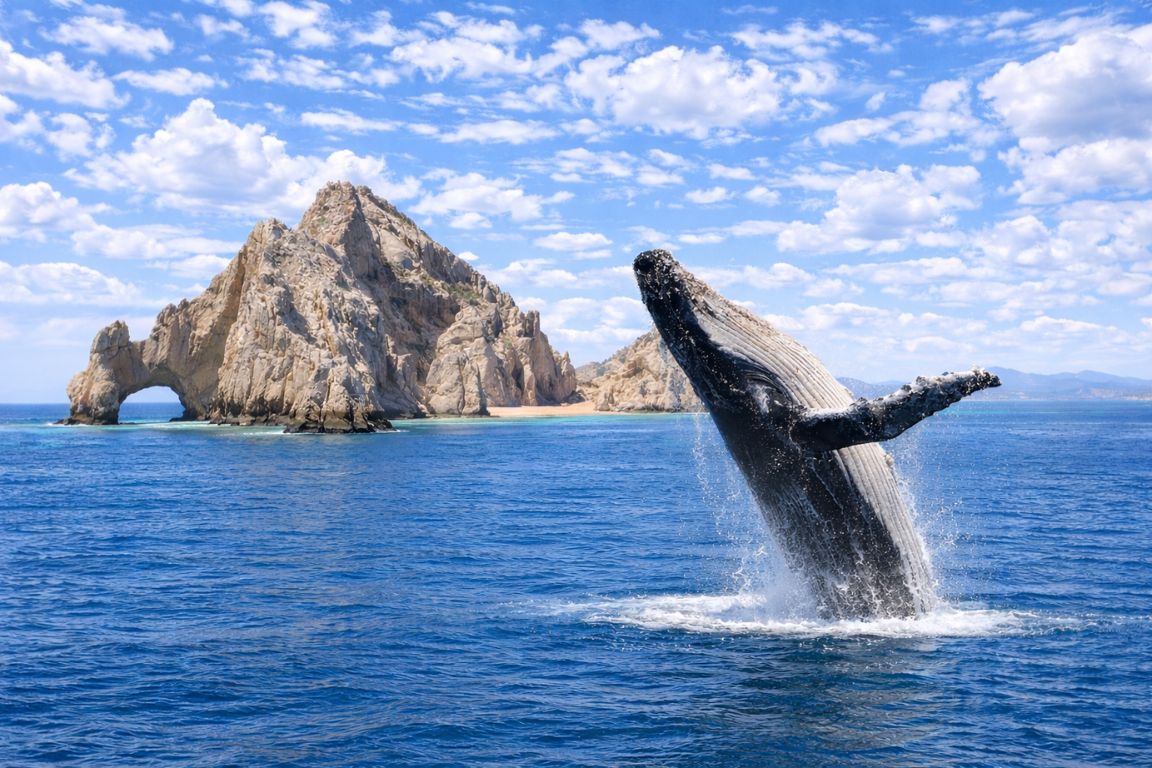
Whale arrival patterns in December follow predictable migration waves spreading across the month. Early December (December 1-10) brings scout whales, typically single animals or small groups of 2-4 whales arriving ahead of main migration. These early arrivals appear sporadically, with some days seeing whales and other days finding none despite searching. The scouts establish presence in Cabo waters, exploring areas and seemingly claiming preferred territories before crowds arrive.
Mid-December (December 10-20) delivers increasing whale numbers as migration accelerates with more whales arriving daily. The gradual buildup means each day brings higher odds of encounters than the previous day, with captains reporting steadily improving sightings throughout this period. By December 15-18, whale numbers reach levels supporting reliable encounters on most tours.
Late December (December 20-31) approaches peak season whale populations as migration nears completion. The whales arriving late month represent the bulk of the population, filling Cabo waters with hundreds of animals simultaneously. Christmas week specifically shows dramatic whale presence increases, with December 26-30 rivaling early January for whale abundance.
Sighting success rates in December vary significantly by timing within the month. Early December (December 1-10) delivers 50-65% success, essentially a coin flip whether tours encounter whales. Tours finding whales typically see 1-3 animals rather than large pods, with sightings often brief as whales move constantly exploring new territory. The uncertainty requires visitors to accept gambling on encounters rather than expecting guarantees.
Mid-December (December 10-20) improves to 65-75% success as increasing whale numbers raise odds. Tours now more likely see whales than not, though still not the 95%+ reliability peak season provides. Multiple whale pods appear more frequently, extending viewing time beyond brief single-whale encounters.
Late December (December 20-31) reaches 70-80% success approaching reliable whale watching. Christmas week specifically hits 75-85% success with whale numbers rivaling January levels. The improving odds make late December viable for travelers wanting strong whale chances without committing to peak season crowds and pricing.
Whale behaviors in December showcase fresh arrivals displaying energy and activity after completing the long migration from Alaska. The whales act almost celebratory reaching warm Cabo waters, breaching and tail slapping frequently as if releasing pent-up energy from 6-8 weeks of steady swimming. The active behaviors create exciting encounters when tours find whales, compensating somewhat for lower sighting odds compared to peak months.
Territorial establishment behaviors emerge as whales stake claims to preferred areas, with males displaying dominance through surface activity and vocalizations. Competitive interactions happen less frequently than peak January-February mating season but occur often enough that tours occasionally witness multiple males posturing near each other.
The whales stay mobile in December, moving frequently between areas rather than settling into predictable patterns. This mobility creates challenges for captains trying to locate whales but also means encounters can happen anywhere, with whales appearing in unexpected locations.
Weather conditions in December provide pleasant comfortable touring with cool mornings warming to moderate afternoon temperatures. Morning departures (8am-10am) start at 68-75°F requiring light jackets or windbreakers for the boat ride out, then warming enough to shed layers by mid-tour. Afternoon temperatures reach 75-82°F, warm but not hot, comfortable for extended sun exposure with proper sunscreen and hat protection.
Sea conditions generally stay calm in December with glassy mornings common, though occasional winter storms pass through creating 2-3 rough days per month. The storms typically arrive and depart quickly, rarely disrupting tours for more than a day at a time. December experiences slightly more wind than January-February, with afternoon breezes picking up creating small chop though rarely making seas uncomfortable.
Water temperature sits at 72-75°F in December, cool but not cold, pleasant if dolphins appear close or spray hits passengers. The cooler water compared to summer months (80°F+) reminds visitors this is winter season despite Cabo’s warm climate.
Crowd levels in December represent the lowest of entire whale season except for the Christmas week anomaly. Early December (December 1-15) sees minimal tourists with tours often running with 60-80% capacity rather than selling out, creating uncrowded relaxed whale watching without competing for boat space or rail positions. Mid-December maintains moderate crowds building gradually as word spreads about arriving whales.
Christmas week (December 20-31) transforms completely with family vacation crowds flooding Cabo, filling hotels and tour boats. The week between Christmas and New Year rivals February-March peak season for tourism density, requiring advance booking and expecting full boats. The Christmas week surge ends abruptly January 1-2 as visitors depart, returning to normal January crowd levels.
The low crowds outside Christmas week create peaceful intimate whale watching experiences, with small groups on boats and minimal competition from other vessels when whales appear. The uncrowded conditions let passengers move freely, access all viewing angles, and interact more personally with guides.
Pricing in December offers the best whale watching deals of entire season, with operators charging $85-110 for tours costing $110-135 in February. The 15-30% December discount reflects uncertainty around whale sightings and moderate demand compared to peak months. Budget-conscious travelers booking December save $25-50 per person versus February pricing while still accessing good whale encounter odds, especially late December.
Christmas week (December 20-31) pricing increases to $100-120, closer to peak season rates due to high holiday demand despite being early season. The week represents the only December period without significant pricing advantages, though still cheaper than February-March rates.
Early booking discounts appear in December more than other months, with operators offering 10-15% reductions for bookings made 6-8 weeks ahead trying to secure early season commitments. These discounts stack with already-low December baseline pricing, creating maximum savings opportunities for planners.
Peak Season (January-March): What To Expect
January characteristics deliver 95-98% sighting success with full whale populations occupying Cabo waters after December’s gradual buildup. Tours encounter multiple whale pods during typical outings, often seeing 5-15 individual whales across 2-3 separate groups. The high whale density creates reliable encounters within 15-30 minutes of leaving the marina, eliminating the extended searching that December sometimes requires.
Active mating behaviors dominate January whale activity with competitive male pods pursuing females, multiple males vying for mating access creating dramatic surface displays, aggressive posturing including breaching and tail slapping to intimidate rivals, and chase sequences where groups of whales swim rapidly for extended periods. The competitive interactions produce the spectacular behaviors whale watchers hope to witness, with multiple whales breaching in succession or simultaneously creating unforgettable moments.
Increasing tourists throughout January start with moderate crowds early month similar to late December levels, then build steadily as January progresses. By late January (January 20-31), whale watching approaches busy season conditions with most tours at or near capacity. The gradual crowd increase means early January offers better balance of excellent whale encounters with manageable tourism than late January’s busier conditions.
February characteristics generally include the season's strongest whale density and active surface behavior. It is the clearest month-level match for a whale trip, but no tour can promise a sighting, a breach or a number of animals.
February is a popular whale-watching month, and holiday periods can affect the departures available. Check the live listing for your date instead of relying on a fixed sellout or lead-time claim.
February pricing reaches season highs at $105-135 reflecting maximum demand and operators capitalizing on peak conditions. The premium rates represent 20-30% increases over shoulder season December and April, with some operators adding specific surcharges for Valentine’s and Presidents Day dates pushing costs even higher.
March characteristics maintain 95-98% sighting success continuing February’s excellent performance with abundant whale populations still present. The primary March difference is increased mother-calf pair sightings as whales who gave birth in January-February begin actively showing calves to tour boats. The mothers display protective behaviors staying extremely close to babies, teaching calves to surface and breathe properly, and occasionally approaching boats seemingly comfortable showing offspring to observers.
Spring Break impact extends throughout March creating sustained heavy crowds rather than single-week surge. Different school districts and universities schedule breaks across 3-4 weeks spanning early, mid, and late March, meaning no quiet periods exist within the month. Family groups with children dominate March tourist demographics compared to February’s couples and January’s mixed groups, changing boat atmosphere to more family-oriented energy.
March weather warms noticeably from January-February with temperatures reaching 72-82°F, getting genuinely warm especially late month. The heating creates comfortable conditions for cold-averse visitors but requires more sun protection and hydration than cooler January-February tours.
Whale behaviors each month show distinct differences despite all three months representing peak season. January focuses on mating with competitive male behaviors dominating encounters including aggressive displays, competitive pod formations with 3-5 males pursuing single females, frequent breaching as males show dominance, and energetic surface activity throughout tours. The January whales act purposeful and driven, engaged in serious mating competition rather than leisurely socializing.
February continues peak mating season but adds maximum whale density creating different encounter dynamics. The sheer abundance means seeing whales everywhere simultaneously, watching multiple breaching events from different whales in different directions, encountering whales every few minutes throughout tours, and experiencing almost overwhelming whale activity. February whales maintain January’s energy levels but the greater numbers create even more spectacular collective displays.
March shifts toward calmer family-oriented behaviors as mating season winds down and mothers focus on calf care. Mother-calf pairs display teaching behaviors with mothers patiently showing babies how to surface, breathe, and dive properly, protective positioning with mothers staying between boats and calves, nursing behaviors sometimes visible at surface, and slower more deliberate movements compared to energetic January-February activity. March whales still breach and perform but with less frequency and intensity than peak mating months, creating gentler more peaceful encounters.
Weather progression across peak season shows gradual warming from January through March. January represents the coolest whale watching month with morning temperatures 65-75°F requiring jackets or windbreakers early, midday warming to 72-78°F comfortable without layers, and overall pleasant conditions neither too cold nor too hot. Sea conditions stay very calm in January with minimal wind and glassy water common.
February continues comfortable conditions slightly warmer than January with mornings 68-78°F, midday reaching 75-82°F, and stable weather with minimal storms or wind. The perfect Goldilocks conditions make February ideal for extended boat time without overheating or chilling.
March shows noticeable warming with temperatures 72-82°F feeling genuinely warm especially on calm sunny days. Late March specifically can feel hot reaching 80-85°F by midday, requiring more sun protection than January-February tours. The heating creates comfortable conditions for people who dislike cool weather but can feel excessive for heat-sensitive visitors especially during extended sun exposure.
Practical recommendation for which peak month: Choose January for active courtship behavior and cooler conditions, then check the live product listing for the departure options on your date.
Choose February for the season's strongest month-level match and accept that it can also be busy. Compare current prices and availability on the live listings, with no guaranteed wildlife outcome.
Choose March for a better chance of observing mother-calf behavior and warmer conditions. Spring Break can affect availability, so check the live listings for your dates.
Late Season (April): What To Expect
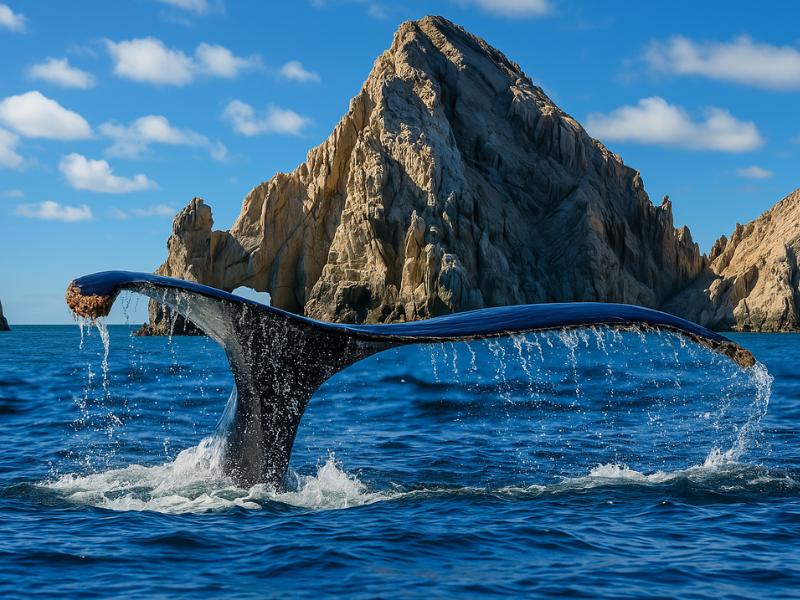
Departure patterns in April show whales leaving Cabo waters gradually throughout the month as the return migration to Alaska progresses. Early April (April 1-15) maintains good whale numbers with most of the population still present, mothers with calves preparing for the long journey north, and whales concentrating in certain areas before departure. The early April period functions almost like an extension of March with abundant whales still available for viewing.
Mid-April (April 10-20) shows noticeable declines as significant portions of whale populations begin the northward migration, leaving noticeably fewer whales than peak months with tours encountering 2-5 whales instead of 10-20, and some days requiring more searching to locate remaining whales. Late April (April 20-30) delivers the lowest whale numbers of official season with most whales already departed, only stragglers and late-departing mother-calf pairs remaining, and tours sometimes searching extensively before finding whales or occasionally missing whales entirely on unlucky days.
The departure process isn’t uniform with childless whales and males typically leaving earlier in April while mothers with newborn calves delay departure until babies gain strength and size for the demanding 3,000-mile swim back to Alaska. The mothers take their time, stopping frequently to nurse and rest, making them the primary whales encountered in late April.
Sighting success rates in April range 70-85% overall with significant variation by timing within the month. Early April (April 1-15) delivers 80-85% success remaining close to peak season reliability, with most tours finding whales though encounters involve fewer individuals and shorter viewing times than January-March. Mid-April (April 10-20) drops to 75-80% success as declining whale numbers reduce odds, creating more uncertainty than peak months but still providing better-than-even chances.
Late April (April 20-30) falls to 60-75% success approaching coin-flip odds whether tours encounter whales. The declining reliability requires visitors to accept gambling on whale sightings rather than expecting near-guarantees that January-March provide. Tours that do find whales in late April typically see mother-calf pairs moving slowly northward, creating extended peaceful viewing opportunities compensating somewhat for lower encounter odds.
Whale behaviors in April shift dramatically from peak season’s energetic mating displays to calmer family-focused travel patterns. Mothers with calves dominate April encounters displaying protective positioning with mothers staying between boats and calves constantly, teaching behaviors showing babies how to surface efficiently and dive properly, nursing at the surface sometimes visible with calves rolling to feed, and very slow deliberate movements as mothers accommodate calves’ limited stamina.
The mothers appear patient and focused on calf care rather than the driven mating urgency visible in January-February whales. Breaching and tail slapping still occur but with reduced frequency, often appearing as playful behaviors from calves learning to use their bodies rather than competitive displays from adults. The overall pace feels leisurely compared to peak season’s constant action, creating peaceful contemplative whale watching rather than spectacular dramatic encounters.
The whales heading north stop frequently to rest, sometimes remaining nearly motionless at the surface for extended periods as calves nurse or recover energy. These resting periods allow tour boats to observe whales for longer durations at close-but-legal distances, though the stationary whales provide less dynamic action than actively moving or breaching whales.
Weather conditions in April warm significantly from peak season’s comfortable temperatures, reaching 75-88°F and feeling genuinely hot especially late month. Early April mornings start pleasant at 75-78°F but warm quickly to 82-85°F by midday, requiring more sun protection than January-March tours. Late April specifically can feel hot with temperatures reaching 85-90°F on warm calm days, creating less comfortable conditions for extended boat time in direct sun.
The warming water temperature reaches 75-77°F in April, noticeably warmer than December-February’s 72-74°F, pleasant if spray or splashing occurs but contributing to overall heating. Sea conditions generally stay calm in April though afternoon winds pick up more frequently than peak season, occasionally creating choppier conditions by 2-3pm making morning tours preferable.
The heating creates challenges for heat-sensitive visitors, young children, or anyone uncomfortable in warm conditions for 2-3 hours. Adequate hydration, high SPF sunscreen, hats, and light breathable clothing become essential rather than optional in April compared to cooler January-February where sun protection matters less.
Crowd levels in April drop sharply after Spring Break ends, typically the first week of April, returning to moderate tourism similar to early January levels. Mid-April through late April sees the quietest whale watching of the entire season outside early December, with tours often running at 60-80% capacity rather than selling out, fewer tour boats on the water competing for whale encounters, and generally peaceful uncrowded conditions.
The declining crowds create relaxed whale watching without jostling for rail space, easy movement around boats for optimal viewing angles, more personal interaction with guides who have time for individual questions and conversations, and minimal competition from other vessels when whales appear. The uncrowded April experience resembles December’s peaceful conditions but with better whale odds.
Pricing in April decreases from peak season rates to $90-115 range, representing 15-25% discounts from February-March pricing and creating better value for budget-conscious travelers. Early April maintains slightly higher rates at $100-115 while late April drops further to $85-100 as operators discount aggressively to maintain bookings with declining whale numbers and tourist demand.
The lower April pricing combined with reduced crowds creates value opportunities for flexible travelers willing to accept 70-85% sighting odds instead of 95%+ guarantees. The savings compared to peak season can fund additional tours, upgrades to smaller boats, or other Cabo activities with money saved on whale watching.
Cabo Whale Watching Crowds And Tourism By Month
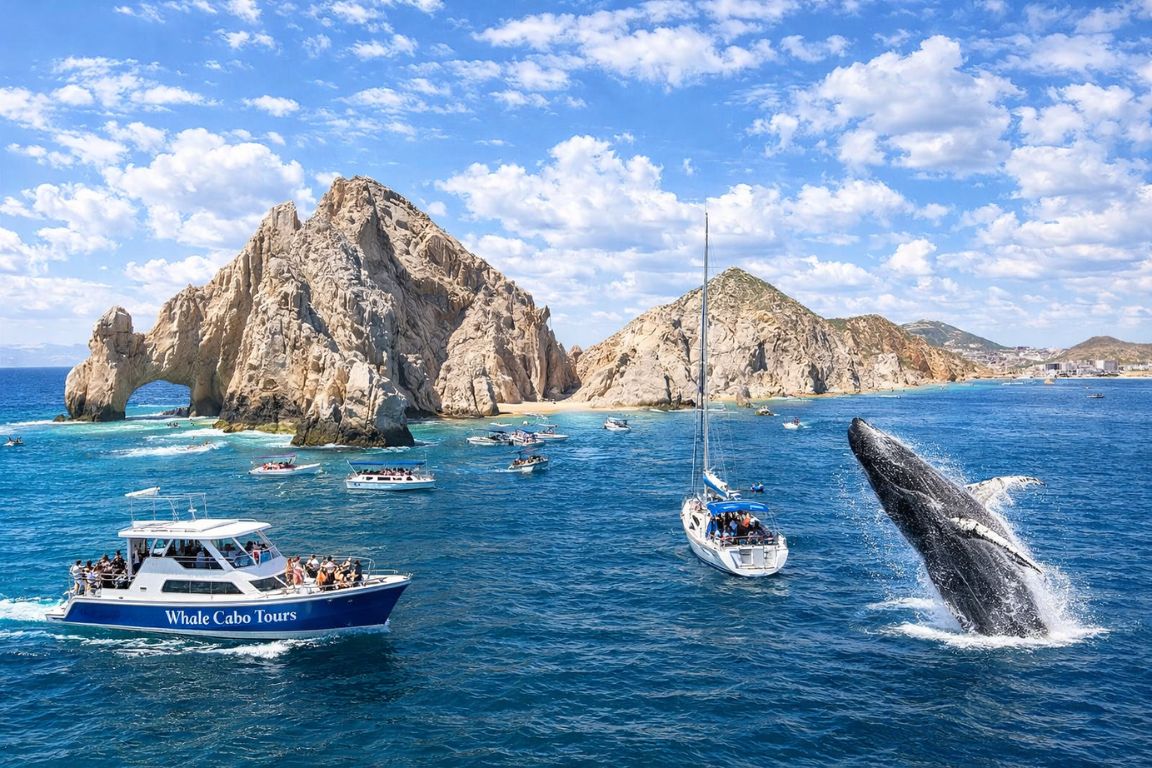 December crowds remain moderate throughout most of the month with tours running 60-80% capacity and hotels maintaining comfortable occupancy rather than selling out. Early December (December 1-15) sees the lightest tourist traffic of whale season with minimal competition for tour spots, easy restaurant reservations, and uncrowded marina areas. Mid-December (December 10-20) builds gradually as word spreads about whale arrivals and visitors target pre-holiday travel, increasing from light to moderate tourism levels but staying comfortable.
Christmas week (December 20-31) transforms completely with a massive spike in family vacation crowds flooding Cabo. The week between Christmas and New Year rivals February-March peak season for tourism density with fully booked hotels, sold-out whale tours, crowded restaurants requiring reservations, and heavy boat traffic on the water. The Christmas surge creates temporary peak conditions despite being early whale season, then drops dramatically January 1-2 as holiday travelers depart.
January crowds build steadily throughout the month following a predictable progression from moderate to busy conditions. Early January (January 1-15) starts with moderate tourism similar to mid-December levels after the Christmas exodus, with tours 70-85% full and comfortable conditions. The New Year’s period (January 1-3) shows brief elevated crowds from holiday carryover then normalizes quickly.
Mid-January (January 10-20) increases to busy levels as tourists target optimal whale watching with strong encounter odds and manageable crowds compared to February-March chaos. Tours consistently reach 85-95% capacity, popular operators begin selling out preferred morning departure times, and marina areas show noticeably higher foot traffic.
Late January (January 20-31) approaches peak season conditions with tours at or near capacity, advance booking becoming necessary rather than optional, and tourism levels rivaling early February. The late January surge reflects savvy travelers targeting excellent whale encounters before February’s extreme crowds and pricing arrive.
February crowds peak throughout the entire month without variation or relief, making it the single busiest whale watching period of the year. Early February, mid-February, and late February all maintain maximum tourism density with fully booked tours, sold-out hotels, and heavy marina traffic. The sustained peak conditions mean no strategic timing within February avoids crowds.
Valentine’s Day week (February 10-17) creates the year’s most romantic whale watching atmosphere with couples dominating tours, operators offering special packages and champagne services, and premium pricing for the holiday. The Valentine’s surge adds to already-high February baseline creating maximum booking difficulty.
Presidents Day weekend (typically third Monday of February, around February 15-17) represents the single busiest period of entire whale season with American long-weekend travelers flooding Cabo, tours selling out 8-10 weeks in advance, and premium surcharges added to standard February rates. The three-day weekend creates peak-within-peak conditions requiring earliest booking and highest prices.
March crowds stay heavy throughout with Spring Break extending 3-4 weeks as different school districts, universities, and regions schedule breaks at different times. Early March (March 1-10) sees first wave Spring Break travelers with college students and early-break school districts. Mid-March (March 10-20) continues heavy with second wave as more districts hit break weeks. Late March (March 20-31) maintains crowds through final Spring Break wave and Easter holiday (when it falls in March, varies by year).
The extended Spring Break period means March never experiences quiet periods, instead maintaining sustained heavy tourism for 4+ consecutive weeks. Family groups with children dominate March demographics creating different boat atmosphere than February’s couples or January’s mixed groups. The family focus means tours adjust to kid-friendly pacing and education.
April crowds decline sharply after the first week as Spring Break ends and tourists return home for school and work commitments. Early April (April 1-7) shows lingering Spring Break and Easter crowds depending on holiday timing. Mid-April (April 8-20) drops to moderate levels with tours running 60-75% capacity, easy bookings, and comfortable uncrowded conditions. Late April (April 20-30) becomes the quietest whale watching period outside early December with light tourism, tours sometimes departing half-full, and peaceful whale watching without competing boats or crowded railings.
The rapid April decline creates dramatic contrast from March’s chaos to late April’s tranquility within just 2-3 weeks, offering travelers seeking peace and space excellent opportunities at the cost of declining whale numbers.
Booking windows change with the calendar and the individual product. Holiday dates may draw more demand, so use live availability rather than a fixed advance-booking formula.
January and February availability varies by date, departure time and product. Open the live listings when your travel dates are fixed.
Spring Break can affect March availability, while April is a shoulder month whose exact operating dates need confirmation. Check the live listing for both.
Prices vary by product, date and departure. Compare the live listings rather than using static seasonal ranges or surcharge claims.
The best deals appear in December at $85-110 representing 20-30% discounts from peak February pricing. April drops to $90-115 as season ends, offering moderate savings though not quite matching December’s rock-bottom rates. Christmas week (December 20-31) pricing increases to $100-120 eliminating typical December discounts due to holiday demand spike.
January pricing sits at $95-120 representing middle ground between December deals and February premiums, with early January closer to December rates and late January approaching February pricing as demand builds.
| Month Period | Crowd Level | Booking Window | Tour Pricing | Boat Availability | Tourism Character |
|---|---|---|---|---|---|
| Early December | Light | 1-2 weeks | Check live listing | Excellent, tours half-full | Quietest whale season |
| Mid December | Moderate | 2-3 weeks | $90-105 | Good availability | Building gradually |
| Late December (Christmas) | Peak | 4-6 weeks | Check live listing | Limited, books fast | Holiday family surge |
| Early January | Moderate | 2-3 weeks | Check live listing | Good availability | Post-holiday normal |
| Mid-Late January | Busy | 3-4 weeks | Check live listing | Filling up | Building to peak |
| All February | Peak | 6-8 weeks | Check live listing | Selling out early | Busiest month |
| Valentine’s Week | Maximum | 8-10 weeks | Check live listing | Very limited | Couples, romantic |
| Presidents Day | Maximum | 8-10 weeks | Check live listing | Extremely limited | Busiest single period |
| All March | Heavy | 6-8 weeks | Check live listing | Limited availability | Spring Break sustained |
| Early April | Moderate-Heavy | 3-4 weeks | $95-115 | Good availability | Spring Break tail end |
| Mid-Late April | Light-Moderate | 2-4 weeks | Check live listing | Excellent, tours often half-full | Quietest besides early Dec |
Planning Your Visit Around Whale Season
Balancing factors requires evaluating competing priorities since no single month delivers perfection across all dimensions. Whale encounter quality peaks January-March with 95-98% sighting success and maximum behaviors, but these same months bring peak crowds and highest pricing. December and April offer fewer crowds and lower costs but reduce whale reliability to 60-85% success. Weather improves from cool January (65-75°F) to warm March (72-82°F) to hot April (75-88°F), appealing differently to cold-averse versus heat-sensitive travelers.
The fundamental trade-off pits whale quality against crowd comfort and budget constraints. Travelers prioritizing absolute best whale encounters must accept February’s peak crowds and $105-135 pricing. Budget-conscious visitors choosing December save $20-40 per person but gamble on 60-80% whale odds. Crowd-averse travelers selecting April enjoy peaceful tours but face declining whale numbers and warming temperatures.
Weather sensitivity affects monthly preferences with January’s cool mornings requiring light jackets appealing to heat-sensitive visitors while making cold-averse travelers uncomfortable. March’s 72-82°F warmth pleases those disliking cool conditions but can feel hot during extended sun exposure. April’s 75-88°F heat challenges anyone uncomfortable in warm conditions for 2-3 hours on boats.
The balancing act requires honest self-assessment about which factors matter most personally. Families on tight budgets prioritize pricing and may choose December despite lower whale odds. Honeymooners seeking best possible experience select February regardless of crowds and costs. Retirees with flexible schedules target January or early April balancing quality with reasonable crowds and moderate pricing.
Flexible dates strategy unlocks shoulder season advantages through timing visits in December or April rather than committing to peak January-March window. December (especially mid-to-late December) delivers 70-80% whale success with $85-110 pricing, 20-30% below February rates, while maintaining uncrowded peaceful conditions. The December gamble means accepting that 20-30% of tours might miss whales, requiring visitors to view whale watching as hopeful opportunity rather than guaranteed certainty.
April (especially early April) provides 80-85% success with declining crowds and $90-115 pricing, representing solid odds without peak season’s intensity. The April strategy works for travelers who completed their primary Cabo vacation goals and treat whale watching as bonus activity rather than trip centerpiece, accepting that late April visits risk missing whales entirely as populations depart.
Flexible travelers booking 4-6 week Cabo stays spanning December-January or March-April optimize by scheduling whale tours early in trip allowing rescheduling if weather or whale activity disappoints. The extended stays provide multiple booking opportunities and reduce pressure on any single tour delivering perfect encounters.
Peak season commitment requires accepting specific demands in exchange for optimal whale experiences. Booking 6-8 weeks in advance becomes mandatory rather than optional, with February and March dates selling out at quality operators. Last-minute peak season bookings settle for whatever remains available, typically afternoon tours, large boats, or budget operators after preferred options fill.
Premium pricing at $105-135 represents 20-35% increases over shoulder season rates, adding $20-50 per person to whale watching budgets. Families of four pay $80-200 more for February tours versus December or April alternatives. The premium buys near-guaranteed spectacular whale encounters, maximum whale numbers, most active behaviors, and peak-quality experiences worth the investment for travelers prioritizing whales above other considerations.
Heavy crowds throughout peak season mean full boats competing for rail space, multiple tour vessels surrounding popular whale pods, busy marina areas, and generally higher-energy more chaotic atmosphere. The crowds don’t prevent excellent whale watching but eliminate the peaceful intimate encounters shoulder season provides. Visitors who dislike crowds or feel overwhelmed in busy tourist environments struggle with peak season conditions regardless of whale quality.
January through March is the strongest planning window for a Cabo whale trip. Actual wildlife outcomes vary by trip, including whether whales appear, how many you see and which behaviors occur. Peak-season dates may still suit first-time and inflexible travelers; compare the live product, boat format and current total instead of treating any encounter as certain.
Off-season alternatives for May-November visitors focus on non-whale marine activities since humpbacks and gray whales are completely absent these months. Dolphin watching tours run year-round with 60-70% sighting success, providing playful interactive encounters with resident bottlenose and common dolphin populations. The dolphins bow-ride boats, jump acrobatically, and display behaviors entertaining enough to satisfy visitors understanding they’re different experiences than whale watching.
We’ve broken down Cabo whale watching vs dolphin watching so you can figure out which one matches what you’re looking for – or if you should do both.
Snorkeling and diving tours access Cabo’s excellent reefs, underwater rock formations, and marine life including tropical fish, sea turtles, rays, and occasional whale sharks (summer months). The underwater experiences showcase Cabo’s marine diversity beyond cetaceans, with many visitors finding snorkeling equally or more enjoyable than whale watching depending on personal interests.
Sportfishing peaks during summer months with excellent catches of marlin, dorado, tuna, and other game fish. The fishing calendar runs opposite whale season, making May-October optimal fishing months. Deep sea fishing charters, inshore fishing, and surf fishing all thrive during whale-less months, providing signature Cabo marine experiences for anglers.
Beach activities, water sports, kayaking, paddleboarding, and coastal tours fill off-season marine recreation needs. The warmer May-October weather (80-95°F) creates ideal conditions for swimming and water sports that cooler December-April whale season doesn’t support as well. Off-season visitors should embrace the different seasonal offerings rather than mourning missed whale season.
Booking timeline optimizes planning by coordinating flights, hotels, and tours according to monthly demand patterns. For December whale watching, book flights 3-4 months ahead securing reasonable rates, hotels 2-3 months ahead for good selection and pricing, and whale tours 2-4 weeks ahead (4-6 weeks for Christmas week specifically). The moderate December demand allows relatively compressed booking timeline compared to peak months.
January requires booking flights 4-5 months ahead as demand builds, hotels 3-4 months ahead especially for late January when occupancy increases, and whale tours 3-4 weeks ahead by mid-month. The building January demand necessitates earlier planning than December.
February and March can be busy for flights, hotels and whale departures. Compare live travel prices and product availability for your exact dates instead of using a fixed booking timeline.
April’s declining demand allows booking flights 3-4 months ahead, hotels 2-3 months ahead, and whale tours just 2-4 weeks advance. The relaxed April timeline accommodates more spontaneous planning for flexible travelers.
Use the Cabo whale watching tour comparison to match a verified trip to your month and the way you prefer to travel. If your dates fall in January through March, the small-group biologist tour is a strong starting point. For December or April, open the live listing and verify your exact date first.
We’ve mapped out how to plan your visit to Cabo whale tours based on what actually matters – booking, timing, and avoiding common mistakes.
FAQ: Cabo Whale Watching Season
1. What months can you see whales in Cabo San Lucas?
December through April only. Peak whale watching occurs January through March with 95-98% sighting success. December shows 60-80% success as whales arrive, April delivers 70-85% success as whales depart. Whales are completely absent May through November when they migrate back to Alaska feeding grounds.
2. What is the best month for whale watching in Cabo?
February is generally the strongest month for whale density, January combines active behavior with cooler conditions, and March is associated with more mother-calf pairs. Check live prices and availability for your date.
3. Can you see whales in Cabo in November?
Extremely rare, only 10-20% chance of occasional scout whales arriving early. Don’t plan November trips around whale watching. The main migration doesn’t begin until late November, with reliable whale watching starting mid-December. November visitors should focus on other Cabo activities like fishing, diving, and dolphin watching.
4. When do whales arrive in Cabo?
First scout whales arrive early December (typically December 5-10). Whale numbers build throughout December with mid-December seeing increasing arrivals and late December approaching peak populations. Full whale season begins reliably by December 15-20. The migration from Alaska takes 6-8 weeks starting late October through November.
5. When do whales leave Cabo?
Whales begin departing in April with most leaving by late April/early May. Early April (April 1-15) still maintains good whale numbers. Mid-to-late April (April 15-30) shows declining populations as whales migrate back to Alaska. By early May, nearly all whales have left with only occasional stragglers remaining.
6. Is December too early for whale watching in Cabo?
No, but timing matters. Early December (December 1-10) shows 50-65% success with uncertain sightings. Mid-to-late December (December 15-31) delivers 70-80% success, approaching reliable encounters. December offers best pricing ($85-110) and fewest crowds, making it good value for travelers accepting slightly lower odds than peak season’s 95%+ guarantees.
7. Is April too late for whale watching in Cabo?
No, but expect declining numbers. Early April (April 1-15) maintains 80-85% success with good whale viewing, especially mother-calf pairs heading north. Late April (April 20-30) drops to 60-75% success as most whales depart. April offers fewer crowds and lower pricing ($90-115) but warmer weather (75-88°F) and less reliable sightings than peak months.
8. Why are there no whales in Cabo during summer?
Whales migrate to Alaska May-November to feed in cold nutrient-rich waters filled with abundant krill and fish. Cabo’s warm waters are perfect for breeding and calving but lack the massive food sources whales need. Whales spend summer and fall rebuilding blubber reserves depleted during winter breeding season when they barely eat, making the seasonal migration essential for survival.
Glossary: Cabo Whale Watching Season Terms
Whale Season (December-April): The five-month period when humpback and gray whales occupy Cabo waters for breeding and calving. Runs December through April with peak activity January-March. Whales are completely absent May through November when they migrate to Alaska feeding grounds. Timing your Cabo visit within whale season is essential for whale watching opportunities.
Peak Season vs Shoulder Season: Peak season (January-March) delivers 95-98% whale sighting success, maximum whale numbers, most active behaviors, but also heaviest crowds and highest pricing ($105-135). Shoulder season (December and April) offers fewer crowds and lower costs ($85-115) but reduced whale reliability at 60-85% success rates.
Migration Timing: The predictable annual cycle where whales leave Alaska late October-November, arrive in Cabo early-to-mid December, stay through March, and depart in April returning to Alaska by June. The 3,000+ mile journey takes 6-8 weeks each direction, driving the December-April Cabo whale watching season.
Sighting likelihood: January through March is generally the strongest part of the season. December and April are shoulder months that need an exact-date check. Wild sightings remain unpromised.
Mother-Calf Pairs: Female whales with newborn babies, most commonly seen in March and April as mothers prepare to migrate north with calves born in January-February. These pairs display protective behaviors, teaching activities, slow leisurely movements, and nursing at the surface. Watching mothers with calves creates gentler more peaceful encounters than peak mating season displays.
Mating Season vs Calving Season: Mating season (primarily January-February) features competitive male behaviors, aggressive displays, breaching, and energetic activity as whales breed. Calving season (late February through April) involves pregnant females giving birth and mothers caring for newborn calves with protective nurturing behaviors. Both occur during Cabo’s December-April whale season.
Arrival/Departure Patterns: The gradual buildup and decline of whale populations. Arrival pattern shows first scouts in early December, increasing numbers mid-December, and full populations by late December. Departure pattern begins in April with declining numbers throughout the month and nearly complete exodus by early May.
Off-Season (May-November): The seven months when whales are completely absent from Cabo waters while feeding in Alaska. Whale watching tours don’t operate during off-season. Visitors during these months should book dolphin watching, snorkeling, diving, or fishing tours instead as alternative marine wildlife experiences.
Ready To Book Your Cabo Whale Watching Tour?
Cabo whale watching season runs December through April with peak encounters January through March delivering 95-98% sighting success, maximum whale numbers, and most spectacular behaviors. December offers budget-friendly early season opportunities with 60-80% odds and minimal crowds. April provides peaceful late season encounters with 70-85% success and declining tourism. Outside this five-month window, whales are completely absent from Cabo waters, making timing your visit within whale season essential for experiencing humpback and gray whale migrations.
Once your month is fixed, compare the verified products for boat style, duration, meeting or transfer details and current availability. December and April require an exact-date check before a whale offer is shown.
The right expectation changes by month. January through March offers the strongest seasonal fit, while December and April depend more heavily on the exact date. The live product listing is the place to confirm whether a departure is offered for your day.
Check availability on the Dec 15–Apr 15 Arch sail, or browse all current whale tours, and see what is open on your dates. We provide honest season guidance helping you decide if your timing works well for whale watching or if you should adjust travel dates for better whale encounter odds.
The whales arrive in December, peak in January-March, and depart in April. The question is when you’re coming to Cabo and what you can expect during your visit timing.
From the guides at Cabo Whale Tours who’ve worked December’s first arrivals, February’s spectacular peak days with whales breaching everywhere, March mother-calf pairs teaching babies to breach, and April’s final departing whales heading back to Alaska, across every month of every season for years.