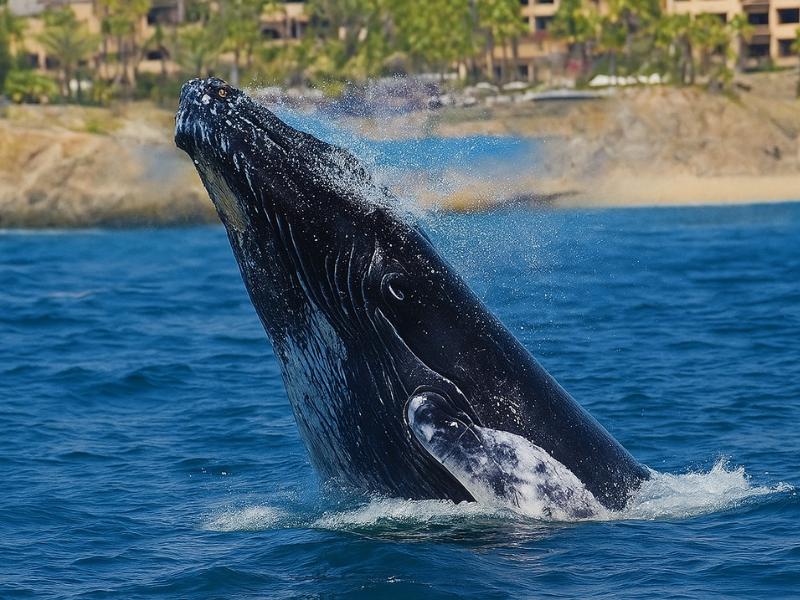
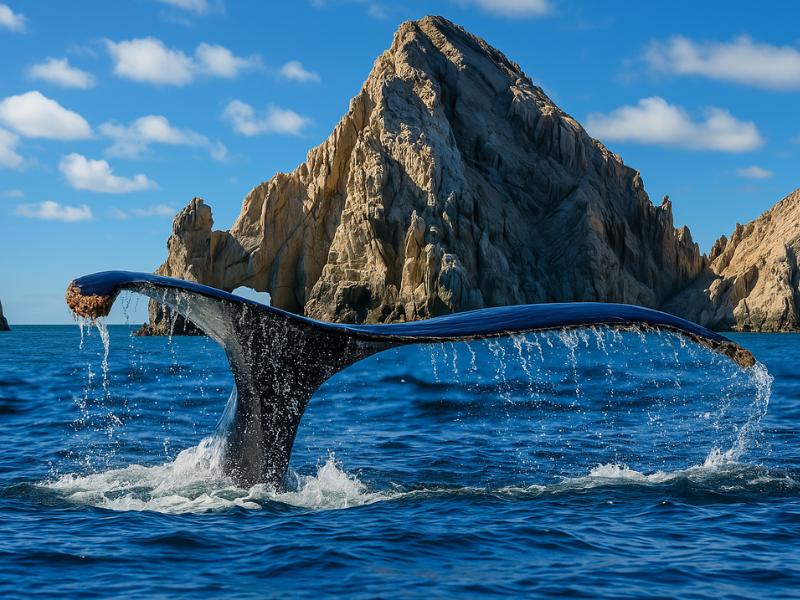
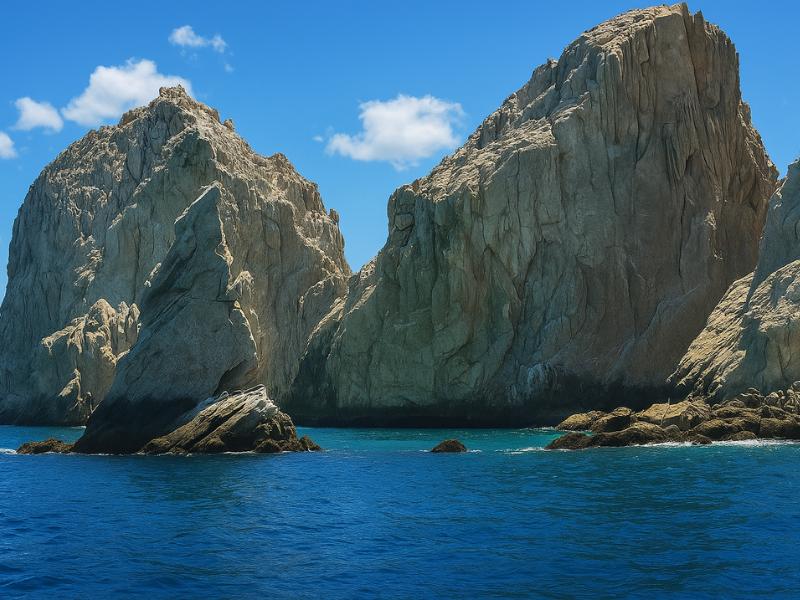
Cabo Whale Watching Vs Dolphin Watching
Whales or dolphins in Cabo? Let the month decide first, then compare the kind of wildlife behavior and boat experience you want. Any combined sighting remains a possibility rather than a promise.
Whale watching and dolphin watching solve different trip decisions. Whales are seasonal visitors, while dolphins may be encountered throughout the year. Their behavior, predictability and the structure of the boat trips differ as much as the animals themselves.
At Cabo Whale Tours, we’ve guided thousands of visitors through both whale and dolphin encounters over the years, and we know exactly how these experiences differ and which works better for different travelers and situations. This guide breaks down the key differences between whale and dolphin watching in Cabo: when you can actually see each animal (whales are seasonal, dolphins are year-round), how the behaviors and encounters differ (whales breach dramatically, dolphins play interactively), what the tours look like and cost, which experience resonates with different personality types and age groups, and how to choose the right option based on when you’re visiting and what you value in marine wildlife encounters. Whether you’re deciding between the two, trying to see both, or just understanding what you’re actually booking, we’ll help you make the right choice.
Choose the animal and month first; only then should the boat, duration and inclusions decide the purchase. Compare The Cabo Tour Options Below →
The verified products here are whale-focused. Dolphins may appear, but no listed product is a dedicated dolphin tour and no combined sighting is promised.
Cabo Whale Watching Vs Dolphin Watching: Key Differences
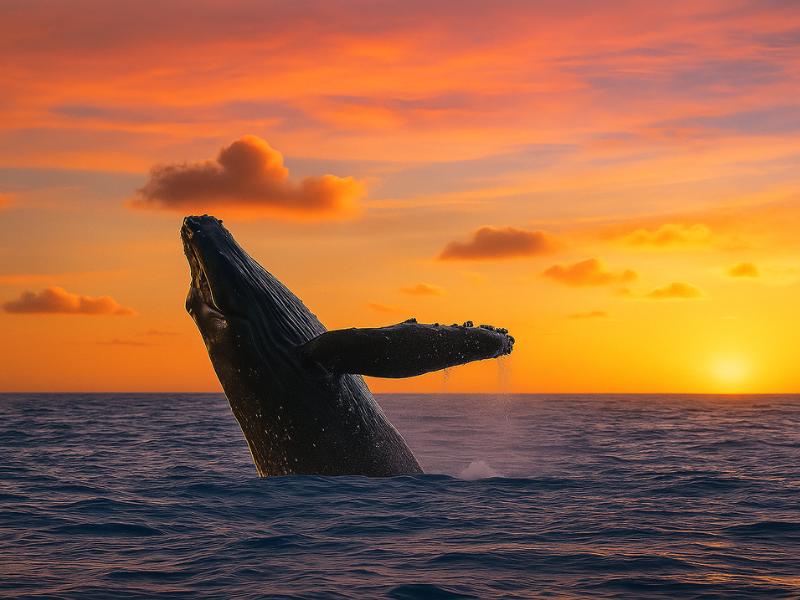
Whales visit Cabo seasonally from December through April, dolphins live here year-round. Whale encounters feature dramatic size and power with breaching and tail slapping behaviors, while dolphin encounters showcase playfulness with bow-riding, jumping, and interactive swimming. Whale sightings reach 95%+ success rates during peak season, dolphins appear on 60-70% of tours throughout the year.
Whale encounters often feel powerful because of the animals' scale, while dolphins can create a faster, more playful impression through bow-riding and group movement. Both remain wild encounters, so the exact behavior changes from trip to trip.
Seasonality differences fundamentally separate whale and dolphin watching experiences. Humpback and gray whales migrate to Cabo waters exclusively December through April, arriving from Alaska feeding grounds to breed and give birth in warm Baja waters. They’re completely absent May through November, making whale watching impossible outside the winter season. Peak whale activity concentrates January through March when thousands of whales occupy Cabo waters.
Dolphins maintain permanent resident populations in Cabo year-round with no seasonal variation. Common dolphins, bottlenose dolphins, and spotted dolphins live in the Sea of Cortez and Pacific waters surrounding Cabo throughout the year. You can encounter dolphins any month from January through December, making dolphin watching the only marine mammal option for visitors arriving May through November when whales are gone.
The seasonal difference changes the planning decision. Whale products need a matching winter or early-spring date, while dolphin viewing is discussed as a year-round possibility. Prices and availability should come from the live listing rather than fixed seasonal rules.
We’ve mapped out how to plan your visit to Cabo whale tours based on what actually matters – booking, timing, and avoiding common mistakes.
Animal behavior differences create distinct encounter experiences. Whales display spectacular power-based behaviors including breaching where 40-ton animals launch their entire bodies out of water crashing back in massive splashes, tail slapping creating thunderous sounds audible from far distances, spy-hopping where whales vertically rise to look around above water, and logging where they rest motionless at the surface. The sheer size creates awe, with 40-50 foot whales dwarfing boats and generating massive presence.
Dolphins showcase playful interactive behaviors including bow-riding where they surf the pressure waves created by boat bows swimming inches from vessels, aerial jumping and spinning completely out of water in acrobatic displays, surfing ocean swells riding waves like surfers, and coordinated hunting where pods work together corralling fish. Dolphins approach boats voluntarily, interact with passengers, and display curiosity about humans creating engaging encounters.
The behavioral differences affect emotional responses. Whale encounters inspire awe and humility from witnessing massive powerful animals whose size and strength humble observers. Dolphin encounters generate joy and delight from watching playful intelligent animals clearly enjoying themselves and interacting with boats and people.
Encounter predictability varies between species. Whale sightings during December-April season reach 95-98% success rates during peak January-March months, dropping to 70-85% in shoulder December and April. The high success rates come from concentrated whale populations in specific areas, radio communication between boats sharing locations, and experienced captains knowing where whales congregate based on season and conditions.
Dolphin sightings throughout the year average 60-70% success across all months. Dolphins roam more widely than migrating whales, cover larger territories hunting fish, and can’t be predicted as reliably. Some days multiple dolphin pods appear, other days they’re scarce despite searching. The year-round resident populations provide consistent encounter opportunities but without whale season’s near-guaranteed sightings.
The predictability difference matters for visitors with limited time. Whale watching during season offers near-certainty of encounters justifying tour investments. Dolphin watching involves more uncertainty with good odds but not guarantees, requiring acceptance that some tours encounter dolphins while others don’t.
Tour structure differences reflect animal availability and behavior patterns. Whale watching tours run as dedicated experiences during December-April season with operators focusing exclusively on finding and watching whales for 2-3 hours. The tours follow migration patterns, concentrate on known whale congregation areas, and prioritize whale encounters above all else.
Dolphin watching tours operate year-round but often combine dolphin viewing with other activities like snorkeling, Arch viewing, or beach stops since dolphins can’t be guaranteed and tours need backup attractions. Pure dolphin-focused tours exist but remain less common than combination tours using dolphins as primary but not sole attraction.
Many whale watching tours during December-April encounter dolphins as bonuses since both species occupy the same waters. Roughly 60-70% of whale tours see dolphins in addition to whales, providing dual encounters without specifically searching for dolphins. The combination happens naturally through overlapping habitats rather than planned itineraries.
| Factor | Whale Watching | Dolphin Watching |
|---|---|---|
| Season | December-April only (Jan-Mar peak) | Year-round, all months |
| Sighting Success Rate | 95-98% (peak season), 70-85% (shoulder) | 60-70% (all months) |
| Primary Behaviors | Breaching, tail slapping, spy-hopping, logging | Bow-riding, jumping, surfing, hunting |
| Size/Impact | 40-50 feet, 30-40 tons – massive presence | 6-12 feet, 300-600 lbs – agile and quick |
| Interaction Level | Observe from distance, whales occasionally approach | Interactive, dolphins approach boats voluntarily |
| Encounter Style | Awe-inspiring, powerful, humbling | Joyful, playful, engaging |
| Tour Types | Dedicated whale-only tours common | Often combined with snorkeling/other activities |
| Tour Availability | High during season, operators add tours | Consistent year-round, fewer dedicated tours |
| Pricing | $85-150, peak season premiums | $70-130, consistent year-round |
| Experience Type | Seasonal exclusive event, dramatic encounters | Reliable year-round option, interactive fun |
When You Can See Whales Vs Dolphins In Cabo San Lucas
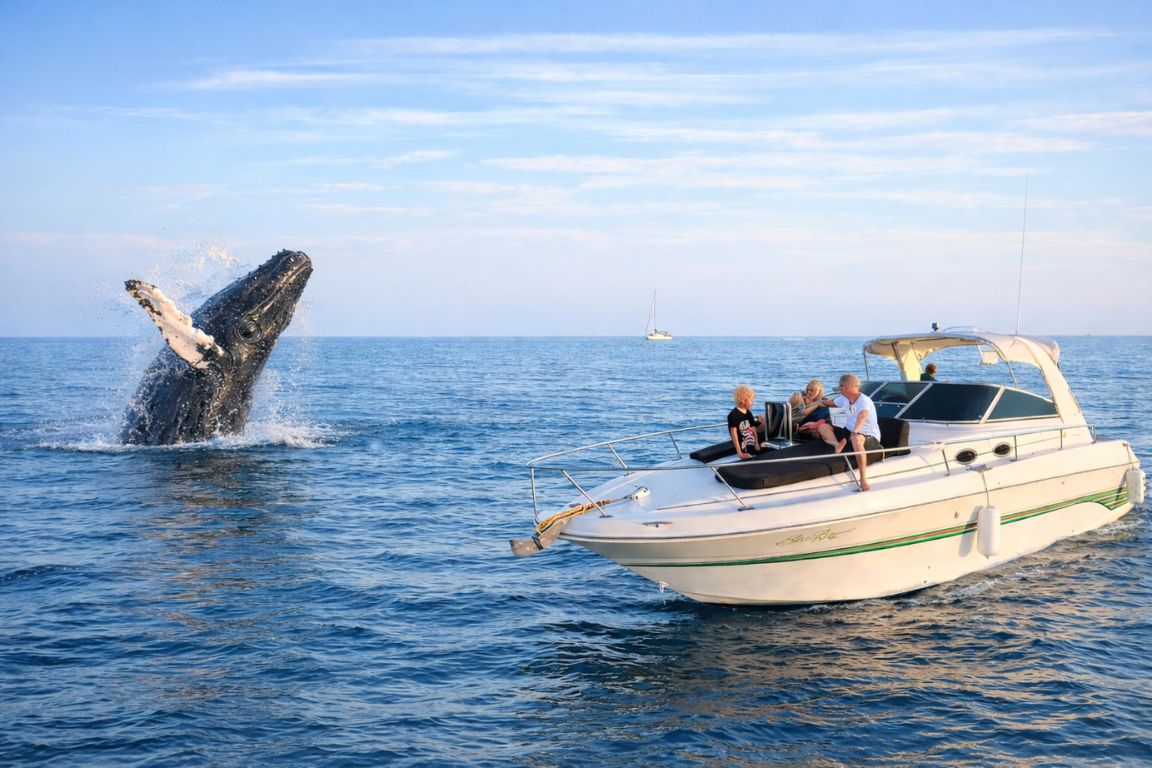
Whale season details follow predictable annual migration patterns driven by breeding and calving needs. Humpback whales and gray whales leave Alaska and Pacific Northwest feeding grounds in late October through November, traveling 3,000+ miles south to reach Baja California’s warm waters. The first whales arrive in Cabo waters in early to mid-December, with numbers building throughout the month as migration continues.
Peak whale populations concentrate in Cabo January through March when thousands of humpbacks and gray whales occupy the region simultaneously. January brings eager early arrivals displaying active mating behaviors, competitive pods of males vying for females, and energetic breaching. February delivers maximum whale numbers with the ocean filled with whales everywhere, spectacular displays, and near-guaranteed encounters. March continues excellent whale watching as mothers with newborn calves appear, preparing for the long journey back to Alaska.
April marks the transition as whales begin migrating north back to feeding grounds. Whale numbers decrease throughout April with mothers and calves taking their time, stopping frequently to rest and nurse. By late April and early May, most whales have departed, leaving only occasional late stragglers.
Whales come to Cabo specifically for breeding and calving in warm protected waters. The Sea of Cortez and Pacific waters around Cabo provide ideal conditions with comfortable temperatures for newborn calves who lack the thick blubber insulation adults possess, relatively calm protected bays and areas for mothers to birth and nurse calves, and absence of predators like orcas that threaten calves in colder northern waters.
Dolphin availability remains constant throughout the year with resident populations living permanently in Cabo waters. Common dolphins inhabit both Sea of Cortez and Pacific sides of Cabo year-round, forming large pods of 50-200 individuals hunting cooperatively for fish and squid. These dolphins don’t migrate, instead remaining in local waters where food sources exist continuously.
Bottlenose dolphins maintain smaller resident populations along coastlines and in bays around Cabo throughout all months. These dolphins establish territories, return to familiar areas repeatedly, and can sometimes be found in the same general locations across years.
Spotted dolphins appear less frequently but occur year-round in deeper offshore waters, occasionally coming closer to shore where tours encounter them during any month.
The year-round presence creates no seasonal variation in dolphin watching opportunities. January dolphin encounters differ little from July encounters in terms of dolphin behavior, pod sizes, or sighting likelihood. Weather and sea conditions vary seasonally affecting tour comfort, but dolphins themselves remain equally available regardless of month.
Best months for each depend on what you’re seeking. Peak whale watching occurs January through March with February representing the absolute optimal month for maximum whale numbers, most active behaviors, and highest sighting success rates approaching 98%. January and March deliver nearly as excellent whale watching with slightly fewer whales but still spectacular encounters.
December and April provide good whale watching at 70-85% sighting success, working well for shoulder season visitors willing to accept slightly lower odds for benefits like fewer tourists, lower prices, and calmer travel periods.
Optimal dolphin encounters don’t vary dramatically by month since resident populations stay consistent year-round. Summer months June through September offer warmer water temperatures creating comfortable conditions if dolphins approach close to boats. Winter months December through February provide cooler more comfortable air temperatures for boat tours though water feels colder during close dolphin approaches.
The practical best months for dolphins are whenever whales aren’t available (May through November) since dolphins become the primary marine mammal attraction for those visiting outside whale season.
If you’re flexible on dates, here’s the best time to see whales in Cabo based on migration patterns and your odds of actually seeing them.
Can you see both together happens frequently during whale season December through April. Approximately 60-70% of whale watching tours encounter dolphin pods in addition to whales since both species occupy overlapping waters and dolphins often investigate boats searching for or watching whales.
The combined sightings occur naturally rather than through deliberate searching. Boat captains focus on finding whales, but dolphins appear opportunistically crossing paths with tours, bow-riding tour boats during transit to whale areas, or hunting in the same general regions where whales congregate.
Some whale watching days deliver spectacular combined encounters with multiple whale sightings plus dolphin pods bow-riding the boat, jumping alongside, or performing nearby. Other whale tours focus entirely on whales without dolphin appearances despite both being present in Cabo waters. The dolphin encounters on whale tours function as welcomed bonuses rather than guaranteed components.
Tours specifically marketing “whale and dolphin watching” during December-April season acknowledge this reality, emphasizing whales as the primary focus while noting dolphins frequently appear as additional attractions. The combined experience happens often enough that visitors booking whale tours during season have better-than-even odds of seeing both species on single tours.
| Month | Whale Activity | Dolphin Activity | Best Choice | What to Expect |
|---|---|---|---|---|
| January | Excellent (95%+) | Good (60-70%) | Whales priority | Active whales, possible dolphins, high season |
| February | Peak (98%+) | Good (60-70%) | Whales priority | Maximum whales, possible dolphins, busiest month |
| March | Excellent (95%+) | Good (60-70%) | Whales priority | Mothers with calves, possible dolphins, crowds |
| April | Good (70-85%) | Good (60-70%) | Whales priority | Departing whales, possible dolphins, fewer tourists |
| May | None (whales gone) | Good (60-70%) | Dolphins only | No whales, dolphins only option |
| June | None | Good (60-70%) | Dolphins only | Warm weather, dolphins only, lower prices |
| July | None | Good (60-70%) | Dolphins only | Summer conditions, dolphins only |
| August | None | Good (60-70%) | Dolphins only | Warmest month, dolphins only |
| September | None | Good (60-70%) | Dolphins only | Hurricane season consideration, dolphins only |
| October | None | Good (60-70%) | Dolphins only | Shoulder season, dolphins only |
| November | Rare early arrivals (10-20%) | Good (60-70%) | Dolphins primary | Occasional early whales, mainly dolphins |
| December | Building (60-80%) | Good (60-70%) | Whales starting | Early season whales, possible dolphins, fewer crowds |
Types Of Dolphins You’ll See In Cabo San Lucas
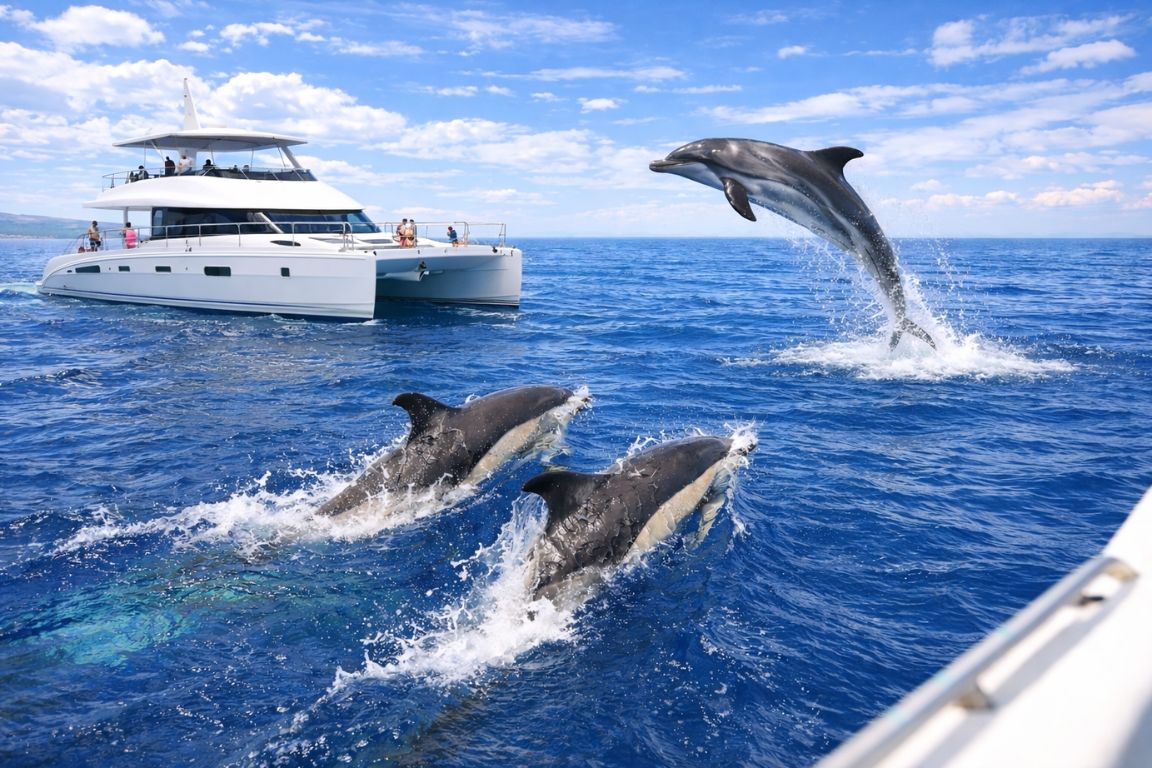
Common dolphins represent the most frequently encountered species on Cabo boat tours, appearing on 50-60% of trips that see dolphins at all. These dolphins travel in large pods of 50-200 individuals, sometimes even larger superpods of 500+ animals creating spectacular sights with dolphins jumping and swimming in all directions. The large pod sizes create dramatic encounters with dozens or hundreds of dolphins surrounding boats simultaneously.
Common dolphins reach 6-8 feet in length weighing 200-300 pounds, making them smaller and more streamlined than bottlenose dolphins. They display distinctive hourglass or crisscross patterns on their sides with tan, gray, and white coloring creating beautiful markings visible when dolphins jump or swim near the surface.
These dolphins exhibit highly social cooperative behaviors, hunting together in coordinated groups to corral fish schools, traveling in organized pods with apparent communication and coordination, and displaying synchronized swimming and jumping. The large pods create constant motion and activity with some dolphins jumping while others dive, creating dynamic ever-changing encounters that keep observers engaged.
Common dolphins frequent both Sea of Cortez and Pacific waters around Cabo, occurring anywhere from near-shore areas to far offshore. Tours heading to whale watching areas, snorkeling spots, or simply cruising coastal waters all encounter common dolphins with roughly equal frequency since the dolphins roam widely following food sources.
Bottlenose dolphins appear less frequently than common dolphins but create more memorable interactive encounters when found. These larger dolphins reach 10-12 feet length weighing 600-1,000 pounds, displaying robust powerful builds with distinctive bottle-shaped beaks giving the species its name.
Bottlenose dolphins demonstrate more curiosity about boats and people than common dolphins, often approaching vessels closely to investigate, swimming alongside and making eye contact with passengers, riding bow waves for extended periods seemingly enjoying the experience, and sometimes performing as if showing off for audiences with repeated jumps and flips.
The more interactive nature creates engaging personal encounters. Bottlenose dolphins at close range allow observers to see their expressions, watch them breathe and blow water from blowholes, and experience the intelligence and awareness these animals possess. The eye contact and apparent interest in humans create emotional connections that common dolphin encounters from greater distances don’t always provide.
Bottlenose dolphins prefer calmer inshore waters, bays, and coastal areas rather than open ocean, concentrating near Cabo San Lucas marina areas, along Medano Beach and protected bays, around Land’s End rock formations, and in the calmer Sea of Cortez waters. Tours departing from or returning to the marina frequently encounter bottlenose dolphins near harbor entrances or along coastal routes.
Spotted dolphins occur least frequently of the three species, appearing on perhaps 10-20% of dolphin encounters. These dolphins reach 7-9 feet length weighing 250-400 pounds, displaying distinctive spotted patterns covering their bodies that become more pronounced as dolphins age. Young spotted dolphins show minimal spotting, while adults develop heavy spotting creating unique individual patterns.
The distinctive markings make spotted dolphins easy to identify when encountered, with the spots clearly visible when dolphins surface, jump, or swim near boats. The patterns create beautiful visual interest with gray base colors covered in white spots creating almost dappled appearances.
Spotted dolphin encounters usually involve smaller groups of 10-30 individuals rather than the massive pods common dolphins form. The smaller groups create more intimate encounters where observers can track individual dolphins and watch specific animals repeatedly as they surface and dive.
Spotted dolphins inhabit deeper offshore waters more than coastal areas, making them more common on tours traveling farther from shore to reach whale watching areas or distant snorkeling spots. Boats staying close to Cabo San Lucas coastline rarely encounter spotted dolphins, while tours venturing 5-10 miles offshore have better odds.
Dolphin behaviors create the entertainment and engagement that makes dolphin watching enjoyable beyond simply seeing dolphins exist. Bow-riding represents the most interactive behavior where dolphins position themselves in the pressure wave created by boat bows, swimming effortlessly in the wave while the boat provides forward momentum. Dolphins bow-ride for minutes at a time, seemingly for pure enjoyment rather than any practical purpose, often looking up at passengers watching them from bow railings just feet away.
Jumping and aerial behaviors showcase dolphin athleticism with complete body breaches launching dolphins entirely out of water, spinning jumps where dolphins rotate lengthwise while airborne, belly flops creating maximum splashes, and side slaps hitting the water with loud smacks. The jumping appears playful rather than functional, with dolphins sometimes performing repeated jumps in succession as if competing or showing off.
Surfing behaviors demonstrate dolphins riding ocean swells like human surfers, positioning in breaking waves and riding forward momentum, sometimes surfing waves created by boats rather than natural ocean swells. The surfing clearly provides enjoyment for dolphins who seek out waves and ride them repeatedly when available.
Hunting behaviors reveal dolphin intelligence and cooperation with coordinated pod movements herding fish into tight balls, individuals taking turns rushing through fish schools to feed while others maintain the perimeter, and surface feeding where dolphins drive fish to the surface making them easier to catch. Watching dolphins hunt provides insight into their social structures and problem-solving abilities.
| Dolphin Species | Size | Frequency in Cabo | Primary Behaviors | Where Typically Seen | Pod Size |
|---|---|---|---|---|---|
| Common Dolphins | 6-8 feet, 200-300 lbs | Most common (50-60% of dolphin sightings) | Cooperative hunting, synchronized swimming, jumping | Both Sea of Cortez and Pacific, near and offshore | Large pods 50-200+, sometimes 500+ |
| Bottlenose Dolphins | 10-12 feet, 600-1,000 lbs | Moderate (30-40% of dolphin sightings) | Bow-riding, interactive with boats, curious about people | Coastal areas, bays, near marina, calmer waters | Small groups 5-20 individuals |
| Spotted Dolphins | 7-9 feet, 250-400 lbs | Least common (10-20% of dolphin sightings) | Similar to common dolphins, less interactive | Deeper offshore waters, 5-10+ miles from shore | Medium groups 10-30 individuals |
Cabo Whale Watching Vs Dolphin Watching Costs
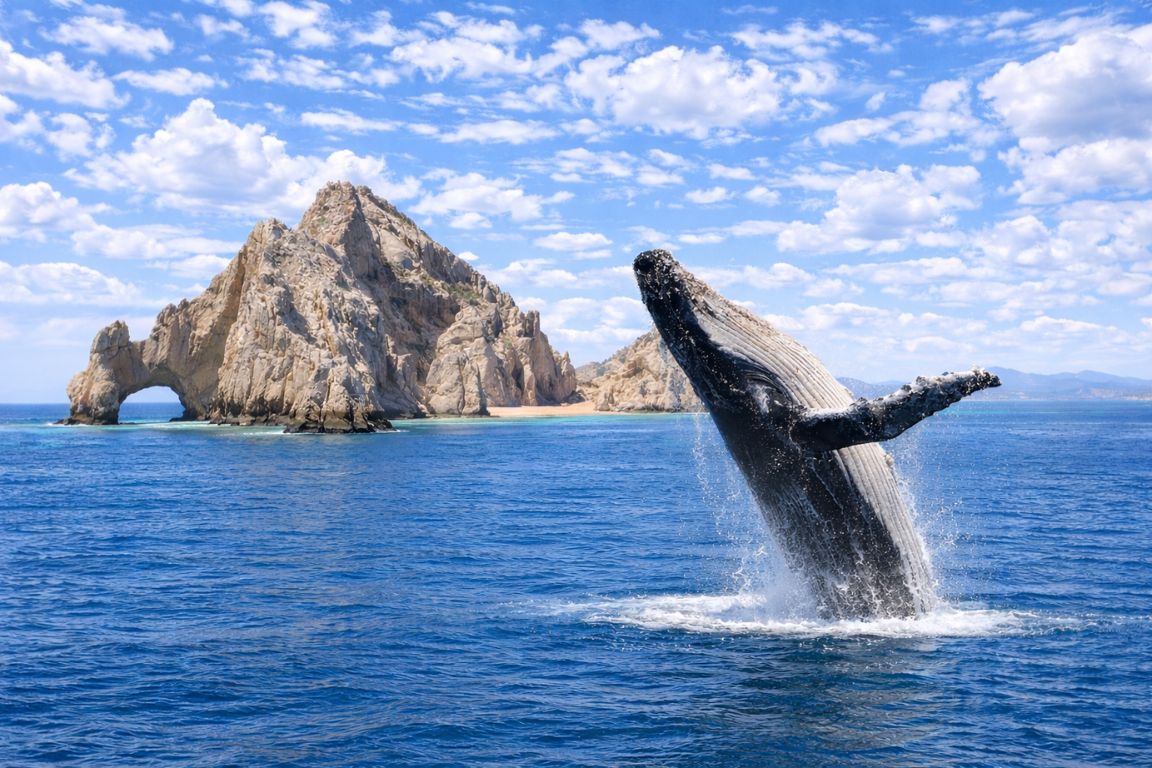 Whale watching tour costs range $85-150 per person for standard group tours during December-April season, with pricing influenced by demand fluctuations throughout the season. December shoulder season offers the lowest whale watching prices at $85-110 as operators incentivize early bookings when tourist numbers are moderate and whale activity is building.
Peak season February and March pricing increases to $100-135 for the same tours that cost $85-110 in December, reflecting high demand during optimal whale watching months when success rates reach 98% and tourist numbers peak. The 15-30% price increases during peak months represent operators maximizing revenue when boats fill consistently and advance bookings secure tours weeks ahead.
Presidents Day weekend and Spring Break weeks see the steepest premiums with some operators adding $10-25 surcharges for specific high-demand dates. A tour normally priced at $110 might cost $125-135 on February 15th weekend when demand peaks and availability becomes scarce.
April shoulder season pricing drops back to $90-115 as whale numbers decrease, tourist crowds thin, and operators reduce rates to maintain bookings during the season’s final weeks. The lower April pricing creates value opportunities for visitors accepting 70-85% sighting success versus 95-98% during peak months.
Premium whale watching tours remain consistently priced at $150-250+ throughout the season with minimal variation since luxury operators maintain fixed pricing regardless of demand, targeting travelers for whom cost is secondary to experience quality.
Dolphin watching tour costs maintain consistent year-round pricing without seasonal fluctuations since dolphin availability doesn’t vary by month. Standard dolphin watching tours charge $70-130 per person throughout January through December, with pricing determined by boat size, tour duration, and included services rather than seasonal demand.
The consistent pricing creates budget predictability for visitors booking dolphin tours at any time of year. A $95 dolphin tour in June costs the same $95 in December, unlike whale tours where the same operator might charge $95 in December and $120 in February for identical experiences.
Dolphin tours often cost $10-25 less than comparable whale watching tours from the same operators, reflecting lower demand and marketing emphasis on whales as premium seasonal attractions. An operator charging $110 for whale watching might offer dolphin watching at $85-95 using the same boats and guides simply because dolphins lack the seasonal exclusivity and tourist draw that whales command.
Many dolphin tours combine dolphin watching with snorkeling, Arch viewing, or beach stops rather than offering pure dolphin-focused experiences, packaging multiple activities to create perceived value justifying tour costs when dolphins alone might not fill boats.
Swim-with-dolphins costs at captive facilities represent completely different experiences and pricing structures than wild dolphin watching tours. Captive dolphin programs at Cabo facilities charge $100-200+ per person for 30-60 minute interactive experiences where participants enter pools with trained dolphins under controlled conditions.
Basic swim programs at $100-130 provide brief water time with dolphins, photo opportunities, and supervised interactions following strict protocols. Mid-range programs at $140-180 extend interaction time, include professional photo packages, and offer additional activities like dolphin kisses or handshakes. Premium programs at $180-250+ provide longer exclusive sessions, private interactions with fewer participants, and comprehensive photo/video packages.
The captive program pricing far exceeds wild dolphin watching costs ($70-130) while offering guaranteed close dolphin contact that wild encounters cannot promise. The ethical considerations around captive dolphins create debates about whether the guaranteed interaction justifies the premium costs and welfare concerns.
Value comparison at different price points reveals what justifies cost differences for each experience. Budget whale watching tours at $60-85 provide basic whale viewing from large boats with minimal service, working adequately when whales are abundant and active during peak season. Budget dolphin tours at $50-70 similarly deliver dolphin sightings when lucky but often combine with other activities since dolphin-only focus at budget pricing struggles to fill boats.
Mid-range whale watching at $95-120 delivers optimal value with better boats (20-30 passengers), experienced guides providing education about whale behaviors and biology, adequate duration (2-2.5 hours), and professional service. Mid-range dolphin watching at $85-110 provides similar quality though often packages dolphin viewing with snorkeling or coastal touring to enhance value.
Premium whale watching at $150-250+ justifies higher costs through small boats (12-18 passengers), marine biologist guides, luxury amenities including gourmet food and open bars, extended durations (3-4 hours), and comprehensive service. Premium dolphin watching tours are rare since dolphins lack the seasonal premium positioning that whales command, with most dolphin tours topping out at $130-150 even with luxury elements.
| Tour Type | Price Range | Season Availability | What’s Included | Sighting Success | Value Assessment |
|---|---|---|---|---|---|
| Budget Whale Watching | Check live listing | Dec-Apr only | Large boat (40-60), basic guide, water, 90-120 min | 95%+ peak season | Adequate for whale viewing only |
| Mid-Range Whale Watching | Check live listing | Dec-Apr (higher in Feb-Mar) | Medium boat (20-30), experienced guide, snacks, 2-2.5 hrs | 95-98% peak season | Best value, quality experience |
| Premium Whale Watching | Check live listing | Dec-Apr only | Small boat (12-18), expert guide, gourmet service, 3-4 hrs | 98%+ | Luxury experience, comprehensive |
| Budget Dolphin Watching | Check live listing | Year-round | Often combined with other activities, basic service | 50-60% | Budget option off-season |
| Mid-Range Dolphin Watching | Check live listing | Year-round | Usually includes snorkeling/Arch/other, 3-4 hrs | 60-70% | Good value for combined experience |
| Premium Dolphin Watching | Check live listing | Year-round | Small boat, dedicated dolphin focus, quality service | 70-80% | Rare, most dolphin tours mid-range |
| Captive Swim Programs | Check live listing | Year-round | Pool interaction, controlled dolphins, photos | 100% guaranteed | Ethical concerns, different experience |
| Combined Whale + Dolphin | Check live listing | Dec-Apr only | Whale focus, dolphins as bonus if seen | 95%+ whales, 60-70% dolphins too | Best overall during whale season |
Can You See Both Whales And Dolphins On One Tour
Yes, approximately 60-70% of whale watching tours during December-April season encounter dolphin pods in addition to whales, providing dual marine mammal sightings on single tours. The combined encounters happen naturally since whales and dolphins occupy overlapping waters around Cabo during whale season.
Combined sighting likelihood varies throughout whale season based on factors including tour routes, time spent on water, and dolphin activity patterns on specific days. December whale tours see dolphins on roughly 55-65% of trips as early season conditions and fewer whales mean boats cover more territory increasing dolphin encounter odds. January through March peak whale season delivers 65-75% combined sighting rates with abundant whales and active dolphins both present in concentrated areas.
The highest combined sighting rates occur on longer tours (2.5-3 hours) covering more distance and spending extended time on water, giving more opportunities for dolphin pods to cross paths with boats. Shorter budget tours (90 minutes) see lower combined rates around 50-55% since limited time reduces dolphin encounter chances even when dolphins are present in the area.
Morning tours encounter dolphins more frequently than afternoon tours, matching the pattern for whale activity. Dolphins appear most active during morning hours feeding and traveling, making 8am-10am departures more likely to see both species than 2pm-4pm afternoon tours.
Geographic factors influence combined sightings with tours departing into Sea of Cortez waters seeing slightly higher dolphin encounter rates than Pacific side tours, though both areas support healthy dolphin populations. The Sea of Cortez’s calmer protected waters attract both humpback whales and common dolphins, creating natural overlap.
Some days deliver spectacular combined encounters with multiple whale sightings including breaching and tail slapping plus large dolphin pods bow-riding the boat, jumping alongside, or hunting nearby. These exceptional days happen perhaps 20-30% of the time when both species are abundant and active simultaneously.
Other whale tours focus entirely on whales without dolphin appearances despite dolphins living in the area. The 30-40% of whale tours not encountering dolphins reflect dolphin movements, timing, or simple luck rather than absence of dolphins from Cabo waters entirely.
Time allocation on tours encountering both species prioritizes whales as the primary focus with dolphins treated as welcomed bonuses rather than equal attractions. Captains dedicate 80-90% of tour time and attention to finding and watching whales since passengers booked specifically for whale watching and whales represent the seasonal exclusive attraction.
When dolphins appear during whale searches or while watching whales, tours typically spend 5-15 minutes enjoying dolphin encounters before returning focus to whales. If dolphins bow-ride the boat during transit to whale areas, passengers watch and photograph them during the travel time without the captain stopping or altering course since reaching whale areas remains the priority.
The exception occurs when whale encounters are slow or disappointing with whales distant or inactive and dolphins appear displaying spectacular behaviors. Captains might allocate more time to active playful dolphins rather than watching distant logging whales, adjusting based on providing passengers the best overall marine mammal experience even when it means more dolphin time than originally planned.
Tours explicitly marketing “whale and dolphin watching” maintain similar prioritization with whales as primary focus during December-April, acknowledging dolphins appear frequently enough to merit mentioning but remain secondary to whale encounters. The marketing reflects the 60-70% reality of combined sightings rather than promising equal focus on both species.
Practical tip for seeing both: Book a small-group whale watching tour during December through April for the best chance of encountering both whales and dolphins on single tours. The 60-70% combined sighting rate during whale season provides far better odds of seeing both species than any other approach.
Visitors wanting guaranteed encounters with both whales and dolphins should book separate dedicated tours on different days: whale watching during December-April season for 95%+ whale success, followed by dolphin-focused tours any time of year for 60-70% dolphin success. The separate tour approach ensures adequate time with each species rather than treating one as secondary bonus on tours focused primarily on the other.
The most realistic expectation for combined encounters is booking whale tours and hoping for dolphin bonuses without counting on them. The 60-70% odds mean more whale tours see dolphins than don’t, but the 30-40% that miss dolphins shouldn’t disappoint since the whale watching itself during peak season delivers spectacular experiences regardless of whether dolphins appear.
Trying to figure out which tour to book? Our guide to the best Cabo whale watching tours shows you exactly what sets each one apart.
How To Choose: Whale Watching Vs Dolphin Watching In Cabo
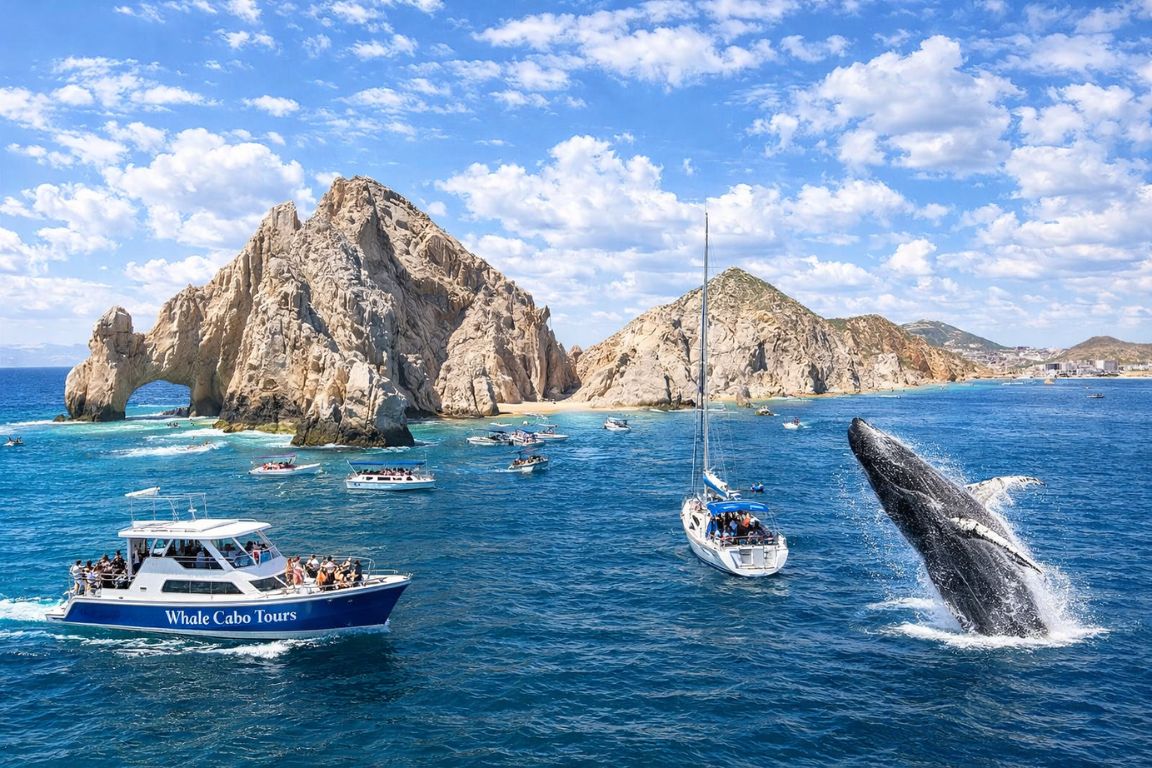
When visiting December-April, prioritize whale watching as your primary marine wildlife experience. The seasonal exclusivity of humpback and gray whales creates once-a-year opportunities that dolphins, being year-round residents, cannot match. Whales migrate 3,000+ miles specifically to reach Cabo waters during these months, making winter the only time to witness these magnificent animals in their breeding and calving grounds.
The 95-98% whale sighting success rates during peak January-March months provide near-guaranteed encounters justifying tour investments. December and April shoulder season still deliver 70-85% success rates, good odds for travelers whose schedules limit them to early or late season visits.
Booking whale tours during December-April also provides 60-70% chances of seeing dolphins as bonuses on the same tours, potentially delivering both experiences without requiring separate bookings or additional costs. The combined sighting likelihood makes whale tours during season the optimal choice for experiencing Cabo’s marine wildlife diversity.
When visiting May-November, choose dolphin watching as your marine mammal option since whales are completely absent from Cabo waters during these months. Dolphins represent the only available cetacean encounters for visitors arriving outside whale season, providing engaging marine wildlife experiences when whales cannot.
The year-round resident dolphin populations maintain 60-70% sighting success throughout May-November months, offering reasonable odds of encounters even though dolphins can’t match whale season’s 95%+ success rates. Summer visitors specifically should embrace dolphin watching as the signature Cabo marine experience available during their travel dates.
For May through November, focus on dolphins and other marine activities; the verified seasonal whale trips do not match those travel months. Check live listings for current prices.
Planning months in advance? This Cabo whale watching season calendar shows you the best weeks and when things start to slow down.
For first-time visitors during December-April season, whale watching represents the recommended choice delivering Cabo’s most spectacular and exclusive marine wildlife experience. The dramatic size and power of breaching 40-ton humpbacks, the seasonal migration story connecting Alaska to Baja, and the near-guaranteed sightings during peak season create quintessential Cabo marine encounters.
First-timers visiting outside whale season should absolutely book dolphin watching rather than skipping marine wildlife tours entirely. Playful dolphins bow-riding boats, jumping in acrobatic displays, and hunting cooperatively provide engaging memorable experiences introducing visitors to Cabo’s rich marine ecosystems.
The first-time visitor advantage of whale watching during season is the awe and humility inspired by witnessing massive powerful animals in their natural environment. The emotional impact of whale encounters creates vacation highlights and lasting memories justifying the emphasis on whales when seasonally available.
For repeat visitors who’ve already experienced Cabo whale watching on previous trips, dolphin-focused tours offer different perspectives and experiences during return visits. The playful interactive nature of dolphin encounters contrasts with the powerful dramatic whale experiences, providing variety for travelers who’ve already witnessed breaching humpbacks.
Repeat visitors during whale season might choose to book both whale and dolphin tours on separate days, dedicating adequate time to each species rather than treating dolphins as secondary bonuses on whale tours. The separate bookings ensure comprehensive attention to dolphin behaviors and encounters that combined sightings on whale tours don’t fully explore.
Dolphin watching also allows repeat visitors to experience Cabo during non-whale months, discovering summer and fall seasons without the peak winter crowds while still enjoying quality marine wildlife encounters. The year-round dolphin availability creates flexibility for return trips timed around different seasons and travel conditions.
Budget considerations start with the live product price, but seasonality should make the first decision. Compare verified formats only after confirming the month fits.
February and March can differ from shoulder-season dates in both demand and availability. Check the live listings for current prices, and choose December or April only after verifying that the product operates on your exact date.
Dolphins may be encountered throughout the year. This guide does not have a verified dolphin-specific trip to recommend, and the seasonal whale trips do not fit travel from May through November.
Match the product to your month before comparing boats. For January through March, start with the small-group biologist-led whale trip. For December or April, verify the exact date. For May through November, use the dolphin guidance and plan another marine activity.
FAQ: Whale Vs Dolphin Watching In Cabo
1. Can you see whales and dolphins on the same tour?
Yes, approximately 60-70% of whale watching tours during December-April season encounter dolphins in addition to whales. Both species occupy overlapping waters, and dolphins often appear while boats search for or watch whales. Dolphins are treated as bonuses on whale tours rather than equal focus.
2. Which is better, whale watching or dolphin watching?
Depends on priorities and timing. Whale watching (December-April only) offers more dramatic encounters with massive 40-ton animals breaching and 95-98% sighting success during peak season. Dolphin watching (year-round) provides playful interactive encounters with 60-70% success rates. Choose whales if visiting during season, dolphins if visiting May-November or wanting different experiences.
3. Are dolphins in Cabo year-round?
Yes, dolphins live in Cabo waters permanently with no seasonal variation. Common dolphins, bottlenose dolphins, and spotted dolphins maintain resident populations throughout all months, making dolphin watching available January through December with consistent 60-70% sighting rates.
4. When is whale watching season in Cabo?
December through April, with peak activity January through March. Whales arrive in early-to-mid December, reach maximum numbers in February, and depart by late April/early May. Whales are completely absent May through November when they’re feeding in Alaska.
5. How much does whale watching cost vs dolphin watching?
Similar pricing at $85-150 per person for comparable quality tours. Whale watching costs $10-30 more during peak February-March season ($100-135) versus dolphin watching year-round rates ($70-130). Shoulder season whale tours (December, April) often match dolphin tour pricing.
6. Are dolphin sightings guaranteed in Cabo?
No, wild dolphin sightings average 60-70% success year-round. Dolphins roam widely hunting fish and can’t be predicted as reliably as concentrated whale populations during whale season. Some tours encounter multiple dolphin pods, others see no dolphins despite searching.
7. Can you swim with wild dolphins in Cabo?
This guide does not have a verified wild-dolphin swim to recommend. Observe dolphins from the boat unless a currently authorized operator and the applicable rules explicitly allow another activity. Captive programs are separate products, and their current price, operating rules and welfare practices should be checked directly rather than inferred here.
8. Which is better for kids, whales or dolphins?
Dolphins often better for young kids (under 8) due to playful constant activity, bow-riding interaction, and frequent jumping keeping short attention spans engaged. Whales better for older kids (8+) who appreciate the dramatic size and power, can handle waiting periods between sightings, and understand the migration story.
Glossary: Cabo Marine Wildlife Watching Terms
Whale Season vs Year-Round: Whale season runs December through April when humpback and gray whales migrate to Cabo waters for breeding and calving, then depart back to Alaska. Year-round refers to dolphins permanently residing in Cabo waters throughout all 12 months with no seasonal variation in availability.
Breaching vs Bow-Riding: Breaching is when whales launch their entire 40-ton bodies out of water and crash back in dramatic displays, creating awe-inspiring moments. Bow-riding is when dolphins surf the pressure wave created by boat bows, swimming effortlessly just inches from vessels in playful interactive behavior.
Common Dolphins vs Bottlenose Dolphins: Common dolphins (6-8 feet, 200-300 lbs) travel in large pods of 50-200+ individuals and represent the most frequently seen dolphin species in Cabo. Bottlenose dolphins (10-12 feet, 600-1,000 lbs) are larger, more interactive with boats, travel in smaller groups of 5-20, and prefer coastal waters near the marina.
Pod: A group of dolphins traveling, hunting, or socializing together. Common dolphin pods range from 50-200+ individuals, while bottlenose dolphin pods typically include 5-20 individuals. Pod sizes and behaviors vary by species and activity.
Seasonal Migration vs Resident Population: Seasonal migration describes whales traveling 3,000+ miles from Alaska to Cabo December-April for breeding, then returning north May-November to feed. Resident population refers to dolphins living permanently in Cabo waters year-round without migrating to other regions.
Combined Sightings: Encountering both whales and dolphins on the same tour, occurring on approximately 60-70% of whale watching trips during December-April season. Dolphins appear as bonuses while boats search for or watch whales since both species occupy overlapping waters.
Wild Encounters vs Captive Programs: Wild encounters involve observing dolphins or whales in their natural ocean habitat from boats at respectful distances following wildlife protection laws. Captive programs confine trained dolphins in pools for human interaction and swim experiences at facilities, raising ethical welfare concerns despite guaranteed contact.
Ready To Book Your Cabo Marine Wildlife Adventure?
The decision between whale and dolphin watching comes down to simple timing: if you’re visiting December through April, book whale watching to experience the seasonal migration spectacle with 95%+ success rates and excellent chances (60-70%) of seeing dolphins as bonuses on the same tours. If you’re visiting May through November when whales are absent, dolphin watching provides engaging year-round marine mammal encounters with playful interactive behaviors. Either way, you’re experiencing Cabo’s rich marine ecosystems with animals displaying natural behaviors in wild ocean habitats.
Book during whale season for the best overall marine wildlife experience. The combination of near-guaranteed whale sightings, dramatic breaching and tail slapping behaviors, and frequent dolphin encounters on the same tours creates comprehensive marine mammal experiences that single-species tours during other months cannot match. The seasonal exclusivity of whales makes December-April the optimal window for visitors wanting maximum marine wildlife diversity and encounter quality.
A whale product should be sold for its verified whale-focused format, with any dolphin encounter treated as a possible bonus. Open the live listing for the exact date, meeting details and current availability.
Check the small-group biologist-led trip for a matching seasonal date, or compare the other verified boat formats on the tour page. Cabo Whale Tours is an affiliate publisher rather than the operator.
The whales are here December through April. The dolphins are here always. The question is just when you’re coming to Cabo and which incredible marine mammals you’ll get to experience.
From the guides at Cabo Whale Tours who’ve watched thousands of humpback breaches and countless dolphin pods over the years, and still get excited every single time either species appears.