When Is The Best Time To See Whales In Cabo San Lucas?
February and early March are usually the strongest part of Cabo's whale season. Use your exact dates, preferred boat style and the live listing to choose a trip.
February and early March are the strongest part of Cabo's whale season, but wild behavior changes from trip to trip. A quiet surfacing, a mother with a calf or a distant breach can each be the encounter of the day.
Timing matters. July falls outside the seasonal whale window, November is too early to plan around whales, and January through March is the strongest part of the season. The sections below explain what changes by month and how to match the boat to the experience you want.
The month sets the wildlife context; the boat format decides whether the day feels intimate, social or private. Compare The Cabo Tour Options Below →
January through March is the strongest planning window. For December or April, verify the exact operating date, then compare the small-group, catamaran and private formats after the article.
When Is Whale Watching Season In Cabo San Lucas?
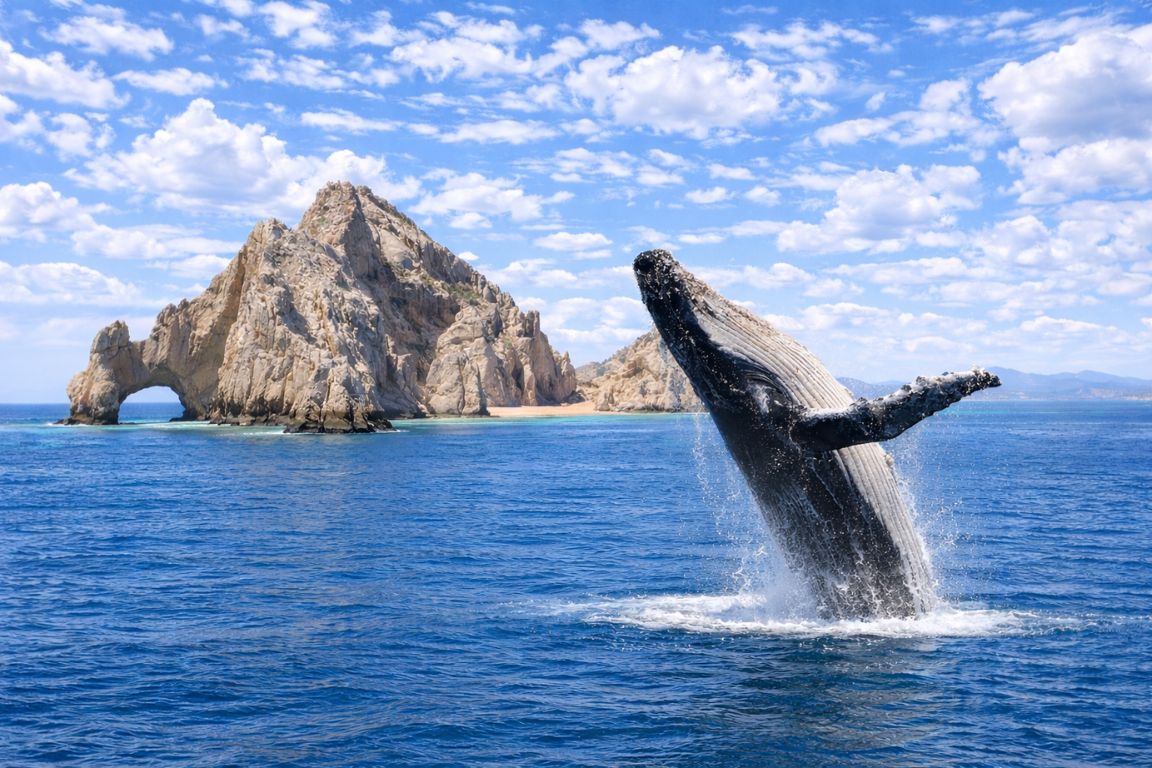
Whale watching season in Cabo San Lucas runs December through April, with peak activity from January through March when thousands of humpback and gray whales migrate to Baja’s warm waters.
My first whale season in Cabo, I made a rookie mistake. A couple wanted to book for early December, and I told them to wait until January for “better chances.” They listened, rebooked for mid-January, and had an amazing tour. But then I took another group out on December 18th that same year, and we saw a mom humpback with her calf doing lazy circles near Lover’s Beach. Turns out the whales don’t read the calendar like we do. December can be spectacular, it’s just less predictable than the deep winter months.
What surprised me most about timing? How different each month feels. January brings the eager early migrants, still fresh from Alaska and full of energy. February packs the ocean with whales everywhere you look. March shows you the babies. Each month has its own personality.
| Month | Whale Activity | Weather | Crowds | What You’ll Likely See | Best For |
|---|---|---|---|---|---|
| November | 10-20% chance | 75-82°F, occasional wind | Light crowds | Maybe a straggler, mostly dolphins | Don’t count on whales |
| December | 60-80% sightings | 70-78°F, pleasant | Moderate, spikes at Christmas | Early arrivals, smaller groups | Avoiding crowds, gambling on whales |
| January | 95%+ sightings | 68-75°F, calm seas | Building crowds | Active whales, mating behaviors, breaching | Great weather, high success |
| February | 98%+ sightings | 70-78°F, perfect conditions | Peak crowds (Valentine’s, Presidents Day) | Maximum whale numbers, spectacular shows | Best overall month |
| March | 95%+ sightings | 75-82°F, warming up | Heavy crowds (Spring Break) | Mothers with calves, still very active | Seeing baby whales |
| April | 70-85% sightings | 78-85°F, getting warm | Decreasing | Late-season stragglers, mom-calf pairs heading north | Last chance opportunities |
| May | 20-30% chance | 80-88°F, hot | Light crowds | Rare late departures | Really don’t count on it |
Our recommendation: Start with January through March for the strongest seasonal match. February is generally the peak, January can feel less busy, and March is associated with more mother-calf pairs. For December or April, verify the exact departure date and keep expectations flexible.
If you’re flexible on dates, avoid Presidents Day weekend and Spring Break weeks in March when boat capacity maxes out. A random Tuesday in late January or early March often delivers better experiences than a holiday weekend, even though the whales don’t care what day it is.
What’s The Best Month For Whale Watching In Cabo San Lucas?
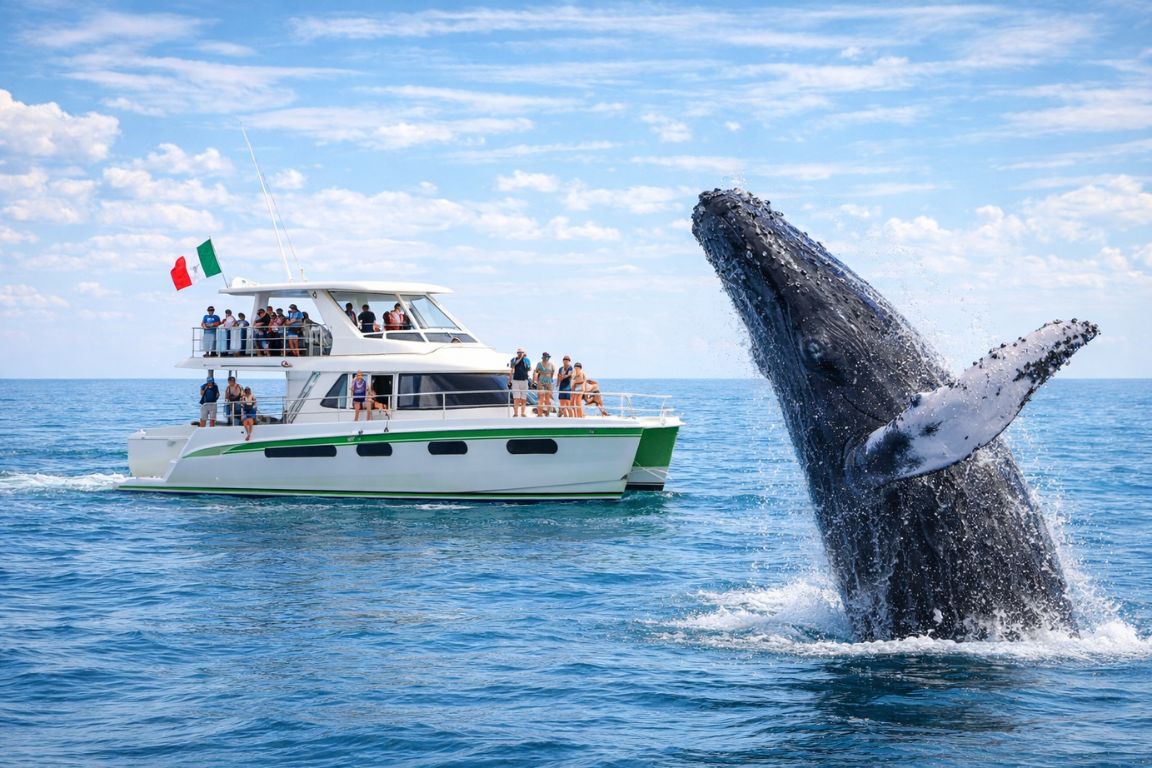 February is usually the best single month for whale watching in Cabo San Lucas, with the highest whale numbers and most active behaviors. But January and March are nearly as good, and each peak month offers something special.
Honestly, asking for the “best” month is like asking which day of summer has the nicest weather. They’re all excellent, just in different ways.
January brings the eager arrivals. These whales just finished a 3,000-mile journey from Alaska and they’re ready to party. I remember a January tour last year where we watched two males competing for a female’s attention. They were spy-hopping, tail slapping, even breaching right next to each other. Pure testosterone-fueled show-off behavior. January whales feel energetic, like they’re celebrating reaching warm water after months in the cold north.
The other thing about January? Fewer tourists than February. You get 95% of the whale action with maybe 70% of the boat traffic. If you hate crowds, this is your month. The weather’s also perfect: cool mornings that warm up nicely, calm seas, brilliant sunshine.
February is when the ocean just fills with whales. I’m talking everywhere you look. Last February we counted twenty-three different whales on a single two-hour tour. Not twenty-three sightings, twenty-three individual whales. Some were breaching, some were logging (resting at the surface), some were traveling in pods. It felt like rush hour but for humpbacks.
February also brings the most dramatic breaching. Something about mid-season gets these whales airborne. Maybe it’s mating competition, maybe they’re just feeling good, but I’ve seen more full-body breaches in February than any other month. Valentine’s week is hilarious because you get all these couples on romantic whale watching dates, and the whales seem to sense the vibe and put on shows.
The downside? Everyone knows February is peak season. Presidents Day weekend gets absolutely packed with boats. If you book February, aim for the first two weeks or the last week. Avoid that middle holiday weekend unless you don’t mind sharing the ocean with twenty other tour boats.
March is the month for baby whales. Mothers who gave birth in January or early February start showing off their calves by March. Watching a baby humpback learn to breach is one of the most adorable things you’ll ever see. They flop out of the water awkwardly, belly-flop back in, and you can almost see the mom teaching them.
I took a family out last March and we spent forty minutes just watching a mother-calf pair. The baby kept swimming under our boat, curious about us, while the mom circled protectively. The kids on our boat were mesmerized. That’s March magic: instead of the big dramatic male behaviors, you get these tender mother-calf moments.
March also warms up nicely. By late March you’re looking at 80-degree days, calm seas, perfect conditions. The only challenge is Spring Break crowds. Universities let out, families descend on Cabo, and suddenly every tour boat is fully booked. If you’re booking March, do it well in advance.
So which month should you actually choose? If you want maximum whales and don’t mind crowds: February. If you want excellent whales with fewer tourists: January. If you want to see babies and enjoy warmer weather: March. Honestly, you can’t go wrong with any of them.
I’ve guided tours in all three months, and guests leave thrilled every time. The whales don’t check the calendar to see which month is “supposed” to be best. They just show up and do their thing, and it’s spectacular regardless of whether it’s January 15th or March 10th.
Choose the month that fits your schedule, then compare the verified Cabo whale watching tours for that date. Wild sightings and behavior remain unpromised even in the strongest part of the season.
Need to know exactly when they’re around? Our Cabo whale watching season calendar breaks it down month by month so you can plan accordingly.
Can You See Whales In Cabo San Lucas Outside Peak Season?
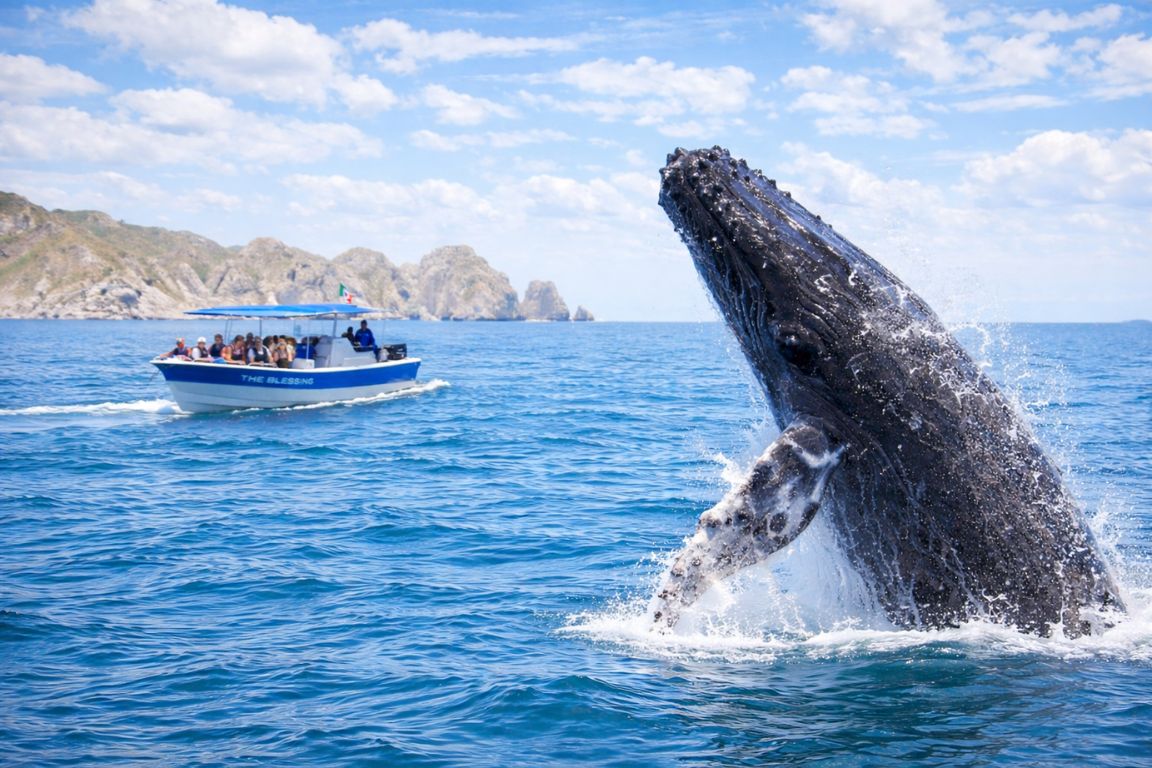 Yes, December and April offer good whale watching with 60-85% success rates. November and May are risky with only 10-30% chances of seeing whales.
December is the gambler’s month. The season’s just starting, whales are trickling in from the north, and some days you hit the jackpot while other days you’re searching. But here’s why some people love December: you might be one of only three or four boats out on the water instead of fifteen.
I remember a December 8th tour two years ago. A retired couple from Colorado booked with low expectations, just hoping to maybe see a distant spout. We found a pod of four humpbacks about twenty minutes out. They were some of the first arrivals of the season, and they seemed almost surprised to see us, like they weren’t expecting tour boats yet. We watched them for over an hour with zero other boats around. The couple said it felt like a private whale encounter.
That’s December magic when it works. When it doesn’t? You see dolphins, sea lions, maybe a distant gray whale, and you shrug and enjoy the boat ride. If you’re the type who hates crowds and doesn’t mind taking chances, early to mid-December can be wonderful. By late December (especially Christmas week), the whales are consistently showing up and it starts feeling like real season.
We’ve broken down Cabo whale watching vs dolphin watching so you can figure out which one matches what you’re looking for – or if you should do both.
April is the bittersweet goodbye month. The whales are heading back to Alaska, but they’re not in a huge rush. Mothers with young calves especially take their time, stopping frequently to rest and nurse. April tours often turn into extended mother-calf watching sessions, which some people find even more moving than the flashy breaching of February.
April’s also gorgeous weather. You’re looking at 80-85 degree days, warm water, calm seas. The crowds thin out after Spring Break ends. But the whale numbers drop too. You’re seeing maybe 70-85% success rates instead of 95%. Still good odds, just not guaranteed like February.
November and May? Don’t book expecting whales. November occasionally gets an early arrival scout whale, and May sometimes has a straggler who’s taking the scenic route back to Alaska. But these are exceptions, not the rule.
I’ve done November tours where we struck out completely on whales and spent two hours watching dolphins instead. The guests were fine with it because I’d warned them ahead of time. But I’ve also had people book November tours thinking “whale season” meant November through April equally, and they were disappointed when we didn’t find any.
If you’re visiting Cabo in November or May for other reasons (fishing, beaches, whatever) and want to try a whale watching tour as a bonus activity, go for it. Just don’t plan your entire vacation around seeing whales in those months. The ocean doesn’t owe you a whale sighting, and in November or May, it usually doesn’t deliver one.
What Types Of Whales Can You See In Cabo San Lucas?
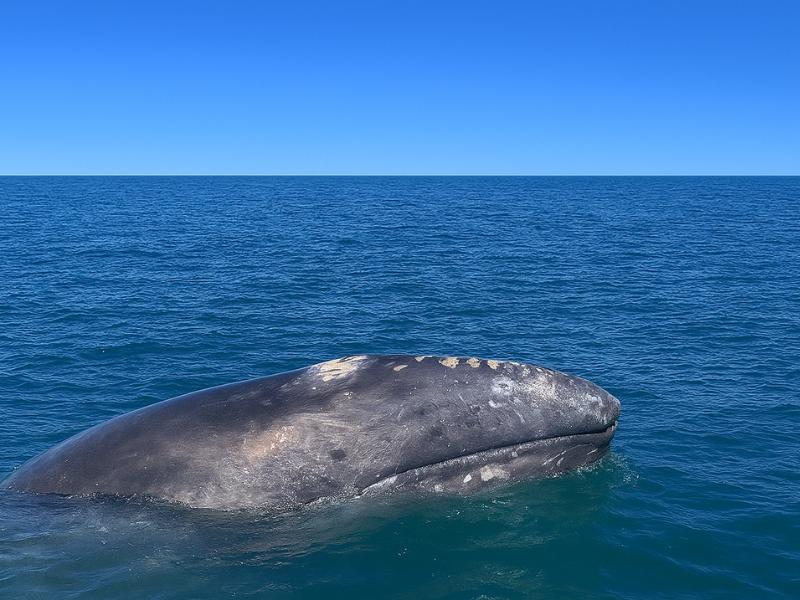
Humpback whales are what you’ll see on 90% of Cabo whale watching tours. Gray whales visit too, especially closer to the Pacific side. Blue whales and orcas show up occasionally as surprise guests, but they’re rare enough that seeing them feels like winning the lottery.
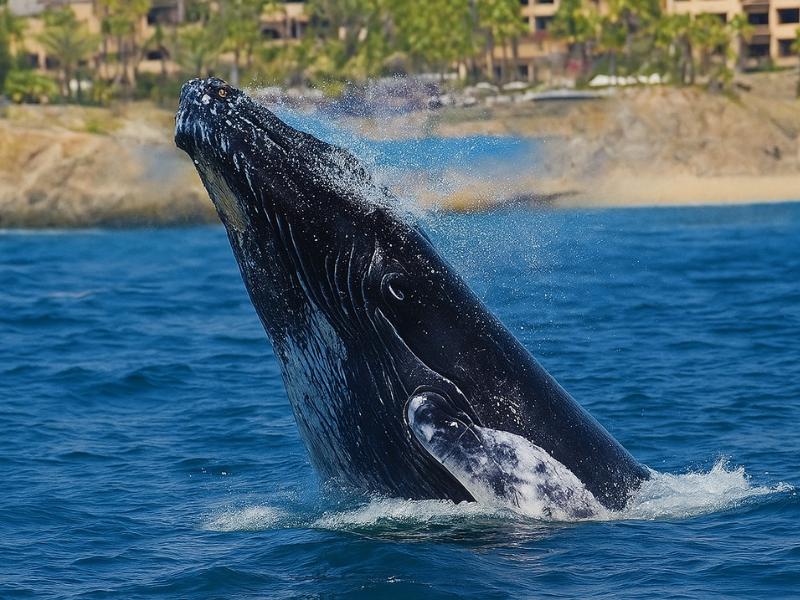
Humpback whales are the stars of Cabo waters. These are the ones breaching, tail slapping, spy-hopping, and generally putting on the shows that end up in everyone’s vacation photos. They’re huge (40-50 feet long, 30-40 tons) but surprisingly acrobatic. I’ve seen humpbacks breach fifteen times in a row, and I still have no idea where they get the energy to launch that much weight into the air.
What I love about humpbacks is their curiosity. They’ll sometimes approach boats just to check us out. Last January a juvenile humpback circled our boat three times, popping up on different sides like it was playing peek-a-boo. The guests were losing their minds with excitement.
Humpbacks also sing, which most people don’t realize until we drop the underwater microphone. The males produce these complex songs during mating season that can last 20 minutes and travel for miles underwater. Hearing it for the first time gives people goosebumps.
Gray whales are the friendly giants. While humpbacks steal the spotlight with their aerial shows, gray whales are the ones that’ll swim right up to your boat and let you touch them. I’m not exaggerating. Gray whales in Baja have this reputation for approaching small boats, especially in the Pacific lagoons up north.
In Cabo, you see gray whales more on the Pacific Ocean side than the Sea of Cortez side. They’re migrating down from Alaska to the breeding lagoons in Baja California Sur, and Cabo sits right on their route. Gray whales don’t breach as much as humpbacks, but they’re more interactive. I’ve had gray whales surface right next to our boat, eye-level with guests, just looking at us like they’re as curious about humans as we are about them.
The best gray whale encounters happen December through February when they’re heading south, and then again in March-April when mothers with calves are heading back north. The mom-and-calf pairs are especially trusting.
Blue whales are the holy grail of whale watching. These are the largest animals ever to exist on Earth, bigger than any dinosaur. We’re talking 80-100 feet long, 200 tons. Seeing a blue whale is rare in Cabo, maybe a handful of sightings per season, but when it happens, experienced guides lose their cool right alongside first-time tourists.
I’ve only seen blue whales twice in ten years of guiding. The first time was March 2019. We were heading back from a regular humpback tour when someone spotted this massive dark shape underwater. It surfaced, and the spout shot 30 feet in the air. Way bigger than a humpback spout. We followed at a respectful distance for about fifteen minutes before it dove deep and disappeared. Everyone on that boat still emails me photos years later.
Blue whales typically show up January through March if they show up at all. They’re usually just passing through, heading to feeding grounds. You can’t plan to see them. You just get incredibly lucky.
Orcas (killer whales) are even rarer than blues. Maybe once or twice a year we get reports of orca pods near Cabo. They’re not here for the warm water breeding like humpbacks and grays. They’re hunting, following fish or even hunting other marine mammals.
When orcas do appear, it’s usually November through February. I’ve never personally seen them on a tour, but a colleague radioed me two Februaries ago saying he had a pod of six orcas near Pelican Rock. By the time we got there, they’d moved on. Orcas don’t hang around like humpbacks do.
| Whale Species | When to See Them | Likelihood | Typical Behaviors | Size | What Makes Them Special |
|---|---|---|---|---|---|
| Humpback Whale | Dec-Apr (peak Jan-Mar) | 95%+ in peak season | Breaching, tail slapping, spy-hopping, singing | 40-50 feet, 30-40 tons | The aerial acrobats, most active shows |
| Gray Whale | Dec-Apr (especially Dec-Feb, Mar-Apr) | 30-50% chance | Friendly approaches, calm surfacing, mom-calf bonding | 45-50 feet, 30-40 tons | Interactive, “friendly whales” reputation |
| Blue Whale | Jan-Mar if at all | 5-10% chance per season | Traveling, deep dives, massive spouts | 80-100 feet, 200+ tons | Largest animal ever, incredibly rare sighting |
| Orca (Killer Whale) | Nov-Feb occasionally | 1-2% chance per season | Hunting, traveling in pods, fast swimming | 20-30 feet, 6-10 tons | Rare visitors, apex predators |
Here’s what this means for booking your tour: When you book with Cabo Whale Tours, our guides know where to look for different species based on the season, water conditions, and recent sightings. Humpbacks tend to hang out in certain areas where the water depth is right for their behaviors. Gray whales prefer different zones. Our captains radio each other throughout the day sharing whale locations, so we’re constantly updating where to find the best action.
You’re booking for humpbacks because that’s the reliable experience. Everything else is a bonus. But knowing your guide has years of experience reading the water and communicating with other boats increases your odds of those surprise encounters with grays, blues, or even orcas.
Most tours focus on humpbacks because that’s what delivers consistent, spectacular whale watching. But the ocean surprises us sometimes, and that’s part of the magic.
How’s The Weather During Whale Watching Season In Cabo San Lucas?
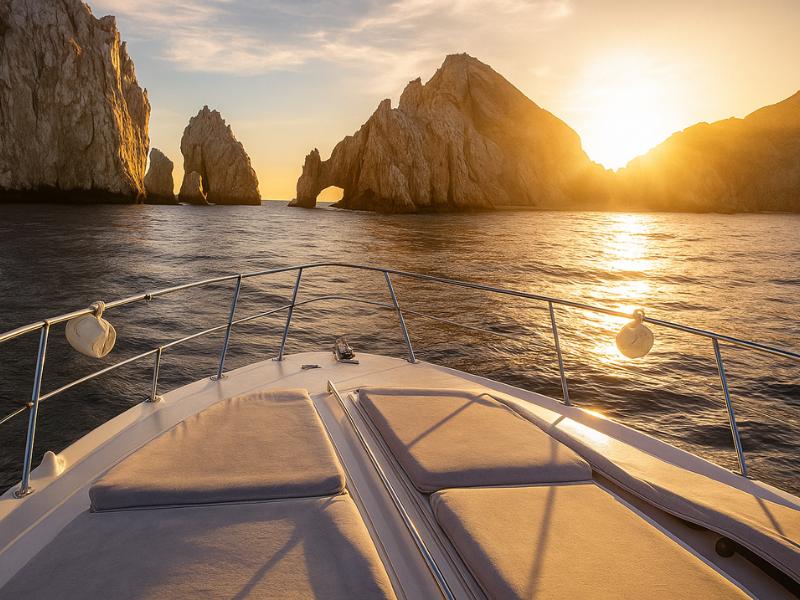
December weather feels like what most people consider perfect. You’re looking at 70-78°F (21-25°C) air temperature, light winds, and calm seas. Mornings start cool enough that you’ll want a light jacket, then by 10am you’re peeling it off. The water temperature hovers around 72-75°F (22-24°C), which is refreshingly cool but not cold. Some years we get occasional winter storms that kick up wind for a day or two, but mostly December is stable and pleasant.
January and February deliver absolute perfection. Air temps run 68-78°F (19-25°C), seas are typically glass-calm in the mornings, and you get that brilliant winter sunshine without scorching heat. I always tell people that if they could design ideal whale watching weather in a laboratory, this would be it. Cool enough that you’re comfortable standing on a boat for two hours, warm enough that you’re never actually cold, and calm enough that even people prone to seasickness usually do fine.
February occasionally gets a bit of wind in the afternoons, which is why we run most tours in the morning. But even afternoon tours are usually smooth.
March starts warming up into the 75-82°F (24-28°C) range. You’re transitioning from winter to spring, so mornings are still pleasant and cool, but by midday it’s getting legitimately warm. The ocean warms up too, reaching 75-77°F (24-25°C). This is actually nice for whale watching because you’re not layering up as much, and the warm sun feels amazing on the boat.
April pushes into proper warmth at 78-85°F (25-29°C). By late April you’re sometimes hitting 88-90°F (31-32°C), which can feel hot on a boat with full sun exposure. But the ocean breeze keeps it tolerable, and honestly, most people love the warm weather. Just bring more sunscreen and stay hydrated.
Why Cabo’s waters are ideal for whale watching: We sit at the tip of the Baja peninsula where the Pacific Ocean meets the Sea of Cortez. This creates relatively protected waters compared to open ocean conditions. The Sea of Cortez side (east) tends to be calmer than the Pacific side (west), which is why most tours launch from the marina and head into Cortez waters.
The Pacific side gets more swell and wind, especially in winter. That’s where you find more gray whales, but it’s also where seasickness becomes more likely. The Cortez side stays calm most days, perfect for humpback watching without the rough water.
I remember one January morning when we had unusual conditions. A winter storm had passed through overnight, and the Cortez side had 3-4 foot swells, which is rare. I warned everyone at the start of the tour that it might be bumpy. Sure enough, we were bouncing around more than usual. But you know what? We found a pod of five humpbacks, and watching them breach while the boat gently rocked actually made it more dramatic. Nobody got sick, everyone had a blast, and the slightly rough conditions made people feel more adventurous.
Compare that to the glassy calm days we get 80% of the time. Last February we had a week where the ocean looked like a mirror every single morning. Absolutely zero wind, flat water, perfect visibility. Guests could see whale spouts from a mile away. We spotted whales constantly. One guest said it felt surreal, like the ocean was cooperating to make whale watching as easy as possible.
Both experiences were great, just different. But I’ll be honest: calm days are easier for photos, better for people worried about seasickness, and generally more pleasant. If you have weather options, book for the calmest forecast day.
If you’re trying to figure out the details, here’s how to plan your visit to Cabo whale tours so nothing falls through the cracks.
What to actually wear and bring (because people always get this wrong):
Morning tours start at 8am or 9am when it’s still cool. Bring layers. I’m talking a light long-sleeve shirt or thin jacket you can take off once the sun warms up. You’ll be glad you have it for the first 30 minutes, then you’ll stuff it in your bag.
Sunscreen is non-negotiable. The sun reflects off the water and hits you from multiple angles. I’ve seen people burn in February because they thought “winter = no sunburn.” Wrong. Bring SPF 50, apply it generously, reapply halfway through the tour. Your future self will thank you.
A hat with a strap or chin cord is smart. Regular baseball caps blow off in the wind. Wide-brimmed hats with straps work best.
Sunglasses, obviously. Polarized ones help you spot whales underwater before they surface.
If motion sickness is a concern, read the medicine's Drug Facts label and ask a doctor or pharmacist what is appropriate for you, especially if you take other medicines or have health conditions. Some motion-sickness medicines can cause drowsiness, and no Cabo sea state or boat format removes the risk.
Closed-toe shoes with grip. Boat decks get wet and slippery. Flip-flops are a bad idea.
A light rain jacket if you’re visiting December or early January, just in case. We rarely get rain during whale season, but occasional brief showers happen.
Camera or phone in a waterproof case or bag. Splashing happens, especially if whales get close. Protect your electronics.
Water bottle. We provide water on tours, but bringing your own means you stay hydrated without asking.
The weather during Cabo whale watching season is genuinely one of the best parts of the experience. You’re not suffering through cold like you would whale watching in Alaska or New England. You’re comfortable, the conditions are pleasant, and you can focus entirely on the whales instead of wishing you’d brought a warmer jacket.
Need a packing checklist? Our guide on what to wear & bring on a Cabo whale tours covers everything from layers to camera gear.
Cabo San Lucas Whale Watching: Crowds And Booking Timing
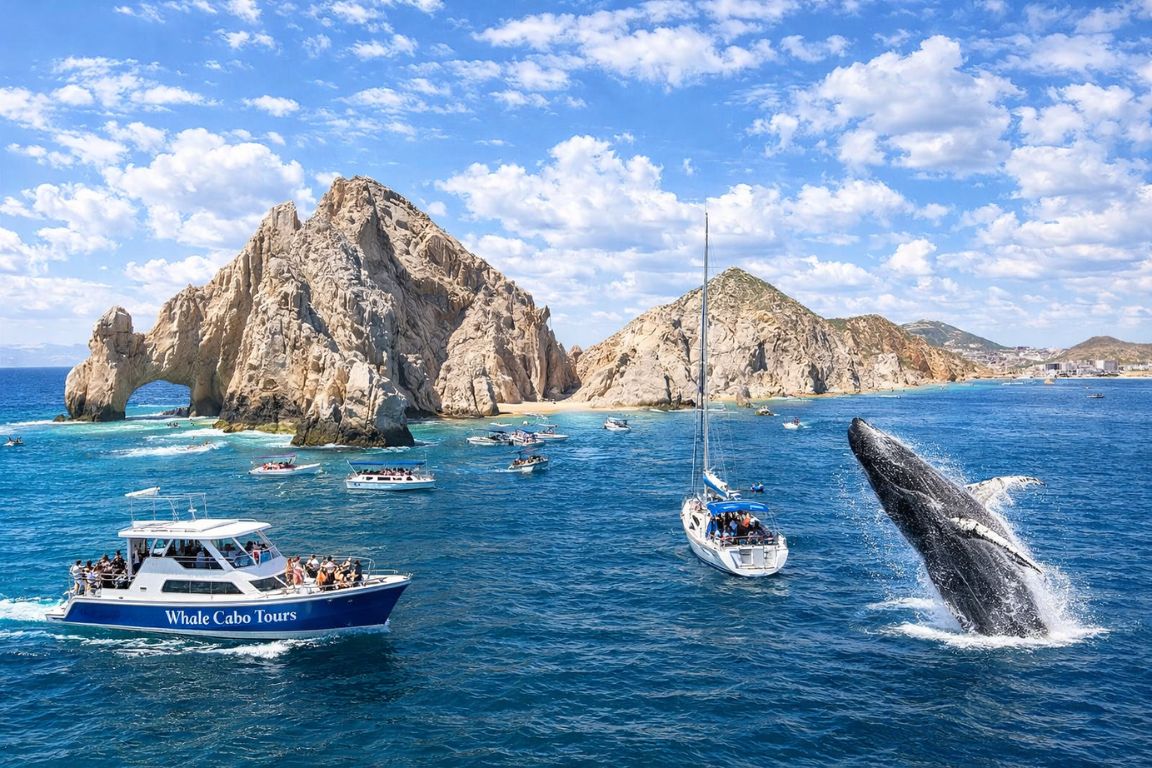
The crowd reality: February and March turn Cabo’s whale watching into a floating traffic jam. Presidents Day weekend in mid-February? I’ve counted 25 tour boats out on the water at the same time, all chasing the same pods of whales. Spring Break in March gets even worse because it stretches over 3-4 weeks as different universities let out at different times.
Last Presidents Day weekend, we had a humpback breach about 200 yards from our boat. Beautiful moment, right? Except six other boats saw it too and started converging on the same spot. Within minutes we had this awkward boat cluster, everyone jockeying for position, engines rumbling. The whale understandably decided to dive deep and relocate somewhere quieter.
That’s peak season crowd reality. You’re sharing the ocean with a lot of other people who had the same brilliant idea to go whale watching during their February vacation.
How many boats actually go out? In early December, maybe 8-12 boats leave the marina on a typical morning. The season’s just starting, tourist numbers are moderate, and there’s plenty of ocean for everyone. By mid-January, that jumps to 15-18 boats. Come February, especially around Valentine’s Day and Presidents Day, we’re looking at 20-25 boats easily. March during Spring Break peaks at 25-30 boats some days.
Does this ruin the experience? Not really. The whales don’t care how many boats are watching. And honestly, sometimes having multiple boats works in your favor because captains radio each other about whale locations. Someone spots a breach two miles north, everyone knows about it within seconds.
But if you’re someone who values peaceful, uncrowded experiences, those numbers matter. Nothing kills the “we’re alone with nature” vibe faster than realizing you’re in a flotilla of tour boats.
The crowd-avoiding strategy that actually works: Book December or early January, and go on weekday mornings. A Tuesday morning in early December might have 6-8 boats total on the water. You find whales, you watch them, and it feels almost private. Compare that to a Saturday in late February with 25 boats, and the difference is dramatic.
I took a couple out on a Wednesday morning in early January last year. They’d specifically avoided February because they’d read online about the crowds. We found a pair of humpbacks around 9:30am, and for almost 40 minutes, we were the only boat watching them. Just us, the whales, and calm water. The husband said it was exactly what he’d hoped whale watching would feel like.
Weekday mornings beat weekend mornings even during peak season. Weekends fill up with locals from Cabo and tourists squeezing tours into their vacation schedule. Monday through Thursday mornings stay calmer.
When to actually book your tour makes a bigger difference than most people realize. For December trips, booking 2-3 weeks ahead works fine. The season’s just starting, availability is good, and you have flexibility.
For January, book 3-4 weeks out. Maybe 4-6 weeks if you want a specific date or morning time slot.
February and holiday weekends can draw more demand. Open the live listing as soon as your dates are fixed to see which departure times and boat formats are actually available.
March Spring Break is tricky because it varies by school district. Some universities break early March, others late March. Figure out when your local schools break, then book 6-8 weeks ahead of whenever you’re planning to visit.
April drops back to 3-4 weeks advance booking being plenty.
Pricing fluctuates too. Early bookers sometimes get better rates, though honestly most Cabo tour operators charge consistent pricing throughout the season. What changes is availability. Book late and you might pay the same price but get stuck with afternoon tours or large group boats instead of the small boat morning tours that sell out first.
Last-minute bookings (like showing up in Cabo and trying to book for tomorrow) sometimes work in December or April. During February and March? Good luck. You’ll probably find something because there are tons of tour operators, but it won’t be the ideal experience you wanted.
Want a preferred date and time? Compare the verified products and use the live listing to see current availability. The site publishes affiliate recommendations and does not operate the boats.
If your Cabo dates are fixed, compare live availability for the boat style and departure time you prefer. Cancellation and rescheduling terms belong on the product listing.
The whales show up regardless of how many boats are on the water. But your experience of watching them definitely improves when you’re not surrounded by 20 other tour groups all trying to photograph the same breach.
Morning Vs Afternoon Whale Watching Tours In Cabo San Lucas
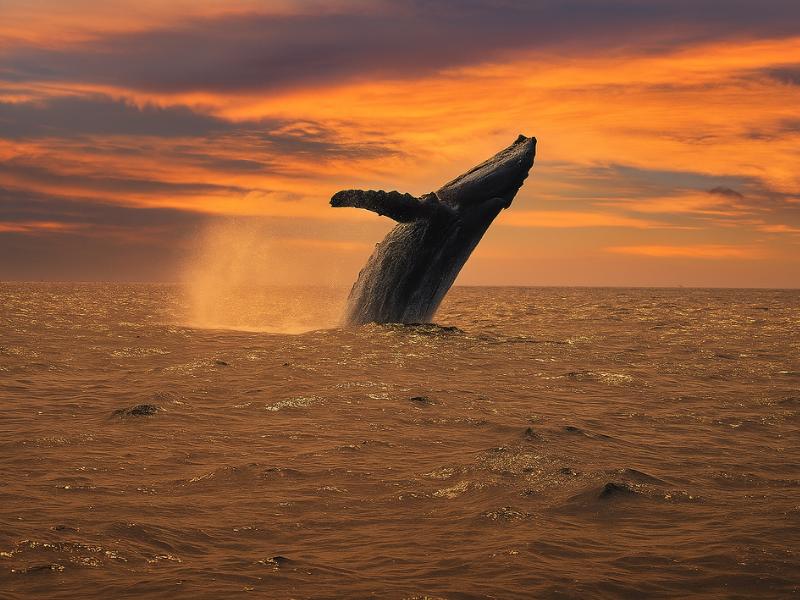
Morning tours own the advantage, and here’s why. I took a group out last January on an 8:30am departure. The ocean was glass smooth, not a ripple. We spotted our first humpback spout at 8:52am, less than 25 minutes into the tour. Over the next 90 minutes we watched that whale breach seven times, tail slap repeatedly, and even spy-hop right next to our boat like it was checking us out.
Everyone asks why mornings are better, and the answer’s pretty simple. Whales are more active in the cooler morning hours. They’ve been resting overnight, and as the sun comes up, they start moving, feeding, socializing, showing off. It’s like watching someone wake up and get energized for the day. By afternoon, especially on warmer days, whales often settle into calmer behaviors like logging (resting at the surface) or slow traveling.
The sea conditions make a huge difference too. Morning ocean is typically calm. The wind picks up as the day warms, creating chop and small waves by afternoon. Calm water means easier whale spotting (you can see spouts from farther away), smoother boat rides (less seasickness), and better photography (no bouncing around trying to focus your camera).
I’ve also noticed whales seem more curious about boats in the morning. Maybe there’s less boat traffic early, so they’re more willing to approach. Maybe they’re just in better moods. Whatever the reason, our most memorable close encounters happen between 8am and 11am.
But afternoon tours can surprise you. I had written off afternoons as the “backup option” until February last year when I guided a 2pm tour. We found a competitive pod of three male humpbacks all vying for a female’s attention. The afternoon light was golden, the water had this beautiful blue-green color, and these whales put on an absolute show. One breached eleven times in twenty minutes. Another was pectoral fin slapping constantly. It was chaos in the best possible way.
The photography that afternoon was stunning. Morning light is nice, sure, but that late afternoon golden hour light? It makes everything look magical. The guests got photos with dramatic lighting, long shadows on the water, and vibrant colors that morning’s bright sunshine doesn’t quite capture.
Afternoons also run less crowded sometimes. Everyone wants morning tours, so afternoon slots stay more available. If you book last-minute and morning’s sold out, afternoon might be your only option, but that doesn’t mean it’ll be disappointing.
How conditions change throughout the day is predictable enough that you can plan around it. Early morning (7am-9am departures) gives you the calmest seas, coolest temperatures, and most active whales. By mid-morning (9am-11am) it’s still excellent, just starting to warm up.
Midday (11am-1pm) the wind picks up, the ocean gets choppier, and honestly this is the least ideal time. We rarely run tours during this window.
Afternoon (2pm-4pm) has variable conditions. Some days the wind calms back down and it’s pleasant. Other days it stays choppy and you’re bouncing around more. The whales might still be active, or they might be in rest mode. It’s less predictable than morning.
Late afternoon (4pm-6pm) can be beautiful for sunset tours, but whale activity drops. You’re more likely to see whales traveling calmly than breaching dramatically.
I always recommend booking morning tours if you have the choice, but I’ve stopped telling people afternoons are bad. They’re just different. You might get lucky and see incredible whale behavior with better lighting. Or you might see calmer whale activity on slightly rougher seas. Either way, you’re still whale watching in Cabo, which beats sitting on a beach.
The tour comparison includes different departure formats because schedules and preferences vary. Choose the time that fits your day, then check the live listing for what is offered.
How To Choose The Best Cabo San Lucas Whale Watching Tour
Choose smaller boats (12-20 people max instead of 40+), experienced guides who know whale behavior, and operators with solid safety records and good reviews. These three factors make the difference between “we saw some whales” and “that was one of the best experiences of our lives.”
Boat size changes everything. I’ve been on both, and the difference is night and day. Large tour boats pack 40-60 people on multiple decks. You’re shoulder to shoulder with strangers, fighting for rail space when whales appear, and stuck wherever you happen to be standing when the action starts. If the whale breaches on the port side and you’re starboard? Too bad, by the time you push through the crowd, it’s over.
Small boats carrying 12-20 people let everyone see everything. When a whale surfaces, you just shift a few feet and you’ve got a perfect view. There’s room to move around, no jostling for position, and the captain can maneuver quickly to follow whales without worrying about a massive vessel’s turning radius.
I remember riding on a large catamaran tour as a passenger (researching competition, honestly). We spotted a humpback about 400 yards out. The boat lumbered toward it slowly. By the time we got close, the whale had moved. We followed at a distance for maybe 15 minutes, never getting closer than 200 yards. People on the upper deck got decent views. People stuck on the lower deck barely saw anything except other passengers’ backs.
Compare that to a small boat tour I ran two weeks later. We found a whale, the captain positioned us perfectly, and when it breached just 50 yards away, all fourteen people on board had unobstructed views. Everyone got photos. Everyone felt the spray when it landed. That’s the small boat advantage.
Guide expertise matters more than the boat itself. You can have the nicest small boat in Cabo, but if your guide doesn’t know whale behavior, you’ll spend two hours searching randomly and hoping to get lucky.
Great guides read the water. They spot subtle signs like bird activity (often means baitfish, which attracts whales), slight surface disturbances, distant spouts. They know where whales tend to hang out based on season, time of day, and recent sightings. They communicate with other boats to share locations. And critically, they understand whale behavior well enough to predict what a whale might do next.
Last March I watched a guide position his boat based on a whale’s diving pattern. He told his guests, “Watch that spot about 100 yards ahead. Based on how long it’s been down and the direction it was traveling, it should surface right there in about 90 seconds.” Sure enough, the whale came up almost exactly where he predicted. The guests thought he was psychic. He just knew whales.
Mediocre guides motor around hoping to spot whales randomly, which sometimes works but often wastes time. I’ve heard stories from disappointed tourists who spent 90 minutes searching with a guide who clearly didn’t know what he was doing, finally found a distant whale, watched it for ten minutes, and headed back. That’s a bad tour, even though technically they “saw a whale.”
Great guides also educate. They explain what you’re seeing, why whales breach, how to identify different species, what behaviors mean. They make the experience richer instead of just pointing and saying “there’s a whale.”
Red flags to watch for when booking: Tours priced way below market rate (quality costs money, if it’s suspiciously cheap, something’s wrong). Boats advertising capacity over 30 people (you’re in cattle-herd territory). Operators with no clear safety briefing or visible safety equipment (life jackets should be obvious and accessible). Reviews mentioning rude guides, broken-down boats, or tours that didn’t actually find whales despite good conditions (one bad review happens, but patterns matter).
Also be wary of tour operators who promise “guaranteed whale sightings or your money back” and then define “sighting” as “we saw a distant spout for 30 seconds.” Read the fine print.
For a verified small-group option, the biologist-led trip caps attendance at 12 and lasts 2.5 hours. It includes guide photos, water and a restroom, with a hydrophone used when conditions allow. It meets at Plaza Bonita in the marina.
| Factor | Large Tour Boats (40+ people) | Small Boats (12-20 people) |
|---|---|---|
| Capacity | 40-60+ passengers | 12-20 passengers |
| Typical Price | Check live listing | Check live listing |
| View Quality | Crowded, fighting for rail space | Everyone has room, easy to move |
| Photo Opportunities | Difficult (people in your way) | Excellent (clear sightlines) |
| Maneuverability | Slow turning, can’t position quickly | Quick positioning, follows whales easily |
| Seasickness Factor | More stable but stuffier | Smaller = more movement but fresh air |
| Personal Attention | Guide barely knows you exist | Guide interacts with everyone |
| Intimate Experience | Feels like a crowd event | Feels like a private tour |
| Noise Level | Loud (engines, people talking) | Quieter, easier to hear whales breathe |
A smaller group can buy more access to the guide and make it easier to change sightlines, while a larger catamaran can add deck space, food, drinks and arranged transfer. Compare those concrete differences on the live listings rather than relying on a fixed price gap.
When you’re choosing a Cabo whale watching tour, don’t just book the first thing that pops up or the cheapest option. Ask about boat size, read recent reviews (not just star ratings, actually read what people say), and look for operators who employ experienced local guides instead of rotating seasonal workers who barely know the area.
You can check the verified small-group tour if you want a maximum of 12 guests and a biologist to explain what you are seeing. The site recommends the product as an affiliate publisher.
The whales show up regardless of which tour you book. But the quality of your experience depends entirely on choosing the right operator.
The Cabo whale watching tour comparison organizes the verified options by duration, group format and inclusions.
FAQ: Cabo San Lucas Whale Watching
1. When is the best time to see whales in Cabo San Lucas?
December through April is whale watching season in Cabo San Lucas, with January through March being the absolute best months. Peak season delivers 95-98% whale sighting success rates with the most active behaviors like breaching, tail slapping, and spy-hopping.
2. What months can you see whales in Cabo?
You can see whales December through April reliably. November and May occasionally have stragglers, but sighting chances drop to 10-30% in those months. Don’t plan a trip around whale watching in November or May.
3. Are whale sightings guaranteed in Cabo San Lucas?
No tour can guarantee a wild animal sighting. January through March is generally the strongest part of the season, while December and April are shoulder months that call for an exact-date check and flexible expectations.
4. What’s the best month for whale watching in Cabo?
February typically offers the highest whale numbers and most dramatic behaviors, but January and March are nearly as excellent. February gets the most crowded, so if you hate crowds, January delivers similar whale action with fewer boats. March is perfect for seeing mother-calf pairs.
5. Can you see whales in Cabo in November or May?
Occasionally, yes, but don’t count on it. November gets maybe 10-20% sighting success as early scout whales arrive. May sees 20-30% as late stragglers head north. If you’re visiting Cabo for other reasons and want to try whale watching as a bonus, fine. But don’t plan your vacation around November or May whale watching.
6. What should I wear on a whale watching tour in Cabo?
Layers are key. Bring a light long-sleeve shirt or jacket for cool mornings (you’ll remove it as it warms up), closed-toe shoes with grip, a hat with a strap, sunglasses, and apply SPF 50 sunscreen generously. December through February mornings can be 68-75°F, while March-April warms to 78-85°F. The sun reflecting off water burns faster than you expect.
7. Do I need to book whale watching tours in advance?
Demand can rise around Presidents Day and Spring Break. Check live availability once your travel dates are fixed rather than relying on a fixed lead-time rule.
8. What’s the difference between morning and afternoon whale watching tours?
Morning tours (8am-10am departures) offer calmer seas, cooler temperatures, and more active whale behaviors. Whales tend to be energized in mornings after resting overnight. Afternoon tours can still be excellent but have less predictable conditions and sometimes choppy water as winds pick up. Morning is the safer bet, but afternoons occasionally surprise with spectacular encounters and better photography lighting.
9. What types of whales visit Cabo San Lucas?
Humpback whales are what you’ll see 90% of the time, doing all the dramatic breaching and tail slapping. Gray whales visit too, especially on the Pacific side, and are known for friendly boat approaches. Blue whales (largest animals on Earth) and orcas appear rarely, maybe a handful of sightings per season. Book expecting humpbacks, everything else is a bonus.
10. Can kids go on whale watching tours in Cabo?
Absolutely. Kids usually love whale watching, especially when whales breach. Most tour operators welcome children of all ages, though very young kids (under 3-4) might get restless during the 2-3 hour tour. Bring snacks, sunscreen, and prepare them for the possibility of some boat movement. Many of our most enthusiastic guests are kids who lose their minds with excitement when they see their first breach.
Glossary: Cabo San Lucas Whale Watching Terms
Breaching: When a whale launches its entire body (or most of it) out of the water and crashes back down. The most dramatic and photographed whale behavior. Nobody knows exactly why whales breach – maybe communication, maybe parasite removal, maybe they’re just showing off.
Spy-Hopping: When a whale vertically pokes its head out of the water to look around above the surface. They’re literally checking out what’s happening on boats or shore. Incredibly cool to witness because they’re making eye contact with you.
Spout (Blow): The visible spray when a whale exhales through its blowhole. How you spot whales from a distance. Different whale species have different spout shapes and heights. Humpback spouts are bushier and about 10-15 feet high.
Humpback Whale: The most commonly seen whale in Cabo (40-50 feet, 30-40 tons). Known for spectacular breaching, complex songs, and acrobatic behaviors. The stars of Cabo whale watching, appearing on 90% of tours during peak season.
Migration: The annual journey whales make between feeding grounds (Alaska/Pacific Northwest) and breeding grounds (Baja California/Cabo). Humpbacks travel 3,000+ miles each way, one of the longest migrations of any mammal. This is why they’re in Cabo December through April.
Pod: A group of whales traveling or socializing together. Can be a family group, mating group, or just whales hanging out. Competitive pods are groups of males competing for a female’s attention, often involving dramatic behaviors.
Calf: A baby whale. Humpback calves are born about 13-16 feet long and gain 100 pounds daily while nursing. They stay close to their mothers and are most commonly seen in Cabo during March as they prepare for the journey north.
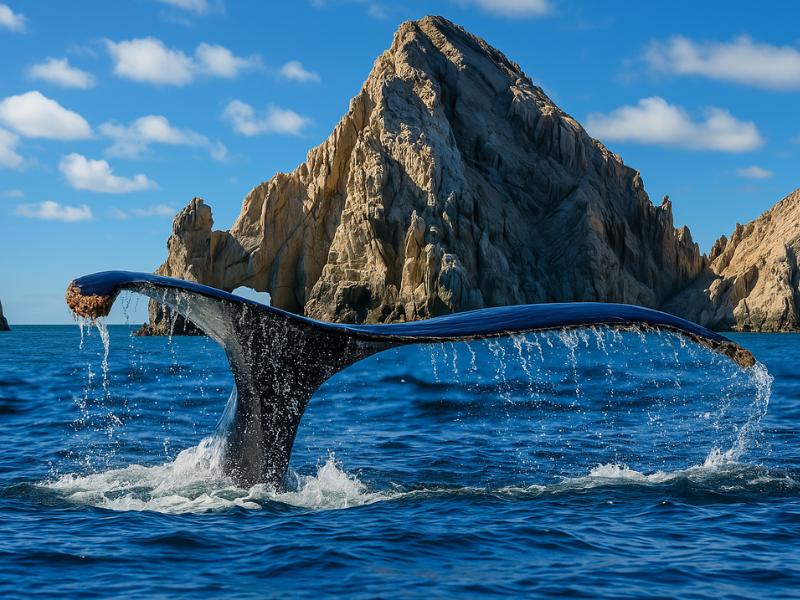
Tail Slapping (Lobtailing): When a whale lifts its tail flukes out of the water and slams them down repeatedly on the surface. Creates a loud smacking sound that can be heard from far away. Often a sign of communication or playfulness.
Ready To Experience Cabo San Lucas Whale Watching?
Here’s what you need to remember: January through March is the strongest seasonal match, while December and April need an exact-date check. Choose the boat format that fits your group and use the live listing for departure availability.
But honestly? The most important decision is booking with guides who actually know these waters and care about giving you an unforgettable experience, not just checking another tour off their daily schedule.
The verified biologist-led small-group option caps attendance at 12 and includes guide photos, water and a restroom. It meets at Plaza Bonita in the marina and returns there.
Check the operator's live listing for current operating dates, safety information and the details of the trip you select.
Compare the verified trips for your month and open the live listing for your exact date. January through March is the strongest seasonal match. December and April require a date check before you commit.
The whales are coming. The question is just whether you’ll be there to see them.
Editorial guidance from Cabo Whale Tours, an affiliate publisher comparing independently operated experiences.