Is Whale Watching In Cabo Safe? Complete Guide To Boat & Ocean Conditions
Is whale watching in Cabo safe? Yes—see real safety stats, calmest months, common risks to avoid, and how to choose licensed operators for worry-free tours.
Every week during whale season, nervous first-timers call asking “Is this actually safe?” or worried parents say “I’m concerned about the boat tipping over with my kids.” Some people cancel after reading about rough seas or whale collisions online, convinced that boats near 40-ton wild animals must be dangerous. The safety concerns are understandable, but anxiety often stems from lack of accurate information about what whale watching actually involves and how rare incidents really are.
This guide explains the questions to ask about boat standards, ocean conditions, whale approaches, and passenger suitability. Confirm current licenses, equipment, weather decisions, and restrictions with the operator for your date.
The useful booking question is which verified boat, duration and passenger requirements fit your group. These recommendations turn each safety topic into a specific product choice while leaving individual medical and access questions to the operator. Compare The Cabo Tour Options Below →
Choose from product-specific facts rather than site-wide safety claims. The biologist trip is a 2.5-hour small group of up to 12 from Plaza Bonita; the catamaran spends two hours on the water with arranged hotel transfer; the private charter gives your party a three-hour boat assigned from its fleet.
Is Whale Watching In Cabo San Lucas Safe?
Whale watching can be a well-managed activity, but conditions and passenger needs vary. Check the operator, vessel, weather policy, and individual restrictions rather than relying on an uncited comparison with other activities.
We’ve mapped out how to plan your visit to Cabo whale tours based on what actually matters – booking, timing, and avoiding common mistakes.
Reliable Cabo-wide incident rates are not published here. Assess the current operator, vessel, passenger requirements, and conditions instead of relying on precise injury, illness, mechanical-failure, or wildlife-incident percentages.
Whale watching involves changing marine conditions, and this guide cannot compare its risk with driving, swimming, or other activities. Follow crew instructions and discuss personal health or access concerns with a qualified professional and the operator.
Why Cabo is safer than many destinations starts with naturally calm protected waters during whale season. The Sea of Cortez side offers exceptionally calm conditions with wave heights typically 1-3 feet, while the Pacific side stays manageable at 2-4 feet during December-April. Both sides benefit from Cabo’s protected southern Baja location sheltered from major Pacific storms and winter weather patterns affecting northern whale watching destinations like Alaska or the Pacific Northwest.
Ask the operator for its current permit, insurance, vessel inspection, and crew credentials. Water temperature does not remove the risks of an unexpected water entry, so passengers should follow the crew's life-jacket and emergency instructions.
Ask the operator to confirm its current permits, insurance, vessel inspection, captain credentials, and passenger briefing. A license is one check, not a guarantee that incidents cannot occur.
Well-maintained boats undergo regular inspections checking engines, hulls, safety equipment, and navigational systems. Professional operators budget for preventive maintenance preventing mechanical failures, while budget operators often defer maintenance creating higher breakdown risks. Experienced crews with years navigating Cabo waters know how to read conditions, position boats safely near whales, handle emergencies, and make conservative decisions prioritizing passenger safety over maximizing whale encounters.
Regulations enforced by authorities and responsible operators include mandatory 100+ foot distance from whales, required safety equipment (life jackets, radios, first aid, fire extinguishers), passenger capacity limits preventing dangerous overcrowding, and weather monitoring with tour cancellations when conditions exceed safety thresholds. The regulatory framework works when operators follow it, though enforcement quality varies and unlicensed operators ignore rules entirely.
Concerns about wildlife, boat stability, falling overboard, and mechanical problems deserve direct questions rather than absolute reassurance. Ask how the crew manages whale approaches, changing conditions, passenger movement, and an unexpected return to shore.
Common concerns include motion sickness, slips on wet surfaces, sun exposure, and dehydration, but their frequency and severity vary. Do not describe them as harmless or fully preventable; use the operator's current guidance and seek medical advice for personal risk.
A couple from Ohio booked last January despite the wife’s severe anxiety about boats and ocean safety. She asked 20+ questions before booking about life jackets, emergency procedures, whale behavior, and what happens if someone gets hurt. She arrived at the marina wearing a life jacket she’d brought from home, visibly nervous and gripping her husband’s arm. Our guide spent 10 minutes before departure explaining every safety feature, showing her the radio and first aid kit, and walking through emergency procedures. Once we departed and she saw the calm water, the professional crew operation, and how gently the boat moved, her anxiety disappeared. When we found whales 20 minutes later and she saw how peacefully they surfaced far from the boat, she relaxed completely. She told us afterward she felt foolish for being so worried about one of the safest activities she’d ever done.
| Safety question | What to verify | Why it matters |
|---|---|---|
| Is the departure authorized? | Current operator permit and vessel documentation | Shows the specific departure is operating under current requirements |
| Is the vessel suitable? | Assigned vessel, flotation equipment, boarding, restroom, shade | General boat labels do not establish fit |
| What if weather changes? | Day-of decision, cancellation and return policy | Conditions and operating decisions vary |
| Does the trip fit the passenger? | Product restrictions and direct operator confirmation | Medical and access suitability is individual |
Boat Safety Standards And Regulations In Cabo
Licensing requirements mandate that legitimate whale watching operators obtain permits from Mexican maritime authorities (SEMARNAT for marine protected areas and CONANP for national park access). The permits require demonstrating proper boat registration, adequate insurance coverage, safety equipment compliance, and captain certifications. Operators must renew permits annually, submitting documentation proving continued compliance with safety and environmental standards.
Tourist service licenses from Cabo municipal authorities add another layer requiring business registration, tax compliance, and adherence to local tourism regulations. The multi-agency oversight creates accountability, though some operators work illegally without permits betting they won’t get caught or face consequences. Licensed operators display permit numbers on boats and marketing materials, while unlicensed operations avoid showing documentation.
Boat inspection and maintenance requirements include regular hull inspections checking for cracks, damage, or deterioration that could compromise seaworthiness. Engine maintenance schedules mandate checking fuel systems, cooling systems, electrical systems, and steering mechanisms preventing mechanical failures at sea. Safety equipment inspections verify life jackets aren’t damaged or expired, fire extinguishers maintain proper pressure and haven’t exceeded expiration dates, and radios function properly.
Professional operators follow manufacturer-recommended maintenance schedules servicing engines every 100-200 hours of operation, replacing worn parts proactively, and keeping detailed maintenance logs. Budget operators often defer maintenance until breakdowns occur, creating higher risk of mechanical failures during tours. Well-maintained boats show clean organized condition, functioning equipment, and professional appearance versus neglected boats with rust, broken fixtures, and general disrepair.
Safety equipment requirements mandate life jackets (personal flotation devices) for every passenger plus extras, properly sized from infant through adult. The life jackets must be Coast Guard approved or equivalent Mexican standards, stored in accessible locations, and maintained in good condition without rips, missing straps, or water-logged foam. Operators should show you life jacket locations and proper wearing during safety briefings.
Ask the operator to confirm its current communication and emergency equipment for the assigned vessel. Do not infer specific radio channels, range, or shore response from a general guide.
Captain and crew qualifications start with captain licensing requiring maritime certifications from Mexican authorities proving navigation knowledge, safety training, and vessel operation competence. Experienced captains typically hold commercial fishing or charter boat licenses demonstrating years of professional marine experience. First aid and CPR certifications ensure crew can respond to medical emergencies until reaching shore or professional help arrives.
Local knowledge matters as much as formal certifications, with experienced Cabo captains understanding specific conditions, whale behaviors, safe approaches, and emergency procedures for local waters. Captains working whale watching tours for 5-10+ years develop expertise that newly-licensed captains lack. Quality operators employ captains with extensive experience rather than minimum-qualified cheaper alternatives.
Insurance requirements mandate liability coverage protecting passengers if injuries or incidents occur during tours. The insurance should cover medical expenses, evacuation costs, and damages resulting from operator negligence or accidents. Minimum coverage levels vary, but responsible operators carry substantial policies (typically $1-2 million coverage) rather than bare minimum insurance.
Passengers should verify insurance exists before booking, though many operators resist providing proof unless pressed. The insurance becomes critical if serious incidents occur, as uninsured operators may lack resources to cover medical costs or damages. Licensed operators include insurance as required permit documentation, while unlicensed operations often carry zero insurance leaving passengers without protection.
Ocean And Sea Conditions For Cabo Whale Watching
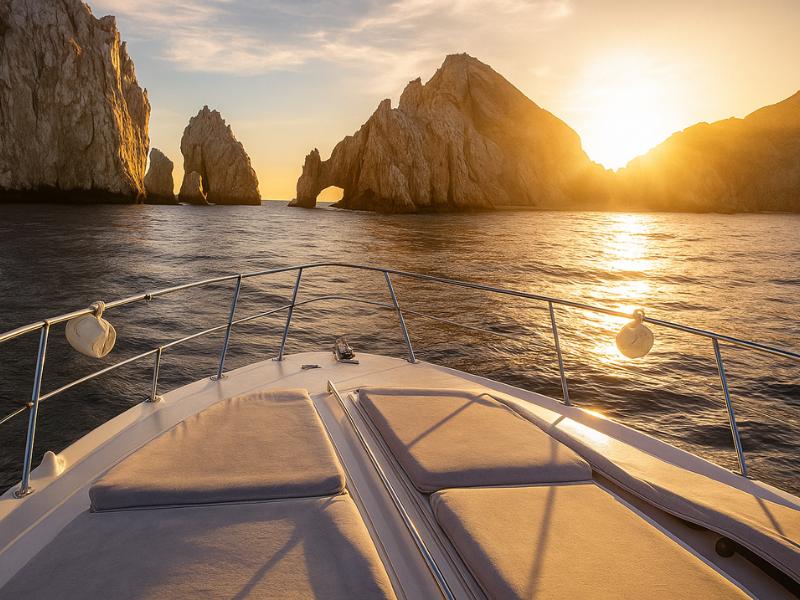
Why Cabo waters are calm stems from geography and seasonal weather patterns protecting this southern Baja location. Cabo sits where the Sea of Cortez meets the Pacific Ocean, creating somewhat sheltered conditions compared to fully exposed coastlines farther north. The Sea of Cortez (also called Gulf of California) acts as a large protected bay blocking major Pacific swells and storms from directly hitting Cabo’s eastern waters.
Whale season coincides with Cabo’s calm dry season when winter storms track farther north, leaving Cabo with stable high-pressure systems, minimal rainfall, and light winds. The seasonal patterns create predictable calm conditions December-April versus Cabo’s rougher hurricane-prone summer months. Southern Baja’s desert climate produces less wind and weather variability than northern regions, contributing to consistent calm whale watching conditions.
Sea state changes by day and departure time. Winter mornings may be calmer, but check the current marine forecast and ask the captain how the chosen vessel handles the expected conditions.
February maintains excellent calm conditions similar to December-January with average waves 1-3 feet and winds 8-12mph. March transitions toward slightly more active conditions as spring approaches, with average waves 2-3 feet, winds 10-15mph, and occasional choppier days. April shows the most variation with average waves 2-4 feet, winds 12-18mph, and increasing afternoon breezes creating chop. The April conditions remain manageable and safe but feel noticeably less smooth than December-February glassy calm.
Sea of Cortez vs Pacific differences create distinctly different whale watching experiences depending on which side of Cabo you tour. The Sea of Cortez (eastern side) stays significantly calmer with typical wave heights 1-2 feet, protected from major Pacific swells, and wind-sheltered conditions. Tours departing from Cabo San Lucas marina generally operate in the Sea of Cortez unless specifically going to Pacific side locations.
The Pacific side (western/southern side) experiences more open ocean swells with typical wave heights 2-4 feet, direct exposure to Pacific swell patterns, and less wind protection. The Pacific conditions vary more day-to-day depending on offshore weather patterns generating swells that travel hundreds of miles to reach Cabo. Most whale watching occurs in the calmer Sea of Cortez, with Pacific tours reserved for specific whale locations or when operators deliberately seek Pacific-side whales.
Wave heights and swells during normal Cabo whale watching conditions range 1-4 feet depending on location and month. One to two foot swells feel gentle and rolling, creating minimal boat motion that most passengers barely notice and rarely causing seasickness. These calm conditions dominate December-February tours, making Cabo exceptionally comfortable for nervous or seasickness-prone visitors.
Two to three foot swells create noticeable but manageable motion with boats rising and falling rhythmically, some passengers beginning to feel queasy, but most people staying comfortable. This moderate condition occurs frequently in March and occasionally in other months. Three to four foot swells produce more significant motion with boats pitching and rolling noticeably, increased seasickness affecting 15-20% of passengers, and some discomfort for people unused to boats. This rougher condition happens occasionally in April or during windier periods but still falls within safe operating parameters.
Rougher water increases motion and can affect comfort and footing. The captain decides whether the vessel should operate; passengers should follow crew instructions and avoid treating any stated wave height as automatically safe.
Items not secured slide around, and spray from bow hitting swells occasionally splashes passengers in forward positions. The motion triggers seasickness in susceptible people, with symptoms ranging from mild queasiness to active vomiting. Despite discomfort, these conditions don’t create safety concerns with proper boats, though operators sometimes cancel tours voluntarily when forecasts predict sustained 4+ foot swells prioritizing passenger comfort over revenue.
| Month | Decision status | What to do |
|---|---|---|
| January-March | Main whale-tour planning window | Check live availability and the current marine forecast |
| December or April | Season edge | Confirm the exact operating date before paying |
| May-November | No featured whale-tour match | Choose a different activity |
| Any month with concerning conditions | Operator decision required | Read the weather and cancellation policy |
Weather Safety During Whale Watching Season
Typical whale season weather delivers exceptional conditions December-April with clear sunny skies dominating 85-90% of days, calm stable atmospheric conditions from high-pressure systems, minimal precipitation with most months seeing zero rainfall, and predictable patterns making tour planning reliable. Morning departures typically encounter calm conditions with temperatures 65-75°F, light winds under 10mph, and excellent visibility extending miles across water for whale spotting.
The dry season coinciding with whale watching creates ideal marine conditions with stable weather fronts, minimal storm activity, and consistent comfortable touring weather. Cabo’s desert climate produces reliable sunshine and warmth throughout whale season, with weather-related discomfort more likely from excessive sun and heat than cold or storms. The predictability lets operators and visitors plan confidently without constant weather anxiety affecting other destinations.
We’ve broken down the best time to see whales in Cabo month by month so you know what to expect when you book.
Storm frequency during whale season remains remarkably low with significant weather causing tour cancellations occurring just 2-4 days per month on average. December and January see the fewest storm days (1-2 per month), February maintains excellent weather (2-3 storm days), while March and April experience slightly more frontal systems (3-5 storm days monthly). The storms typically arrive and depart within 24-48 hours rather than settling in for extended periods.
Weather can change or cancel a departure. Read the operator's current cancellation, rescheduling, and refund terms, and keep a flexible day if whale watching is a priority.
Wind conditions create the primary weather challenge during whale season, with sustained winds above 20mph generating uncomfortable chop and spray making tours unpleasant though still safe. December-February winds rarely exceed 15mph, maintaining comfortable touring conditions. March and April see increasing wind frequency with afternoon breezes building to 15-20mph by 2-3pm, making morning tours preferable during these months.
Wind limits depend on the vessel, route, and captain's assessment. Ask the operator how it decides to cancel or reschedule and do not treat a generic wind threshold as a safety rule.
Rain during season occurs rarely with most December-April months recording zero to minimal precipitation. When rain happens, it typically arrives as brief passing showers lasting 15-30 minutes rather than all-day downpours, falls lightly without heavy intensity, and often occurs overnight or early morning clearing before tour departures. Rain itself doesn’t create safety issues for whale watching, merely temporary discomfort that light rain jackets easily address.
Rain, wind, visibility, and wet clothing can change both comfort and operations. Bring the layer the operator recommends and let the captain decide whether conditions support departure or an early return.
Electrical storms can affect marine operations. Use the current forecast and the operator’s day-of decision; ask how weather cancellations and returns are handled instead of relying on an annual frequency estimate.
Weather thresholds and monitoring procedures are operator- and vessel-specific. Confirm the current weather policy and follow the captain’s instructions if conditions change.
How operators monitor weather involves checking multiple forecast sources daily including NOAA marine forecasts, Mexican meteorological service (CONAGUA), commercial marine weather services, and local knowledge from other captains and marina staff. Professional operators review forecasts 24-48 hours before tours, identifying potential weather issues early and contacting passengers about possible cancellations or rescheduling.
Real-time monitoring continues through departure morning using marine radar showing approaching weather systems, VHF radio communication with other boats reporting actual conditions at whale watching areas, visual assessment of cloud formations, wind, and sea state, and continuous forecast updates via marine weather apps and radio broadcasts. The multi-source approach prevents surprises, allowing informed decisions about tour safety and passenger comfort before departing marina.
If you want the full picture, here’s our Cabo whale watching season calendar that maps out migration patterns throughout the year.
Whale Encounter Safety: Distance And Behavior
Whale-approach rules depend on the current permit framework and species guidance. Ask the operator how it applies the rules on your date and follow the captain's instructions when an animal approaches the boat.
Permit enforcement and penalties can change. Ask the operator to confirm its current authorization and follow the approach instructions given for that departure.
Whales are wild animals, and close interaction should be managed by an authorized operator under the current approach rules. Stay in the passenger area and follow crew instructions throughout the encounter.
Do not treat whale behavior or collision avoidance as guaranteed. Choose an authorized operator and let the captain control distance, speed, and position.
When whales approach boats the interaction remains legal and safe because regulations prohibit boats approaching whales but don’t restrict whales approaching boats of their own choice. When whales swim toward vessels, captains must maintain position with engines in neutral, allowing whales to control the encounter distance and duration. The whale-initiated approaches often bring animals within 20-50 feet of boats, well inside the 100-foot legal distance, but perfectly legal since whales chose the proximity.
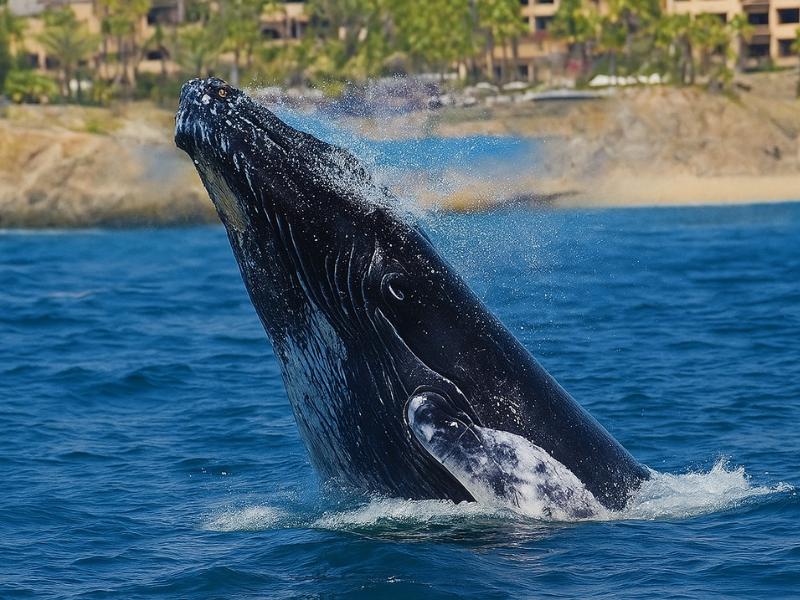
These close approaches create spectacular viewing opportunities with whales surfacing alongside boats, passing directly under vessels visible through clear water, spy-hopping (raising heads vertically out of water) near boats apparently observing passengers, and sometimes staying near vessels for extended periods seemingly enjoying the interaction. The close encounters feel intense but remain completely safe, with whales demonstrating precise control over their movements and showing clear awareness of boat positions throughout interactions.
A father from Chicago brought his 10-year-old daughter on a tour last February specifically to see whales but worried constantly about safety. When we found a pod of four humpbacks, one whale surfaced heading directly toward our boat from about 200 feet away. The father grabbed his daughter pulling her back from the rail, asking nervously if we should move the boat away. Our captain explained the whale was controlling the approach and we’d stay still letting it decide how close to come. The whale swam to within 30 feet, surfaced slowly showing its massive head and eye, seemed to look directly at passengers for 10-15 seconds, then dove peacefully continuing on its way. The father was shaking afterward, saying “That was the most incredible and terrifying thing I’ve ever experienced,” then laughing at how his fear transformed to awe once he realized the whale moved with complete awareness and gentleness despite its enormous size.
Boat Safety Equipment And Emergency Procedures
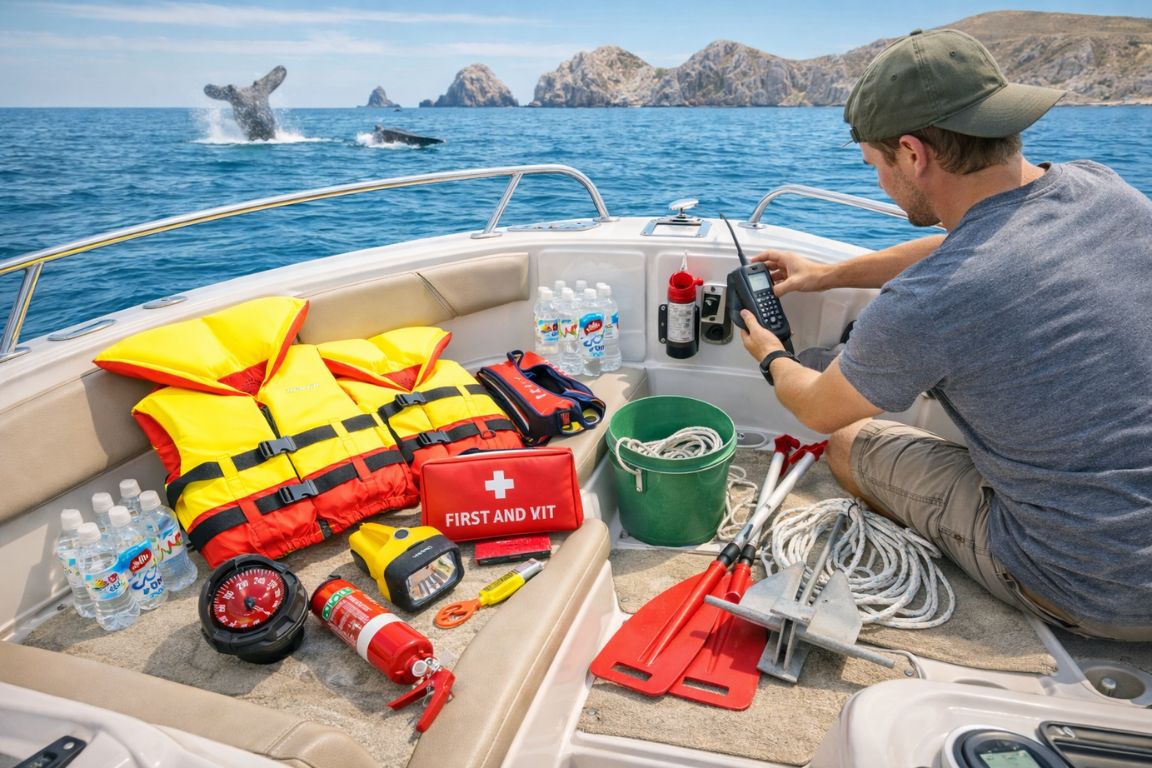
Ask the operator to confirm the flotation equipment and sizing available for every passenger in your group, especially infants or children, and follow the safety briefing on when and how to wear it.
Life jackets become mandatory when conditions deteriorate with rough seas, high winds, or weather concerns, when passengers request them for personal comfort regardless of conditions, and for children under certain ages (policies vary by operator, typically under 6-8 years old). Crew demonstrates proper wearing during safety briefings including adjusting straps for secure fit, positioning flotation panels correctly, and ensuring buckles and zippers close properly. Most Cabo whale watching occurs in calm enough conditions that life jacket wearing remains optional for adults, though availability and immediate access stay mandatory.
Radio communication relies on VHF marine radios operating on standard maritime channels enabling boat-to-boat communication, contact with marina operations and harbor master, and emergency communication with coast guard and rescue services. Channel 16 serves as the international distress and hailing frequency monitored continuously by authorities and other vessels, while Channel 22A provides working frequency for routine communication after initial contact on Channel 16. Properly equipped boats carry at least one fixed-mount VHF radio plus handheld backup units preventing total communication loss if primary systems fail.
Coast guard contact happens immediately during emergencies with operators broadcasting distress calls on Channel 16 including vessel position (GPS coordinates), nature of emergency, number of passengers aboard, and assistance needed. The VHF system’s line-of-sight range typically extends 15-25 miles depending on antenna height, easily covering distances between whale watching areas and shore-based rescue coordination. Modern radios include GPS integration automatically transmitting vessel location with distress signals, and Digital Selective Calling (DSC) enabling one-button emergency broadcasts alerting all vessels and authorities within range.
First-aid supplies and crew training vary by vessel and operator. Travelers with a medical concern should ask what is carried and obtain operator confirmation before paying.
Advanced kits on professional operators’ boats add trauma supplies including hemostatic gauze for serious bleeding, splinting materials for suspected fractures, emergency oxygen for breathing difficulties or severe seasickness, and potentially automated external defibrillators (AEDs) for cardiac emergencies. Crew training ranges from basic first aid certification covering minor injuries to advanced certifications including CPR, AED use, and emergency medical response. Medical emergency protocols involve stabilizing patients using available first aid supplies, radioing coast guard requesting medical evacuation if needed, and returning to shore immediately for anything beyond minor treatable injuries.
If you’re trying to figure out what you need, here’s what to wear & bring on a Cabo whale tours based on actual boat conditions and weather.
Fire safety equipment includes Coast Guard-rated fire extinguishers mounted in accessible locations throughout vessels with minimum two extinguishers on small boats and additional units on larger vessels. The extinguishers must be rated for Class B (flammable liquids like fuel) and Class C (electrical fires) common on boats, regularly inspected with pressure gauges showing adequate charge, and crew-trained on proper operation. Prevention focuses on fuel system maintenance preventing leaks, proper electrical system installation avoiding short circuits and overheating, designated smoking areas away from fuel and flammables (if smoking allowed at all), and no-flame policies in engine compartments and fuel storage areas.
Evacuation procedures during fire emergencies prioritize getting passengers away from fire toward boat’s opposite end or into water if flames spread rapidly, deploying life jackets to all passengers immediately, radioing emergency distress calls with position and situation, and fighting small contained fires with extinguishers only if safe while preparing to abandon vessel if fire spreads beyond control. The warm Cabo water temperature means evacuation into water doesn’t create hypothermia concerns allowing time for rescue if vessel fire requires abandonment.
Emergency procedures for man overboard situations involve immediately throwing flotation devices (life rings, cushions) to person in water, designating spotter maintaining visual contact constantly while calling out position, turning boat around using proper recovery maneuvers, approaching person carefully from downwind side avoiding propeller contact, and pulling person aboard using ladder, swim platform, or crew assistance. The warm clear Cabo water and calm conditions make recovery relatively straightforward compared to cold rough northern waters, though prevention through passenger awareness and proper railings remains priority.
Emergency procedures depend on the vessel, location, crew training, and current conditions. Ask the operator how it communicates with shore and handles an early return; seek individual medical advice before travel when needed.
Mechanical failures activate troubleshooting procedures attempting to fix problems at sea using onboard tools and spare parts, radio calls to shore-based mechanics for guidance, and if repairs prove impossible, radio assistance requests to other operators or coast guard for tow back to marina. The short distances from shore and heavy boat traffic during whale season mean disabled vessels get assistance within 30-60 minutes typically, preventing extended stranding situations.
Emergency response time and resources cannot be promised in this guide. Ask the operator about its communication plan and the limits of assistance available offshore.
Distance from shore and return time change with the route, wildlife location, vessel, and conditions. Do not plan around a fixed emergency return time.
Seasickness: Prevention, Management, And Safety
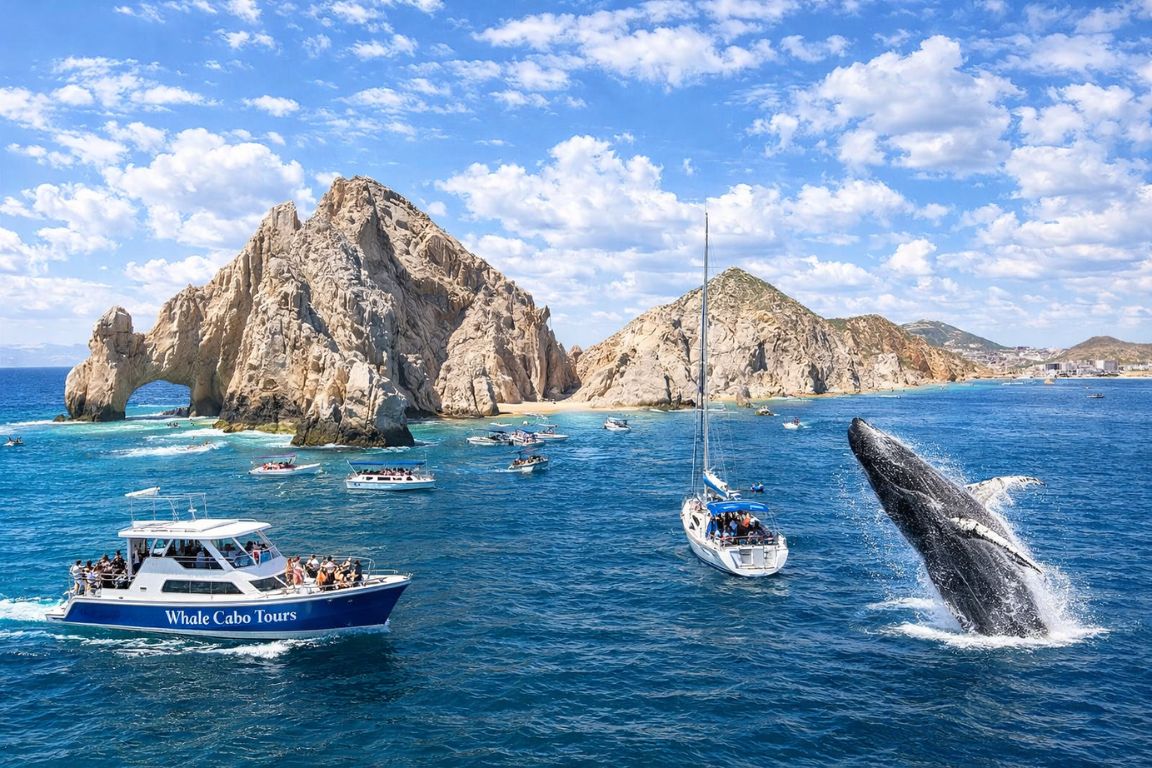 Why Cabo has low seasickness rates stems directly from the calm protected waters characterizing whale season conditions. The typical 1-3 foot wave heights during December-April create gentle rolling motion that most people tolerate easily compared to rougher destinations with 4-8 foot swells triggering widespread seasickness. The Sea of Cortez provides particularly calm conditions with minimal swell action, while even the more exposed Pacific side stays manageable during whale season’s stable weather patterns.
Seasickness affects only 5-10% of Cabo whale watching passengers in normal conditions compared to 20-40% rates in rougher destinations like Alaska or the North Atlantic. The warm stable weather, short tour durations (2-3 hours), and proximity to shore all contribute to low seasickness frequency. Most affected passengers experience mild queasiness rather than severe vomiting, with symptoms manageable through positioning changes and staying hydrated.
Motion-sickness medicines have individual risks, side effects, and instructions. Ask a pharmacist or clinician which option is appropriate for you and follow the product label.
Evidence and individual response vary for ginger and acupressure products. Treat them as personal comfort choices rather than assigning a success rate.
Management during tours involves crew recognizing early seasickness symptoms including pale skin, cold sweats, and decreased activity, and providing immediate intervention before symptoms worsen to vomiting. Experienced crews direct affected passengers to optimal positioning at boat’s center where motion feels less dramatic than bow or stern locations, and toward stern where engine exhaust doesn’t add nausea-inducing smells to motion discomfort. Fresh air access at railings helps many people feel better than staying in enclosed cabins where stuffiness intensifies nausea.
Crew provides cold water encouraging hydration, suggests focusing on distant horizon rather than nearby waves or boat movements, and offers crackers or light snacks that settle stomachs better than empty stomachs. Sitting rather than standing reduces symptoms for many passengers, as does avoiding looking down at phones or cameras focusing on nearby objects. The crew reassures passengers that seasickness, while miserable, doesn’t indicate serious medical problems and typically resolves within 20-30 minutes of reaching shore.
Persistent vomiting or other concerning symptoms require individual medical assessment. The article cannot diagnose dehydration or tell a traveler when a symptom is harmless.
If symptoms are severe, unusual, or continue after the trip, seek advice from a qualified medical professional. Do not rely on a fixed time threshold in this guide.
Vomiting safety procedures involve providing seasick passengers with bags rather than having them vomit over railings where leaning far over creates fall risks. The bags contain vomit hygienically and crew disposes of them properly, while passengers stay safely seated or standing with railings support. If passengers insist on using rails, crew ensures they maintain secure grip with at least one hand while using railings for support, positioning themselves where spray won’t blow back onto other passengers.
Staying hydrated after vomiting becomes critical for preventing dehydration complications. Crew encourages small sips of water every few minutes rather than large amounts that might trigger more vomiting. The goal is gradual rehydration maintaining fluid levels until reaching shore where more comprehensive rehydration can occur. Passengers should inform crew if they feel unable to keep any water down, as this signals potential need for medical evaluation upon return.
Medical Emergencies And Preparedness
Common medical issues encountered during Cabo whale watching involve minor injuries and discomfort rather than serious emergencies. Small cuts and scrapes from bumping boat fixtures, slipping on decks, or handling equipment occur occasionally, treated easily with bandages and antiseptic from first aid kits. Seasickness affects 5-10% of passengers creating temporary misery but rarely requiring medical intervention beyond hydration and positioning adjustments. Dehydration from inadequate water intake in sun and heat causes headaches, dizziness, and fatigue, resolved through drinking water and resting in shade.
Sunburn represents the most common passenger injury with 10-15% of unprepared visitors developing painful burns requiring after-tour treatment. Minor bruises from stumbling on moving boats, headaches from sun exposure or dehydration, and small splinters from wooden boat surfaces round out typical issues. These common problems don’t threaten health seriously but create discomfort affecting tour enjoyment, all easily prevented through proper preparation and precautions.
This guide does not have reliable local incidence figures for medical emergencies. Travelers with a medical condition should seek individual advice and obtain operator confirmation before booking.
Strokes, diabetic emergencies, severe asthma attacks, and other acute medical crises occasionally affect passengers, requiring crew assessment, first aid intervention, immediate radio contact with coast guard medical advisory, and typically helicopter or rapid boat evacuation to shore-based medical facilities. The rarity of serious emergencies (affecting less than 0.01% of tours) means most crew members never encounter life-threatening situations during careers, though training and preparedness remain essential for the rare occasions when emergencies occur.
Crew first aid training on professional operators ranges from basic to advanced depending on boat size, passenger capacity, and operator investment in safety. Basic first aid certification covers wound care, bleeding control, burn treatment, splinting suspected fractures, recognizing medical emergencies, and when to seek professional help. Most crew complete basic training through Red Cross or equivalent organizations, maintaining current certifications through periodic renewal courses.
Advanced certifications including CPR (cardiopulmonary resuscitation), AED (automated external defibrillator) operation, and wilderness first aid or emergency medical responder training equip crew for serious medical situations during the 15-45 minutes before professional help arrives. Larger operators with multiple crew members often ensure at least one crew member per boat holds advanced certifications, while smaller budget operators might have only basic first aid training. The training quality and depth varies significantly between operators, with premium services typically investing more heavily in comprehensive crew medical preparedness.
Return and transfer times to medical care vary with route, vessel, traffic, conditions, and facility availability. Ask the operator about its emergency plan; no response time is guaranteed.
Medical facilities, services, and travel times can change. Use current local emergency information and the operator’s response plan rather than this article for care decisions.
When to disclose conditions to operators and crew before tours, passengers with heart conditions including previous heart attacks, angina, arrhythmias, or recent cardiac procedures should inform crew enabling them to monitor for warning signs and respond faster if cardiac events occur. Severe allergies requiring epinephrine auto-injectors (EpiPens) need disclosure so crew knows to retrieve and administer medication if anaphylaxis develops. Diabetes requiring insulin or prone to blood sugar emergencies should be communicated allowing crew to recognize symptoms and assist with medication if needed.
Seizure disorders, asthma requiring rescue inhalers, recent surgeries or injuries affecting mobility, pregnancy (especially third trimester), and any conditions requiring regular medication all warrant disclosure. The information helps crew make appropriate safety accommodations, position passengers optimally, and respond effectively if conditions worsen during tours. Most operators keep medical disclosures confidential, using information solely for safety purposes rather than refusing passengers based on disclosed conditions.
Safety Differences Between Tour Types
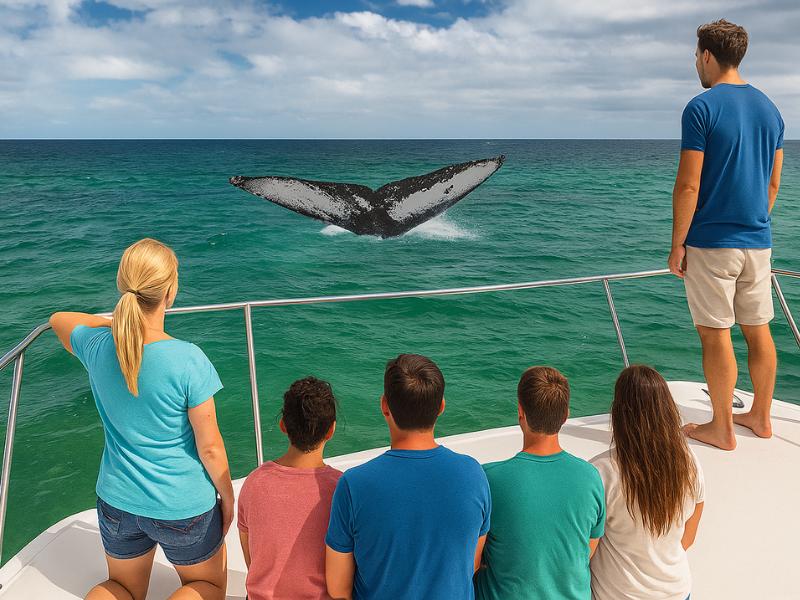
Small boat safety characteristics include higher seasickness rates due to more pronounced motion in boats under 30 feet, with passengers feeling every wave and swell more dramatically than on larger stable vessels. The smaller size means less space between passengers and water surface, creating psychological discomfort for nervous passengers even though actual safety isn’t compromised. Movement around small boats requires more careful attention with limited deck space, narrower walkways, and fewer handrails compared to spacious large vessels.
The advantages include superior maneuverability allowing captains to respond quickly to changing conditions or whale movements, easier communication between passengers and crew in intimate settings, and typically lower passenger counts (6-20 people) making headcounts and supervision simpler. Small boats can access shallower areas and maneuver into optimal viewing positions that large boats can’t reach. The safety trade-off involves accepting more motion and less physical comfort in exchange for better whale encounter positioning and more personalized crew attention.
A larger format may feel different from a small boat, but size alone does not verify stability, restroom, shade, deck access, or medical suitability. Confirm the actual vessel and every required feature with the operator.
The passenger capacity ranging from 40-60 people creates safety through numbers with more witnesses if incidents occur, more hands available to assist in emergencies, and statistical safety from larger crew-to-passenger ratios. Large stable boats handle rough conditions better than small boats, maintaining operation in 3-4 foot swells that would create miserable experiences on smaller vessels. The trade-offs involve less personalized attention from crew managing many passengers, potential crowding at railings during popular whale sightings, and less intimate experiences.
A private booking may allow more direct communication with the crew, but route changes and early returns remain the captain's decision and depend on conditions. Confirm the assigned vessel and any medical or access requirement before booking.
A private charter gives your group direct access to the crew, but it does not guarantee medical or mobility accommodation. The verified private product uses an assigned vessel, so confirm boarding, layout, assistance, and passenger requirements before paying.
If you prefer a more personal experience, here are the private Cabo whale watching charter experiences that give you way more control over the trip.
Budget tour safety concerns stem from economic pressures forcing operators to cut costs somewhere, often affecting safety-critical areas. Cheaper boats frequently show deferred maintenance with older engines more likely to fail, worn safety equipment that should have been replaced, and general disrepair indicating operator priorities favor minimizing expenses over proper upkeep. Less experienced crews working for lower wages may lack the judgment and skills handling challenging situations or whale encounters safely.
Budget operators often carry minimal required safety equipment rather than comprehensive supplies, skip regular boat inspections to avoid finding problems requiring expensive fixes, and may operate without proper insurance leaving passengers unprotected if incidents occur. The $60-70 pricing compared to $95-135 legitimate operators charge reflects corners cut throughout operations. Not all budget operators are unsafe, but price points dramatically below market rates warrant careful scrutiny before booking.
Price does not verify maintenance, certification, equipment, or crew experience. Ask each operator for current evidence and compare the actual vessel and requirements rather than treating a higher fare as a safety credential.
The quality difference appears in details like crew performing safety briefings thoroughly rather than rushing through minimum requirements, boats showing excellent maintenance and cleanliness indicating overall care standards, and operators readily providing insurance documentation, permits, and certifications when asked. Premium pricing buys peace of mind through verifiable safety investments rather than just nicer seats or better snacks.
If you want to skip the research, here are the best Cabo whale watching tours based on boat size, guides, and what’s included.
| Format | Verified useful facts | Limits to check |
|---|---|---|
| Biologist small group | 2.5 hours, max 12, restroom, water, conditional hydrophone, photos | Not wheelchair accessible; pregnancy/back recommendation and serious-medical-condition limit |
| Catamaran | 2 hours on water, light meal, domestic bar, arranged hotel transfer | Not wheelchair suitable; add transfer time |
| Private charter | 3 hours, food, drinks, snorkel gear, paddleboard, IGY Dock C | Fleet assigned; confirm access, layout, capacity and child rules |
FAQ: Cabo Whale Watching Safety
1. Is whale watching in Cabo San Lucas safe?
Whale watching can be well managed, but no activity is risk-free and this guide does not have a verified Cabo-wide incident rate. Check the actual operator, vessel, conditions, and passenger needs before booking.
2. Can whales attack or tip boats?
Whales are wild animals. An authorized operator should manage speed, distance, and position under the current rules, and passengers should follow the crew’s instructions.
3. What happens if someone falls overboard?
A vessel’s overboard procedure, equipment, location, and response time vary. Listen to the safety briefing and ask the operator about the assigned vessel if this concern affects your decision.
4. Is it safe to whale watch if I can’t swim?
Ask the operator whether the assigned vessel and flotation equipment are suitable for a non-swimmer, and follow the crew’s instructions. Do not assume suitability from a general statement.
5. Are there sharks in Cabo during whale watching season?
Marine wildlife is present in the region, but this guide cannot guarantee how any wild animal will behave. Remain aboard, follow crew directions, and use an authorized operator.
6. What if I get seasick during the tour?
Crew assistance and onboard supplies vary. If motion sickness is a concern, ask a pharmacist or clinician for individual advice and confirm the operator’s current cancellation or early-return policy.
7. How close do boats get to whales – is that safe?
Approach rules can depend on current permits and species guidance. Ask the operator to explain the rules for the departure and follow the captain’s directions.
Glossary: Cabo Whale Watching Safety Terms
Authorized operator: a provider that can confirm the current permits, insurance, vessel documentation, and crew credentials required for the departure. Verify these details with the operator rather than relying on the label alone.
Flotation equipment: ask the operator to confirm the type and size available for every passenger, then follow the safety briefing for its use.
Marine communication equipment: equipment and monitoring arrangements vary. Ask the operator what the assigned vessel carries and how it contacts shore in an emergency.
Sea state describes current wind, waves, and surface conditions. Check the current forecast and accept the captain’s day-of operating decision rather than relying on seasonal averages.
Captain credentials: ask the operator to confirm the qualifications required for the assigned vessel and route. This guide does not verify an individual captain.
Approach rules: current permit and species guidance govern vessel behavior around whales. Follow the operator’s briefing rather than a fixed distance quoted in older copy.
Safety briefing: listen for flotation equipment, passenger movement, emergency communication, and crew instructions. Ask questions before departure if anything is unclear.
Protected-area rules: permits and operating instructions can change. Confirm the departure’s current authorization and follow the operator’s briefing.
Ready To Book Your Safe Cabo Whale Watching Experience?
A sound booking starts with the specific operator, vessel, weather policy, and passenger requirements. Conditions vary, wildlife is unpredictable, and this guide does not provide Cabo-wide incident rates or comparisons with other activities.
Compare the verified product details, assigned vessel, current permit, cancellation terms, and fit for your group before choosing a departure.
This article does not verify a site-owned operating history or a perfect safety record. Evaluate the actual tour operator and assigned vessel, and ask for current documentation when safety details affect your decision.
Choose a departure only after reviewing the actual operator, assigned vessel, current conditions, eligibility limits, and cancellation terms.
Good preparation starts with product-specific facts: the operator, vessel, weather policy, safety briefing, and passenger suitability.
If a passenger has a mobility or medical concern, ask the operator to confirm suitability and the assigned vessel before paying.