Where Is The Best Place To See Whales In Cabo San Lucas?
The best whale watching in Cabo happens on the water off Land's End, where the Pacific meets the Sea of Cortez, minutes from the marina. This covers the zone the boats work, the shore viewpoints that genuinely deliver, and the timing that improves both.
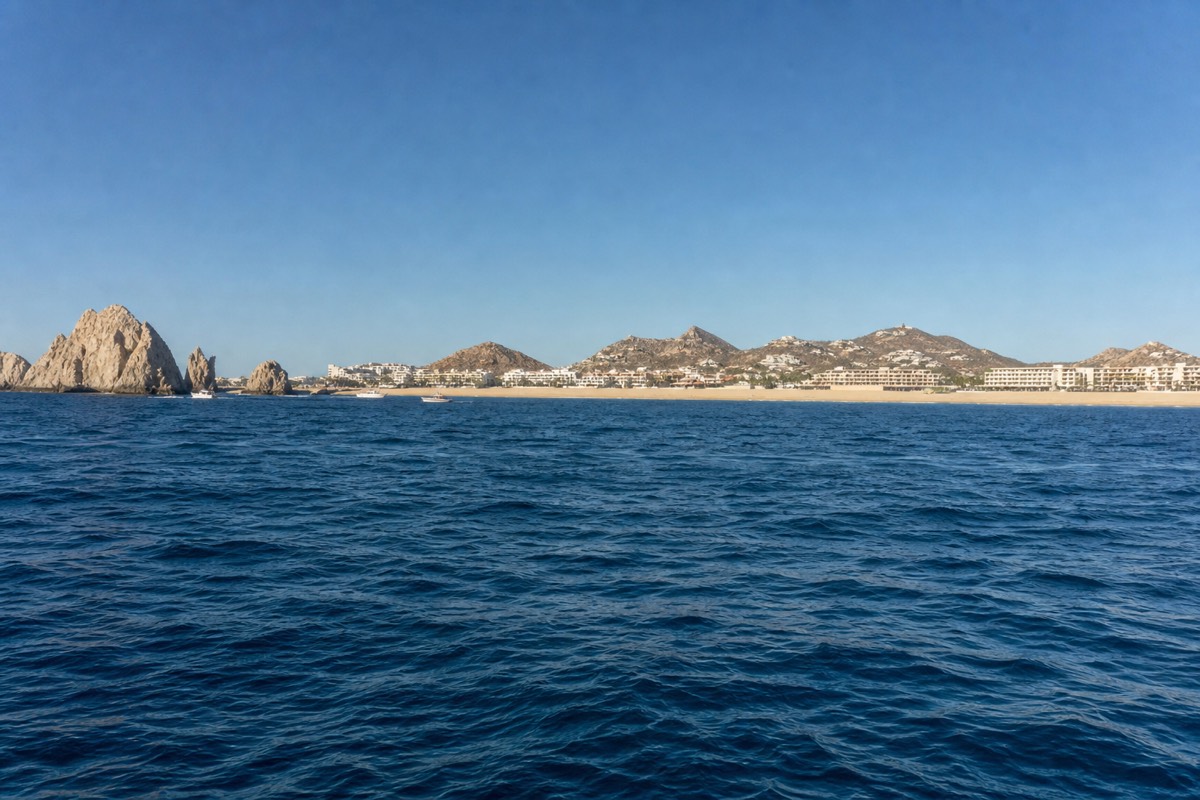
The search area begins beyond Land's End; the boat choice decides how your group experiences it. Compare The Cabo Tour Options Below →
Shore viewpoints can show distant blows, while boats work changing water on both sides of Land's End. Compare small-group interpretation, catamaran logistics and private group time after the FAQ.
Where Is The Best Place To See Whales In Cabo San Lucas?
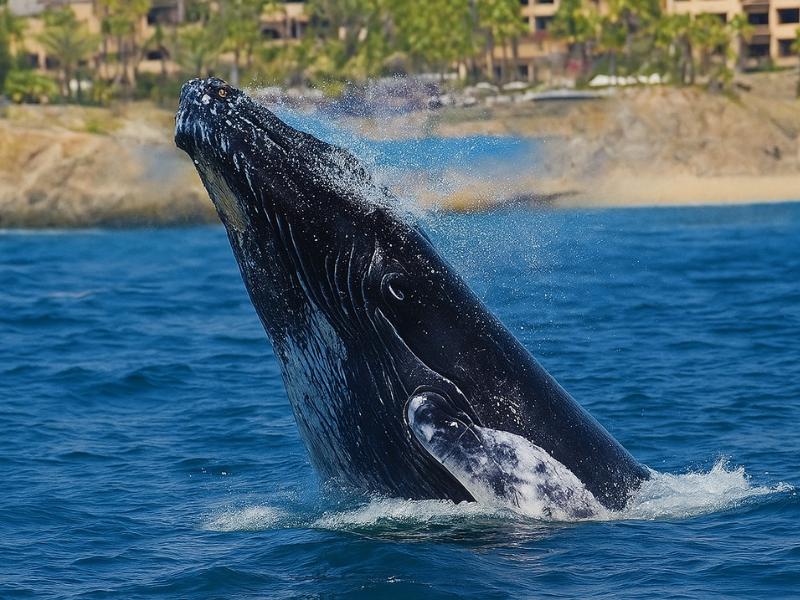
On the water off Land's End, where the Pacific meets the Sea of Cortez. Boats reach that zone within minutes of leaving the marina, which is why almost every departure is two hours rather than a half day. Shore viewing works from elevated Pacific side viewpoints between December 15 and April 15, but only a boat gives you behaviour.
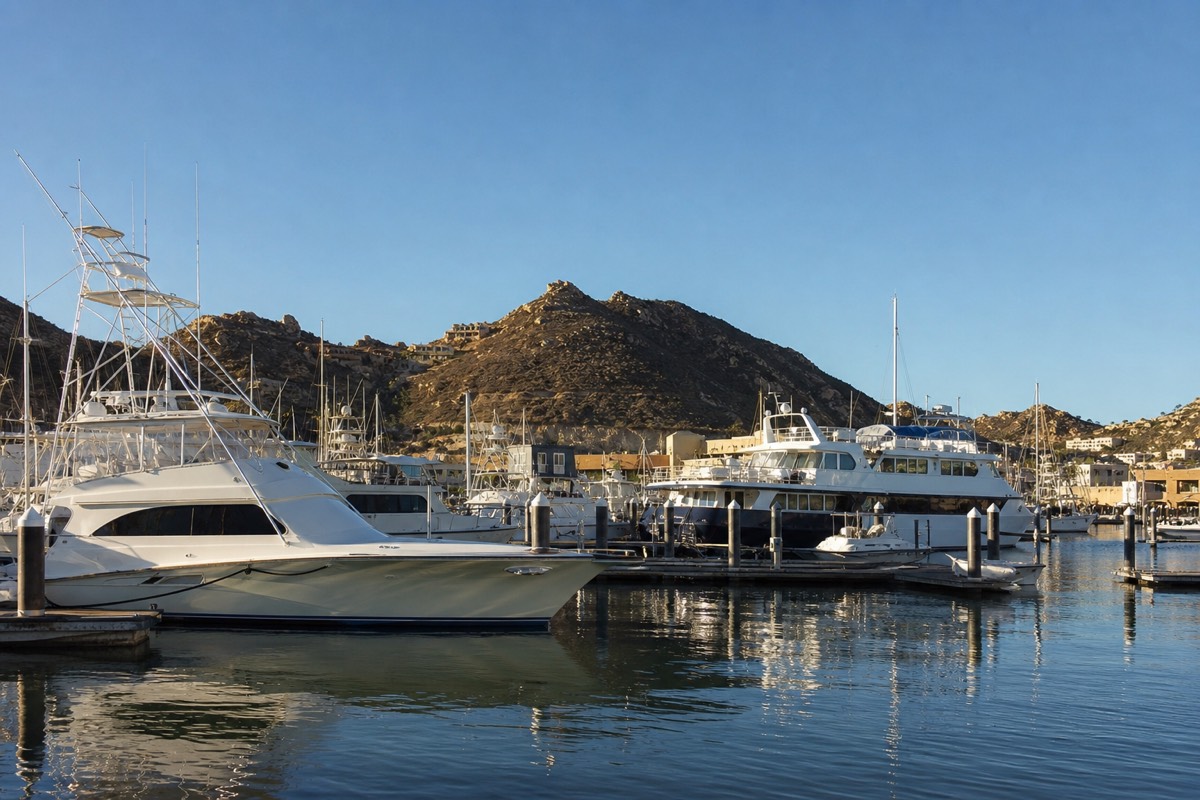
Cabo has an unusual advantage. In most whale watching destinations the boat spends the first hour getting somewhere. Here the town sits on the corner where two bodies of water meet, so the viewing ground starts a short run past El Arco and the sea lion colony on the rocks.
That geography is the reason a two hour ticket is not a short ticket. Take out ten minutes of transit at each end and you still have most of the trip in whale water.
Why The Water Off Land's End Is Where The Boats Go
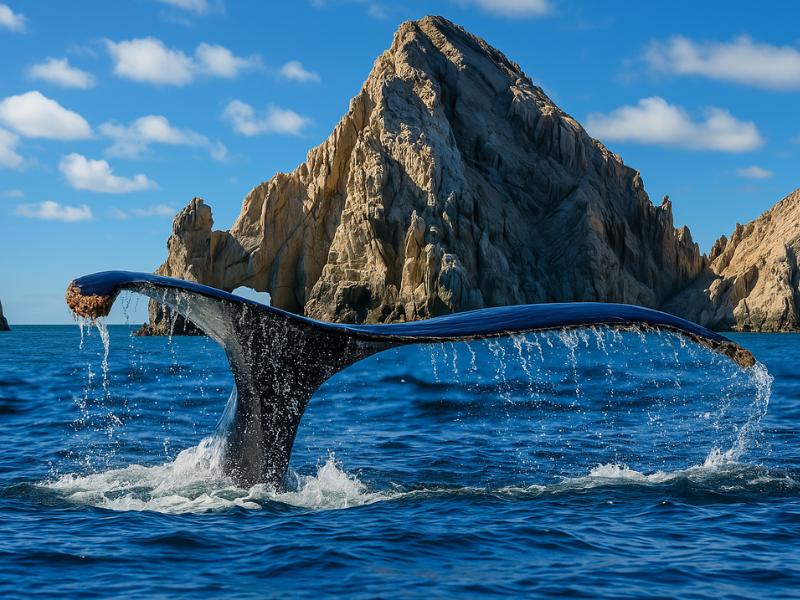
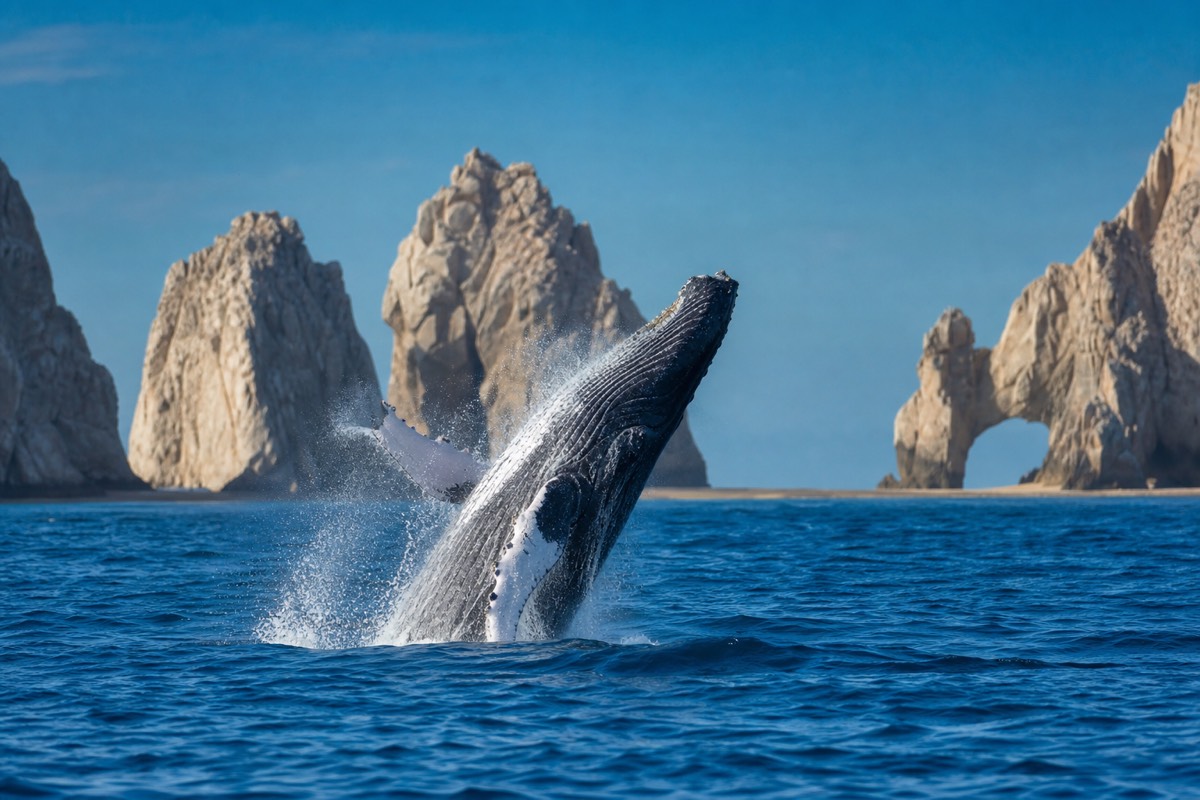
Land's End is the pivot between two oceans. Humpbacks and gray whales moving down the Pacific coast round that corner into the warmer Sea of Cortez, so the boats work the ground on both sides of the point rather than heading for one fixed spot.
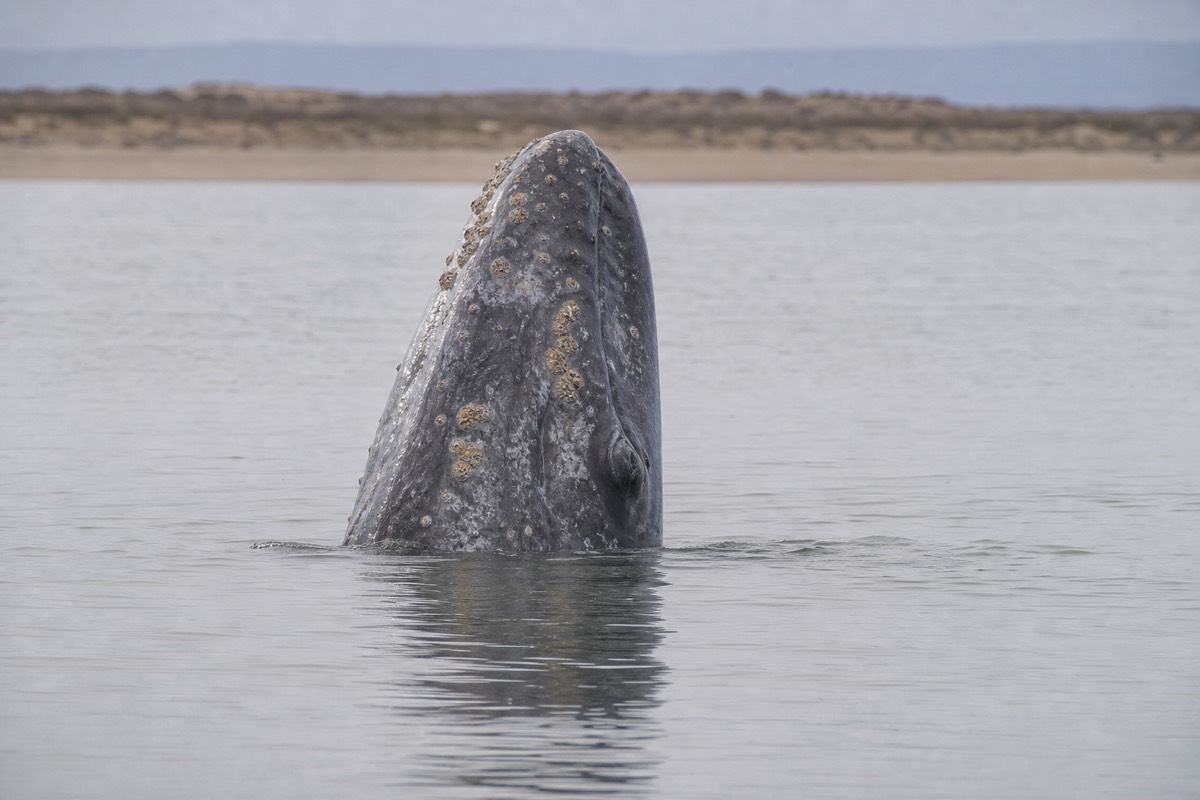
Captains read the day rather than the map. Wind direction, swell and where the last blows were seen decide whether a morning runs out onto the Pacific side or stays in the calmer Cortez water. On a settled morning the fleet often spreads across both, which is another argument for a smaller boat that can reposition quickly.
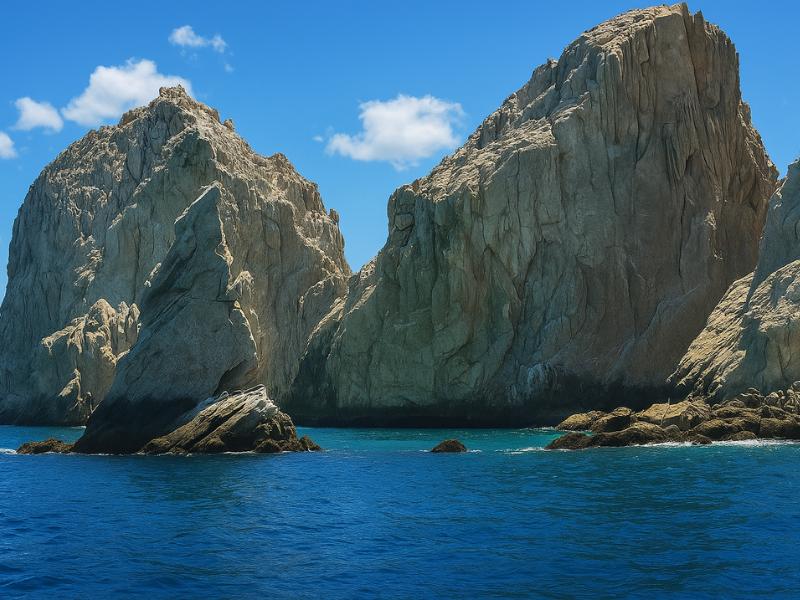
The landmarks come free with the route. Most departures pass El Arco and Lover's Beach on the way out, and the sea lion colony sits on the rocks at the point. If those are the images you came for, the El Arco and Lover's Beach boat trips cover which departures build in the closest passes.
Can You See Whales From Shore, And From Where?
Yes, between December and April. Blows and the occasional distant breach are visible from elevated Pacific side viewpoints and from Medano facing hotel terraces. Bring binoculars and patience. What shore watching cannot give you is behaviour detail, scale, or the sound of a singing male through a hydrophone.
| Where you watch from | What it gives you | What it costs you |
|---|---|---|
| On the water off Land's End | Blows at viewing distance, tail slaps, breaches, mother and calf pairs, hydrophone song, sea lions and the Arch | Check the verified live listing for duration and availability |
| Elevated Pacific side viewpoints | Free, unhurried, a wide field of view, good odds of spotting blows on a calm morning | Distance. No behaviour detail, no sound, no control over timing |
| Medano facing hotel terraces and balconies | Free, comfortable, occasional distant blows on the Cortez side | Luck. You watch whatever passes rather than going to find it |
| Marina dock and town waterfront | Atmosphere, boats coming and going | Almost nothing whale wise. The animals are past the point |
A shore sighting has its own shape. You scan a patch of sea, catch a white puff that hangs for a second or two, and then wait to see whether the animal surfaces again in the same line. On a still morning that is easy work. By early afternoon, when the wind picks up and the surface breaks into whitecaps, the same blow disappears into the texture of the water and most people stop seeing anything at all.
Shore watching pairs well with a boat trip rather than replacing it. Spend one morning on the water and keep binoculars handy for the rest of the week, and most winter visitors end up with several free sightings on top of the paid one. There is more on the free option in the notes on spotting whales from the beach.
Which Boat Puts You In The Best Position?
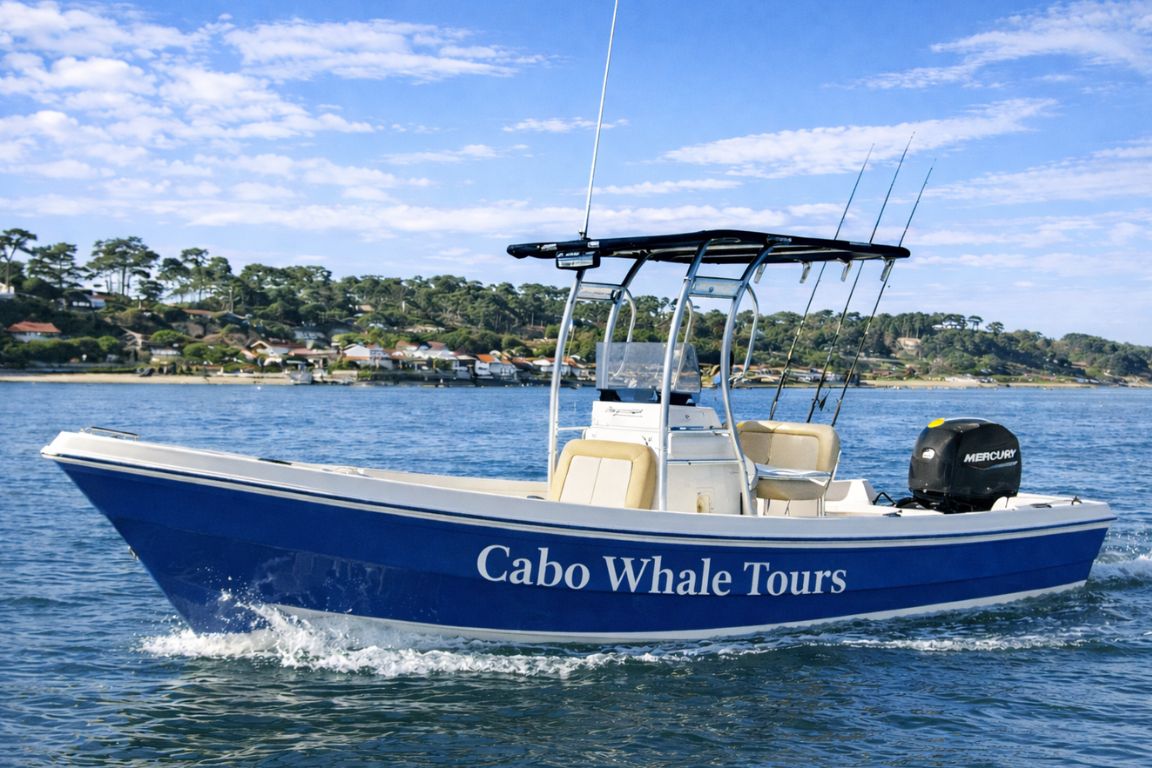
A smaller group can make it easier to follow the guide and move for a sightline. The verified biologist-led trip caps the group at 12. The catamaran solves a different need with a light meal, a domestic open bar and arranged hotel transfer. Check the live listings for current prices.
| Boat | Around | Group | Best for |
|---|---|---|---|
| Biologist-Led Cabo Whale Watching Tour with Free Pics | Check live listing | Max 10 | Low freeboard, fast repositioning, photographs |
| Cabo San Lucas: Small Group Whale Watching with Biologist | Check live listing | Max 12 | Explanation, hydrophone, families who want commentary |
| Cabo Luxury Sailing: Whale Watch & Arch Experience | Check live listing | Max 16 | Sailing under canvas, Arch pass, a quieter deck than a party boat |
| Catamaran Whale Watching Tour from Cabo San Lucas | Check live listing | Larger deck | Stability, shade, food and drink, mixed groups |
Group size is the number to watch on the listing, not the boat length. Ten guests on a small hull means everybody has a rail, and when the captain turns, nobody has to climb over anyone to keep the animal in frame. Larger decks solve a different problem well, since they are steadier, shaded, and much kinder to anyone who worries about the swell. Private charters sit outside this comparison entirely: they buy privacy and a schedule, not a better whale.
Mexico's NOM-131 sets observation distance by vessel size and species, so the minimum is not identical for every hull. For humpback and gray whales it is 60 metres for smaller vessels and 80 metres for medium or larger vessels, with a 240-metre waiting distance; swimming and diving are prohibited during observation. If a whale approaches, the boat remains powered in neutral until the animal moves away.
Does Morning Or Afternoon Change Where The Whales Are?
The hour can change light, temperature and sea state more than the search area. Morning often brings cooler air and useful side light, while afternoon conditions vary. Compare live times and prices for the verified product you choose.
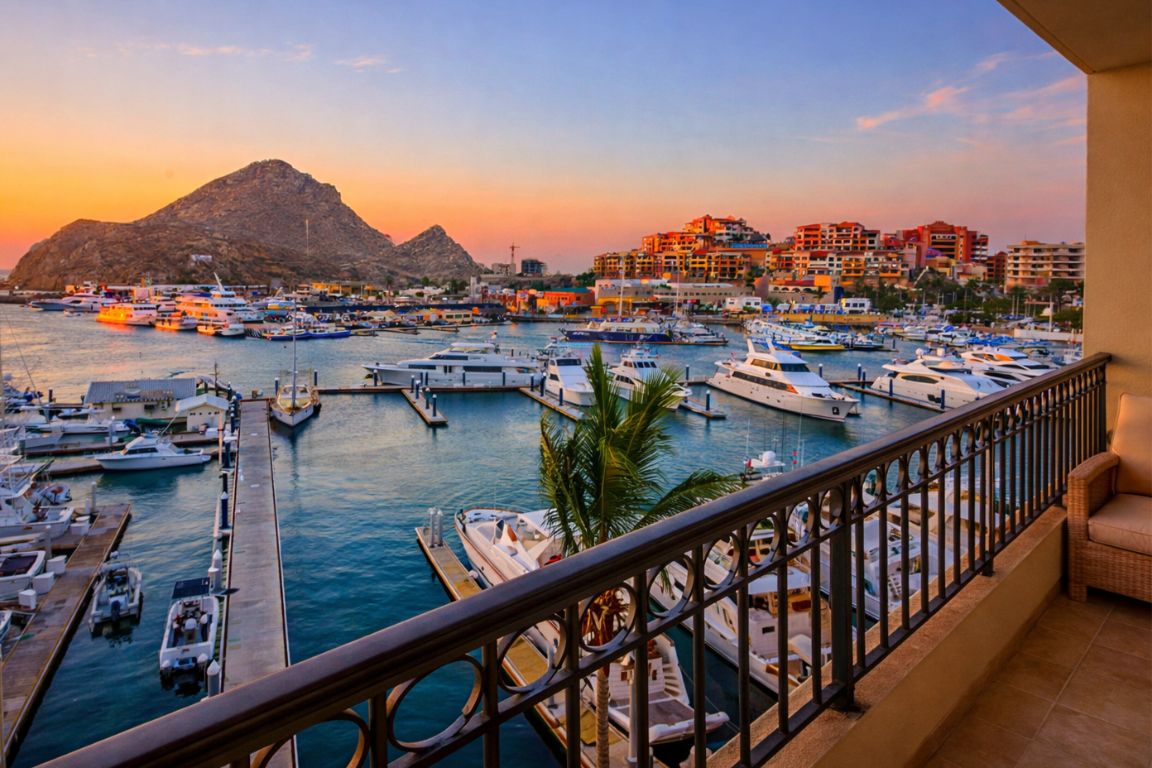
Chop is the deciding factor for many people. A blow is easier to pick out on a smoother surface and easier to lose among whitecaps, so the morning advantage can be about spotting range as well as comfort. Compare verified live departures rather than relying on a static cheapest-price claim.
A workable winter day starts by checking the meeting time and location on the live listing. The verified small-group trip meets at Plaza Bonita and lasts 2.5 hours; the catamaran spends two hours on the water plus transfer time; the private trip meets at IGY Dock C and lasts three hours.
Every shared departure Cabo Whale Tours lists sails from the main marina, so there is no second location to weigh up, only a time. Pick the morning unless heat is a problem for you, and if your travel dates are still open, the month by month season calendar shows which weeks put the most animals in that water.