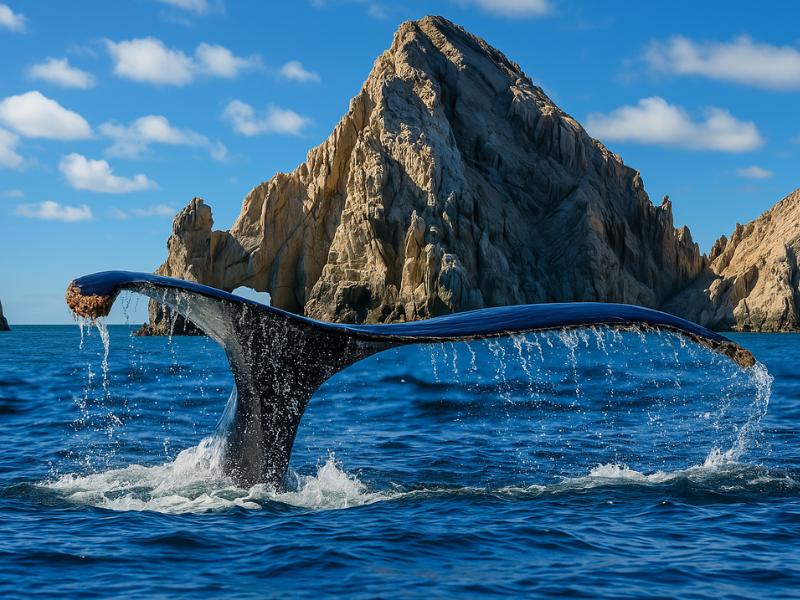
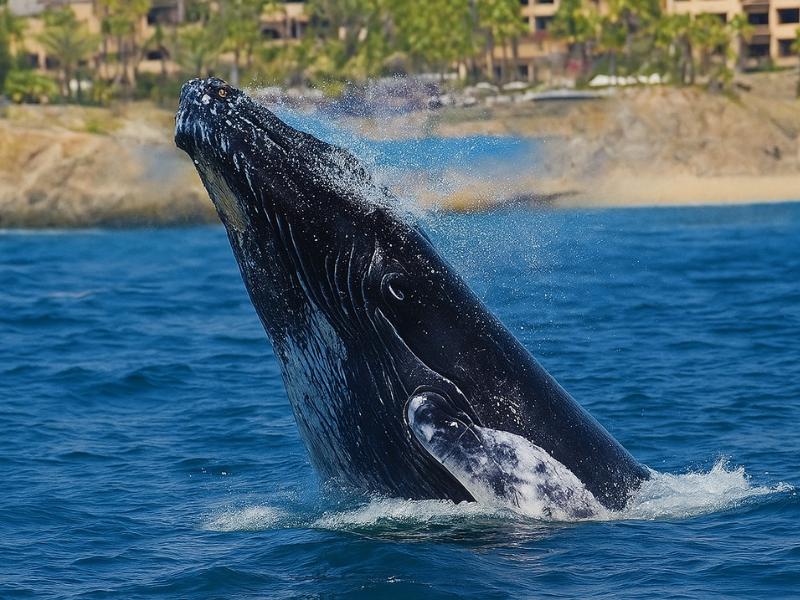
Whale Watching From San José Del Cabo: What Changes And What To Book
The verified products in this guide use Cabo San Lucas departure logistics: Plaza Bonita for the small-group trip, IGY Dock C for the private charter, and hotel pickup arranged 48 hours ahead for the catamaran. Drive and collection times vary by hotel, traffic, and pickup route.
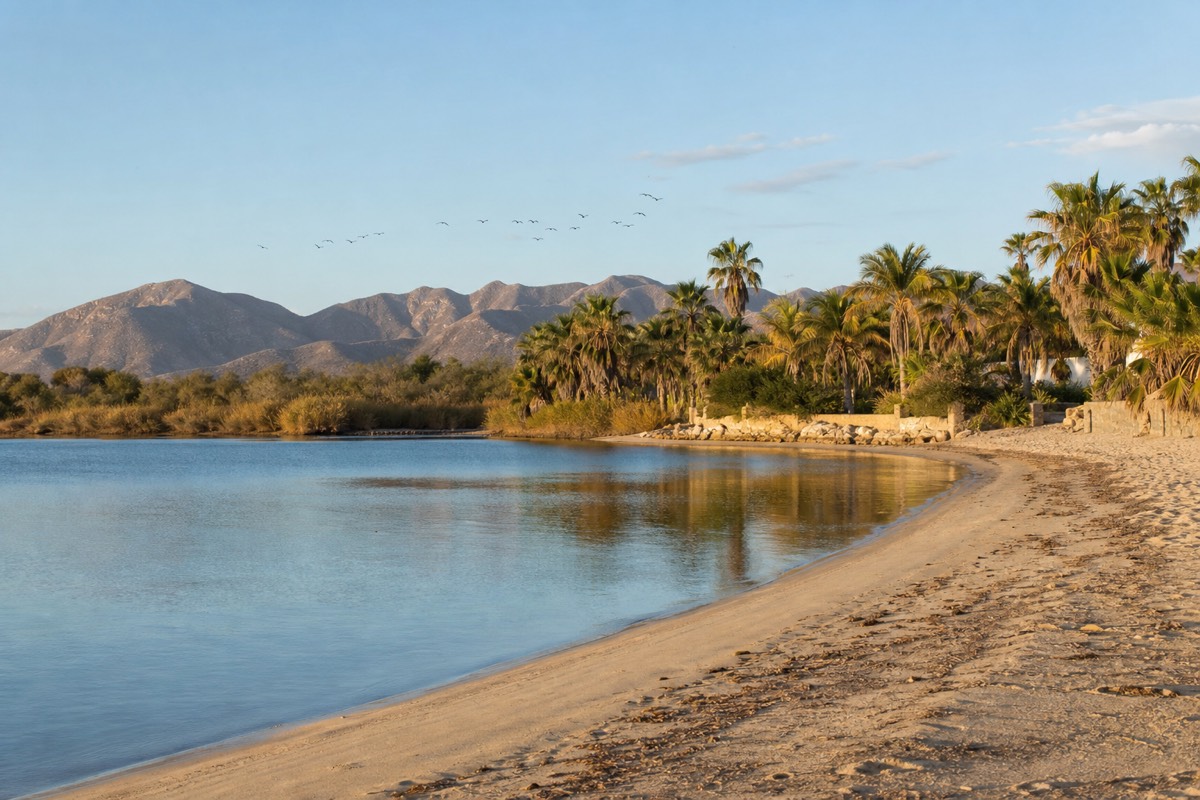
Timing an 8 a.m. departure from San José del Cabo
All whale tours depart from the Cabo San Lucas marina. The 33 km transfer from San José del Cabo is the only extra step; operators ask you at the dock about 30 minutes before departure.
From San José del Cabo, the decisive difference is tour-day transport. Compare the catamaran’s arranged hotel pickup with the Plaza Bonita and IGY Dock C meeting points before choosing a boat. Compare The Cabo Tour Options Below →
The verified whale trips use Cabo San Lucas logistics. The catamaran includes hotel pickup and drop-off when arranged at least 48 hours ahead; the 2.5-hour biologist trip meets at Plaza Bonita; the three-hour private charter meets at IGY Dock C.
Do Whale Watching Tours Actually Leave From San José Del Cabo?
The three verified options in this guide use Cabo San Lucas arrangements: Plaza Bonita for the small-group trip, IGY Dock C for the private charter, or an operator-arranged hotel transfer for the catamaran. Road time from San José del Cabo varies with the pickup and traffic, so confirm your own schedule.
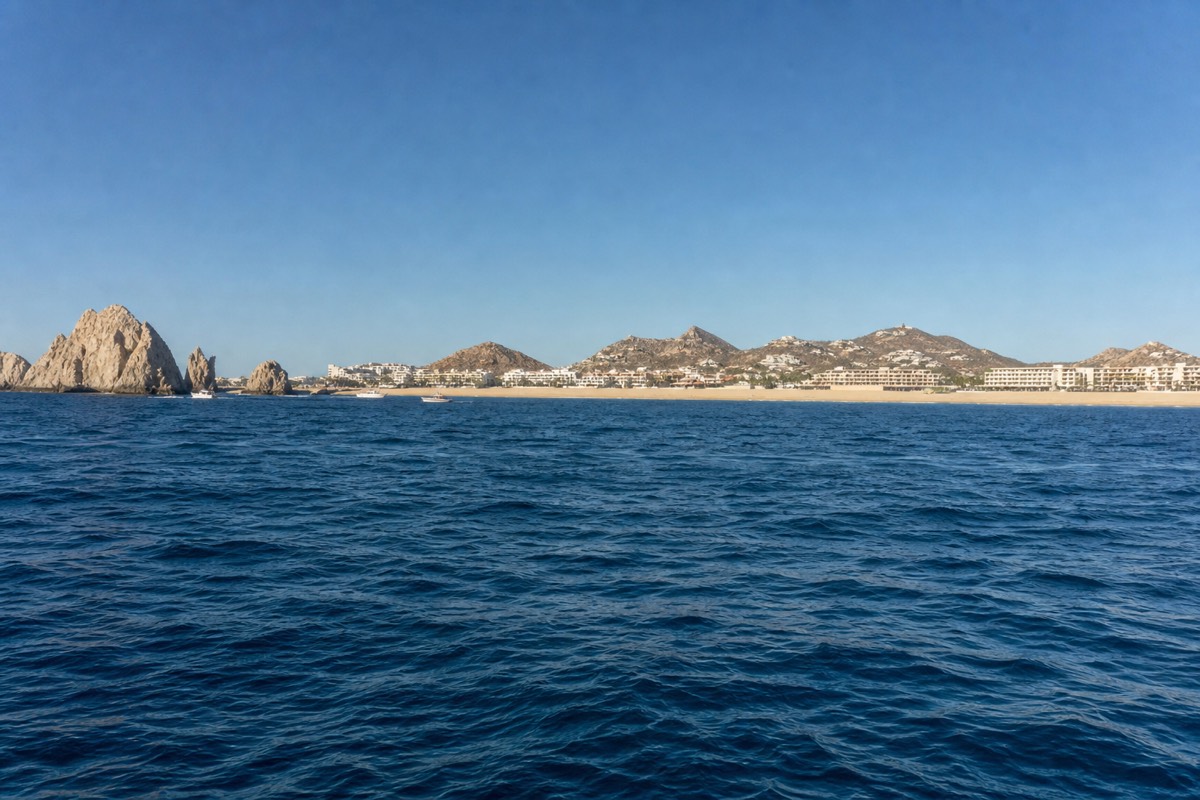
That is the entire difference, and it is better to be blunt about it before you pick a hotel. San José del Cabo is the quieter half of Los Cabos: a colonial centre, an art district, a bird-heavy estuary, long open beaches. Cabo San Lucas is the loud half, and it happens to own the harbour the whale boats use.
Use the confirmation for the exact departure arrangement. The verified biologist trip meets at Plaza Bonita, the private charter meets at IGY Dock C, and the catamaran includes hotel pickup and drop-off when arranged 48 hours ahead.
From the harbour mouth it takes only minutes to reach the Arch, and a few more to be in open water. So the planning question is never which San José tour to book. It is how to cover 33 km in time for an 8am boarding without wrecking the morning. Two answers exist. Let the tour move you, or move yourself. Both work, and they cost different amounts of money and different amounts of control.
What Changes When You Base Yourself In San José Del Cabo?
Your base changes the morning, not the whales. From San José you accept an earlier alarm and a corridor drive in exchange for calmer streets, an easier town to walk and quieter restaurants. From Cabo San Lucas you can reach the dock on foot in about ten minutes and be back in bed by mid-morning.
Your base affects travel time and pickup logistics. Wildlife sightings are not guaranteed, and this guide does not establish comparable sighting rates by hotel location or boat.
The honest case for San José is everything that happens after the boat. The historic centre is compact and walkable, the art district runs a Thursday evening art walk in season, and prices at dinner tend to sit below the marina strip. The honest case against it is that whale watching is a marina activity and you have chosen not to live at the marina.
| Base | Tour-day implication | Confirm |
|---|---|---|
| San José del Cabo | You need an arranged pickup or your own marina transfer. | Exact hotel coverage, pickup time, traffic allowance |
| Cabo San Lucas | You may be closer to the stated meeting point. | Exact walking or driving route and check-in time |
If your trip is four nights or more, the transfer stops mattering much because it happens once. If your trip is two nights and the whale tour is the reason you came, the section below on who should move hotels instead is the one to read before booking anything.
How Do You Get From San José Del Cabo To The Marina?
Your practical options depend on the booked product: arrange the verified catamaran transfer 48 hours ahead, or organize your own transport to Plaza Bonita or IGY Dock C. Confirm the live pickup terms and current transport quote before paying.
The verified catamaran includes hotel pickup and drop-off when arranged with the operator 48 hours ahead. The biologist trip and private charter do not promise hotel transport, so plan your own marina transfer for those products.
Self-transport reverses that. You leave when you want, you can stop for coffee, and you are not sitting in a van at 06:50 waiting for the last family. Taxis from the corridor are a longer run than the in-town hops that cost roughly $15 to $30 each way, so agree the fare with the driver or your hotel desk before you get in. Rideshare works well inside Cabo San Lucas but thins out badly at dawn, which is exactly when you need it. Our team's rule of thumb: if the tour includes the transfer, take it; if it does not, arrange the ride the night before rather than at 07:10 in a lobby.
| Option | Use it when | Confirm |
|---|---|---|
| Catamaran pickup | You want the verified included hotel transfer. | Arrange with operator 48 hours ahead and confirm hotel coverage |
| Own transfer to Plaza Bonita | You choose the biologist small-group trip. | Current quote, route and check-in time |
| Own transfer to IGY Dock C | You choose the private charter. | Current quote, assigned vessel and check-in time |
The wider picture of getting around Los Cabos, including which airport transfer to book on arrival day, sits in the guide on airport transfers and marina access.
Which Whale Tours Include Pickup From San José Del Cabo?
The verified catamaran includes hotel pickup and drop-off arranged 48 hours ahead. The verified small-group trip meets at Plaza Bonita and has no hotel-pickup claim; the verified private charter meets at IGY Dock C and has no hotel-transport promise.
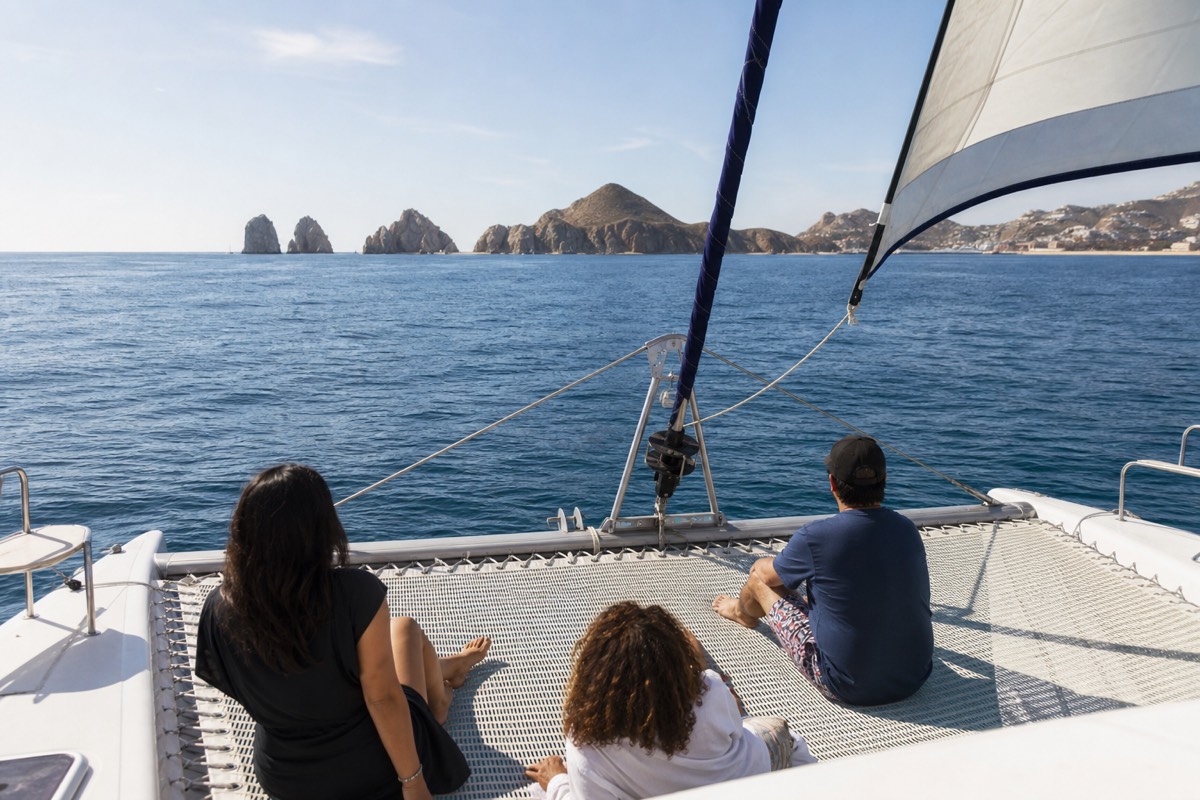
Ask the operator to confirm that your exact hotel is within the pickup area and obtain the pickup time in writing. Do not infer coverage or exclusions from examples for other listings.
The verified catamaran spends two hours on the water and includes hotel pickup/drop-off arranged 48 hours ahead, English and Spanish service, a light meal, and a domestic bar. Confirm your hotel's coverage and the total transfer time; check the live listing for price.
The verified small-group biologist trip checks in at Plaza Bonita, caps at 12 guests, and returns to the same meeting point. It has no verified hotel pickup, so arrange the San José road transfer separately and follow the booking confirmation for exact directions.
| Verified product | Duration and logistics | Key check |
|---|---|---|
| Catamaran whale watching | 2 hours on water plus arranged hotel transfer | Arrange pickup 48 hours ahead; not wheelchair suitable |
| Small group with biologist | 2.5 hours; Plaza Bonita; max 12 | Own transport; product medical/access limits apply |
| Private Cabo Boat Adventures charter | 3 hours; IGY Dock C; food, drinks, snorkel gear, paddleboard | Fleet assigned; confirm layout, access, capacity and child rules |
If you want the boat types compared on their own merits rather than by pickup radius, the breakdown of Cabo boat types covers small boats against catamarans against yachts.
What Does An 8am Departure Look Like From A San José Hotel?
Plan on being awake by 06:20 and out of your room by 07:00. A transfer-inclusive van will collect you between 06:45 and 07:15, reach the marina by about 07:45, and you board at 08:00. Self-drivers can leave twenty minutes later and still park with time to spare.
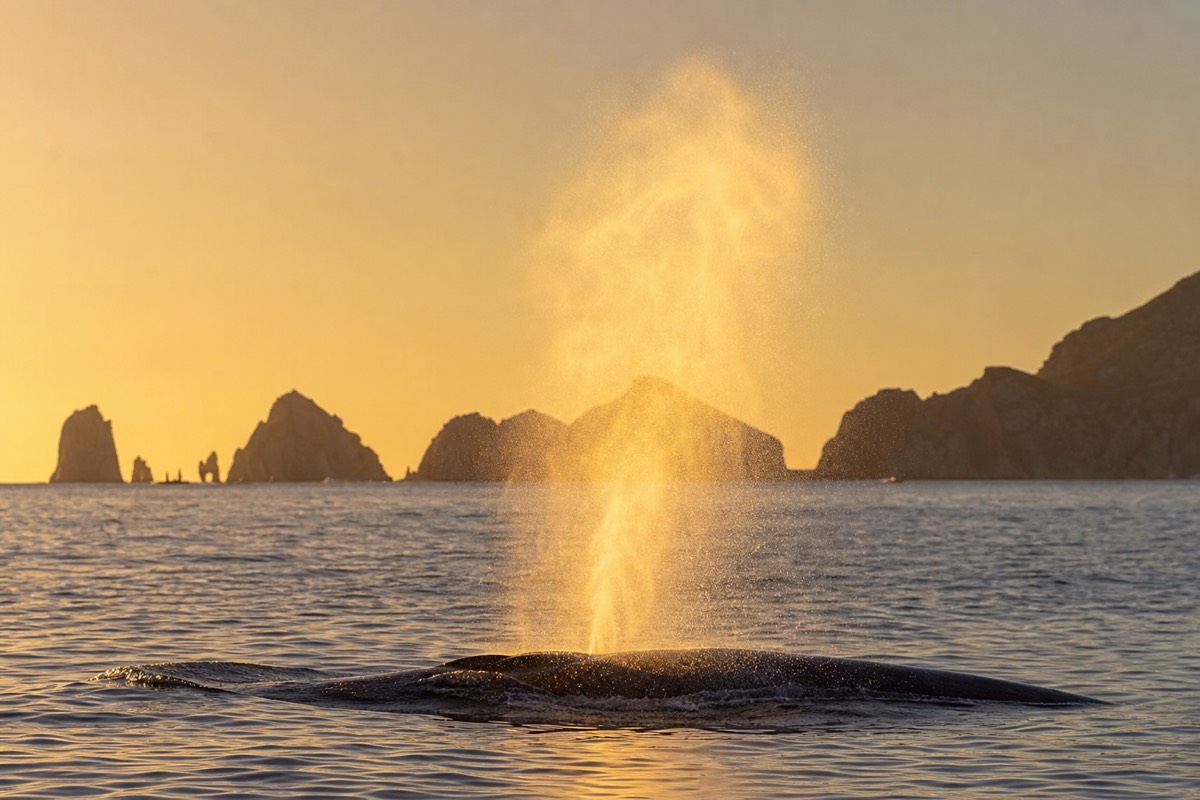
The two versions of the morning diverge only in the first hour. After check-in they are the same trip: life jackets, a short briefing, lines off, then the harbour mouth and the Arch inside ten minutes. Boats reach whale water fast from Cabo San Lucas, which is why a two-hour ticket is mostly whale time rather than transit.
Morning and afternoon conditions can differ, but weather, wildlife behavior, fares, and road traffic vary by date. Choose the time that fits your confirmed transfer and use the current marine forecast and listing details.
| Stage | Action |
|---|---|
| Day before | Confirm pickup or marina route, check-in time and cancellation terms. |
| Before departure | Allow the transfer and check-in time stated by the operator. |
| On the water | Use the verified product duration; catamaran duration excludes transfer time. |
| Return | Keep later plans flexible for traffic, weather or schedule changes. |
Can You See Whales From San José Del Cabo Beaches?
Yes, though what you get is distance, not detail. Between mid-December and mid-April blows and the occasional breach are regularly visible from open coastline and elevated ground across Los Cabos. Binoculars turn a smudge into a whale. A boat turns a whale into behaviour you can describe afterwards.
Shore watching works best when the sea is flat and the light is low, so the first hour after sunrise is the window. Look for the vertical puff of a blow rather than a body: the spout hangs for a moment against the horizon and is far easier to catch than a back. Once you have found one, keep watching the same patch of water, because whales surface in series.
The estuary at San José is a different attraction and worth an early walk on its own terms, but it is a bird and turtle place rather than a whale place. Whales pass offshore, in deeper water, and the flat beach means your eye is barely above sea level. Anywhere with height helps: a hotel balcony on an upper floor, a headland, the elevated stretches along the corridor.
A boat changes the viewing perspective, but wildlife distance and hydrophone use are never guaranteed. The verified biologist trip lists a hydrophone only when conditions permit.
Why Does The Whole Fleet Work The Same Water At Land's End?
Because the harbour opens directly onto the point where the Pacific meets the Sea of Cortez, and whales use that corner. Boats clear the marina and are in productive water within minutes, so a two-hour ticket buys roughly ninety minutes of actual searching rather than a long commute.
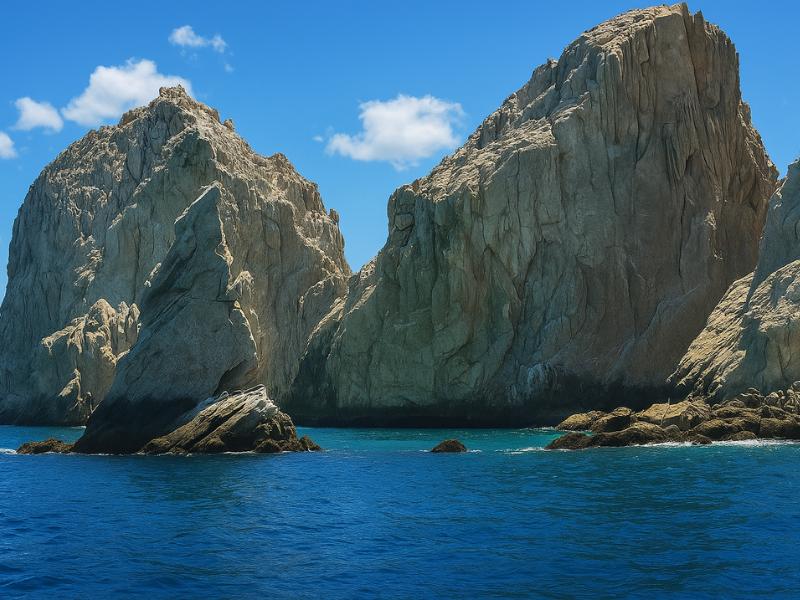
Land's End is the southern tip of the Baja peninsula. The rock formations that make the postcards, the Arch, Lover's Beach, Pelican Rock and the sea lion colony on the rocks, all sit within the first few minutes of any departure. Past them the seabed drops away quickly, which is what brings large animals close to a town.
Ask the operator to confirm its current permit and explain the approach rules for your departure. Follow the captain’s instructions and do not rely on fixed maneuvers or distances in an older guide.
Compare each product's actual pickup or meeting point, vessel format, group size, guide, and restrictions. Current prices and routes belong on the live operator listing.
Which Month Should A San José-Based Visitor Pick?
January through March is the main matching window for the featured whale-watching products. Confirm the exact operating date in December or April; wildlife sightings and sea conditions are never guaranteed.
January through March matches the featured whale products. Confirm an exact date in December or April, and rely on the operator’s current permit, wildlife, guarantee, and pickup terms rather than a fixed site-wide window.
| Month | Whale-tour decision | Next step |
|---|---|---|
| January-March | Main matching window | Check live availability and confirmed transport |
| December or April | Season edge | Confirm the exact operating date before paying |
| May-November | No featured whale-tour match | Choose a different activity |
A fuller week-by-week view, including how the mix of species shifts across the season, sits in the Cabo whale season calendar.
What Should You Budget Beyond The Ticket Price?
Add a dock and protected areas fee, usually around $5 per person in cash at check-in on the boats that charge it, plus transfers if they are not included, plus a tip for the crew. For a couple on a $99 ticket with transfers included, the realistic all-in number lands not far above the ticket.
The fee catches people out because it is cash only on several listings and the marina is not the place to hunt for an ATM at 07:50. Bring small bills. Tips are optional and appreciated in the usual way, and on a small biologist-led boat where the guide has spent two hours explaining behaviour, most guests hand something over.
Transfers are the main extra variable from San José. Compare the live product price with the full cost and time of reaching its meeting point; the verified catamaran includes pickup and drop-off when arranged 48 hours ahead.
What is not worth paying for, from this end of the corridor, is a paid pickup add-on on a boat whose competitor includes the same service free. Compare the two listings side by side before you decide, and check whether the transfer covers your specific property. The general cost picture for a Cabo whale day is laid out in the trip planning guide.
How Do You Fit A Whale Morning Into A San José Day?
Treat the tour as the morning and nothing else. You will be back in San José around 11am with the afternoon intact, which is enough for lunch, the historic centre, a slow beach hour and dinner. Trying to stack a second boat activity on the same day is how people end up seasick and tired.
The template below assumes an 8am departure with an included transfer. It also assumes you do not schedule anything that needs punctuality before roughly noon, because a van collecting several hotels does not always run to the minute and the return leg is the same shape in reverse.
| Order | Plan |
|---|---|
| 1 | Confirm the exact pickup or marina meeting point. |
| 2 | Allow the operator’s stated transfer and check-in time. |
| 3 | Take the booked boat trip and follow the crew’s briefing. |
| 4 | Keep the return window flexible before making another reservation. |
Who Should Skip The Transfer And Move Hotels Instead?
Four groups: anyone on a two-night trip built around the boat, anyone booking the sunrise departure, travellers with serious motion sickness, and families with small children. For these, a night at the Cabo San Lucas end removes an hour of road time from a day that is already demanding.
The sunrise case is the clearest. The Sunrise Whale Watching trip boards before the day has properly started, around $81, rated 4.9 across 1,131+ bookings, and it exists because the light at that hour is extraordinary. Adding a 33 km corridor drive in front of it turns a beautiful departure into a punishing one. Guests who want that boat and are staying east often book a single night near the marina for it.
The road transfer followed by a boat trip can be uncomfortable for a motion-sensitive traveler. Ask a pharmacist or clinician about individual options before travel, follow the label, and confirm the operator’s cancellation terms.
Everyone else should stay put. A 20 to 30 minute drive in a comfortable van, at an hour when the road is quiet and the light over the Sea of Cortez is turning gold, is not a hardship. Most guests who make it once do it again later in the week for a different boat.
How Far Ahead Should You Book From San José Del Cabo?
Six to eight weeks for February and March, three to four weeks for January, two to three weeks for December and April. Transfer-inclusive boats fill their van capacity before they fill their deck capacity, so a San José guest is effectively booking against a smaller pool than the seat count suggests.
Check live availability once your date and transfer plan are firm. The biologist-led option caps the group at twelve, but availability changes by date and should not be inferred from a fixed lead time.
Two habits help. Book the boat before you book anything else in the week, then build the rest of the itinerary around it. And check whether the operator confirms the pickup window 48 hours out, as most do, so you are not guessing on the night before. When that message arrives, tell the front desk you will be in the lobby early, because vans that run a corridor route sometimes reach the eastern hotels ahead of schedule.
If your dates are already tight, widen the search rather than the wallet. An afternoon departure on a transfer-inclusive catamaran is a better outcome than a morning slot you cannot reach, and the difference in whale activity across the day is smaller than the difference between going and not going. For what to throw in the bag once the booking is done, see the packing list for a Cabo boat morning, and if you want the Land's End rock formations to be a proper part of the trip, read the guide to El Arco and Lover's Beach by boat.